Don’t Like Copilots Because Humans Get In The Way Of AI: Vinod Khosla
Vinod Khosla has never had much patience for half-measures.
The Sun Microsystems co-founder and Khosla Ventures founder has long argued that AI will reshape the nature of work far more radically than most people are willing to accept, and his views on how companies should deploy AI reflect that impatience. While the dominant approach in enterprise AI right now is the copilot model — AI that sits alongside a human worker and assists them — Khosla thinks that framing is fundamentally broken. “I generally favour going after the bolder, bigger path to get there faster,” he said, “but most people prefer incremental paths of being a copilot, assisting somebody.”
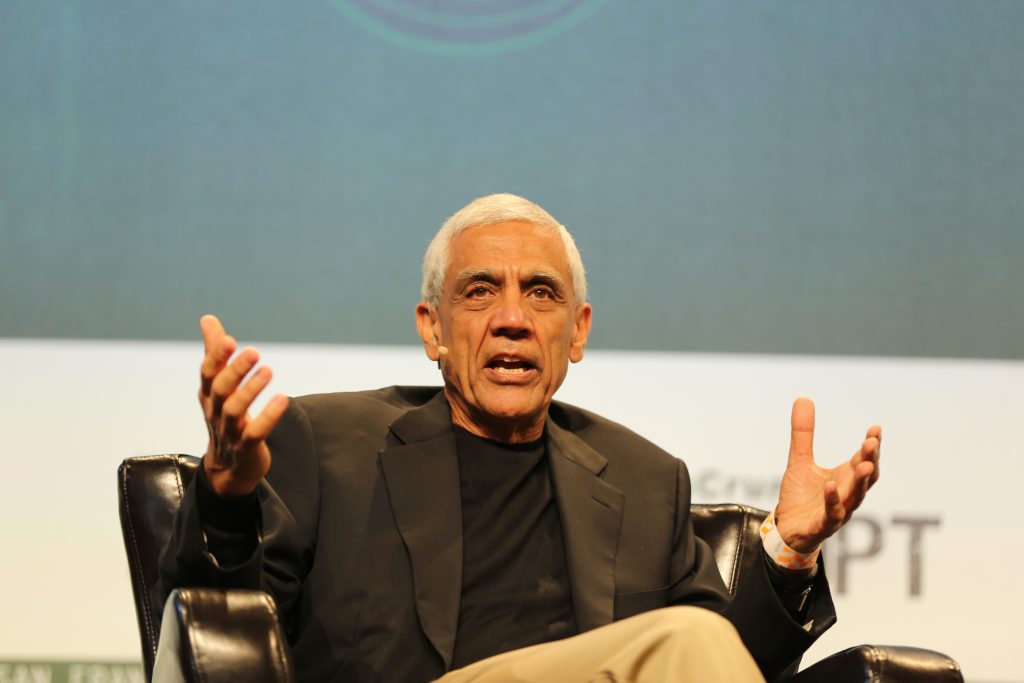
His problem with this approach isn’t theoretical. “Humans get in the way of copilots,” Khosla said. “They’re just really poor at it, and they don’t want to change.” The copilot model, in his view, assumes a level of human adaptability and willingness to evolve that simply doesn’t exist in most workplaces.
He offered accountants as a concrete example of why. “Accountants don’t want an accounting copilot. They just think their job is threatened.” And if that’s the psychological reality — if workers are going to resist and resent AI assistance regardless — Khosla sees little reason to go through the motions of a gentler transition. “You might as well just try and threaten their job directly. So I prefer that strategy.”
It’s a deliberately provocative way to frame things, but the underlying logic has some weight to it. The copilot model depends on humans actively collaborating with AI, improving their outputs, catching errors, and iterating. When the human in that loop is disengaged or defensive, the system degrades. Khosla’s point is that the friction isn’t a bug that better change management can fix — it’s a structural feature of how people respond to perceived threats to their livelihoods.
This sits within a broader worldview that Khosla has been articulating with increasing sharpness. He has predicted that 80% of all jobs will be within AI’s reach by 2030 and that IT services will mostly disappear in their current form. Against that backdrop, building products that smooth the human-AI handoff starts to look like misplaced effort. If the destination is full automation, the copilot is just a detour. For investors and founders watching where the real bets are being placed, Khosla’s preference for the “bolder, bigger path” is less a philosophical stance than an investment thesis.