Even as LLMs get more and more capable, interesting new approaches to AI are also gaining ground.

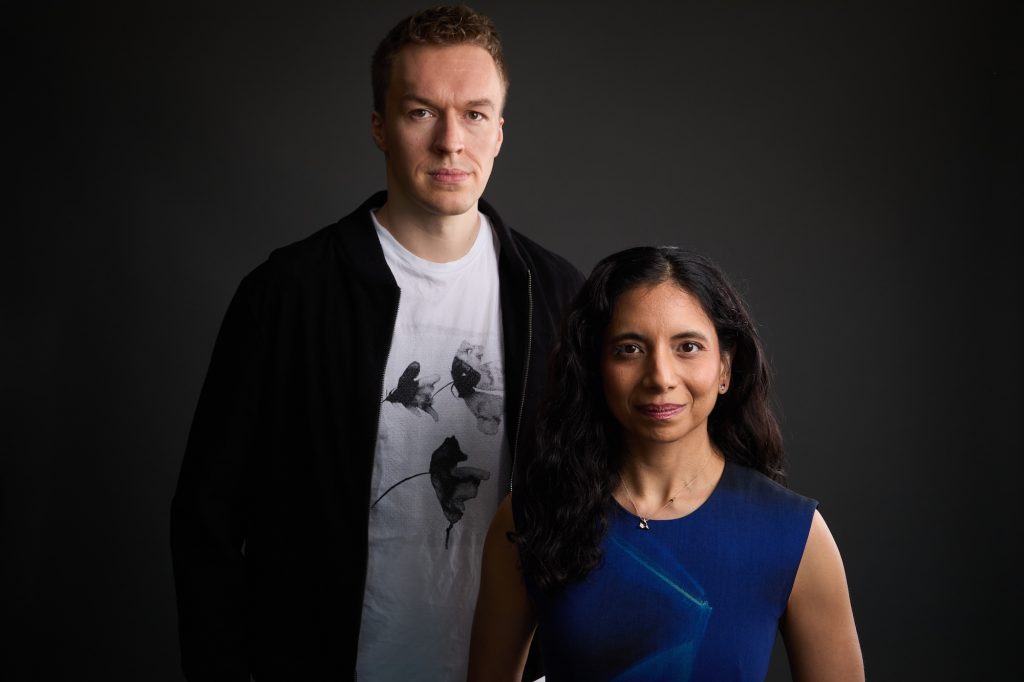
A new startup called Accelerated Understanding has launched out of stealth with a pitch that sidesteps the language-model race altogether. Founded by husband-wife duo of Caltech professor Anima Anandkumar and AI infrastructure engineer Benedikt Jenik, the company says it has built a model that doesn’t predict the next word in a sentence, but instead predicts how physical systems evolve across space and time.
The core argument from Anandkumar and Jenik is that intelligence itself is no longer the constraint on scientific and engineering progress. Models can already generate more ideas than any lab can test. What hasn’t kept pace is the ability to actually run the experiments needed to validate those ideas, whether that’s testing a new chip layout, a materials design, or a weather pattern. Accelerated Understanding’s bet is that if you can simulate physics accurately enough, you can replace a meaningful chunk of that real-world experimentation, and get something a lab experiment never gives you for free: a sense of direction for how to improve the design.
To do that, the company has moved away from the transformer architecture that underpins most large language models today. Instead, it relies on neural operators, a technique Anandkumar helped pioneer years before joining Nvidia as senior director of AI research. The pitch is that physical systems need to be represented in four dimensions at once, three spatial dimensions plus time, rather than flattened into 2D video frames or predicted step by step, which is where errors tend to compound in other “world model” approaches. Anandkumar has framed this as a fundamentally different way of thinking about intelligence altogether, telling Reuters that putting physics rather than language at the center of a model amounts to a “nature-centric” view of AI, as opposed to a human-centric one.
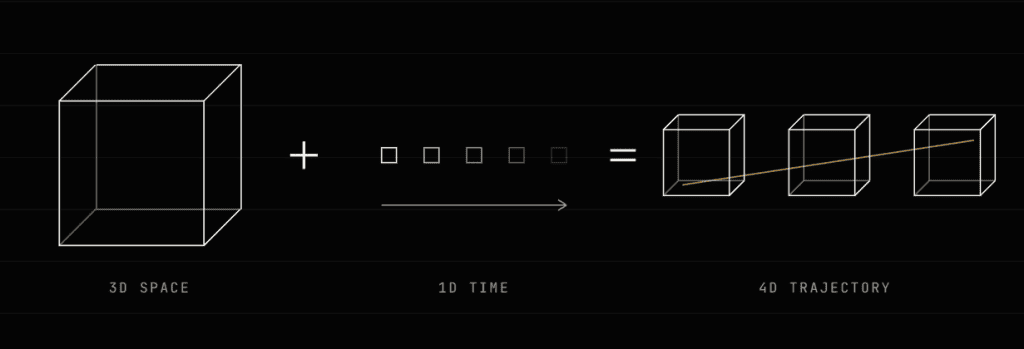
The numbers the company is putting out are eye-catching even by frontier-lab standards. Accelerated Understanding says it has trained models with over a trillion parameters and pushed context length, meaning how much information the model can take in in one shot, past 5 trillion at inference. Since physics data scales across four dimensions rather than the single dimension of text, a single training sample can be too large to fit on one accelerator or even a full compute node, which the founders say required new architectural work to get around.
This isn’t the first time the two have been approached to build something like this at scale. According to Reuters, Anandkumar and Jenik were courted in late 2024 by investor Vik Bajaj, who would go on to co-found Jeff Bezos’s industrial AI venture, Project Prometheus. An offer letter reviewed by Reuters proposed Anandkumar as the public face of the company with a board seat and a combined 35% stake for her and Jenik, plus committed funding of more than $2 billion through a Series B. The two turned it down and kept building on their own, while Prometheus went on to close a $12 billion Series B round earlier this year.
Accelerated Understanding is entering a space that has been getting more crowded by the month. Fei-Fei Li’s World Labs and Yann LeCun’s AMI Labs have both raised roughly a billion dollars apiece on the argument that language alone can’t give AI a working model of the physical world. Where Anandkumar and Jenik say they differ is in scope. Rather than building a system tuned to video or spatial reasoning for a specific use case, they’re arguing for one model that can generalize across many kinds of physics at once, weather, fluid dynamics, materials, heat transfer, the same way large language models trained on diverse text outperformed narrower ones trained on a single domain.
The company isn’t starting with consumers. Anandkumar and Jenik say they’re focused on enterprise applications first, pointing to chip design as an early example, where a model with a native grasp of thermal and material behavior could cut down the trial and error that currently requires lab testing. They also see applications in robotics, extreme weather prediction, and energy exploration, essentially any domain where a physical simulation currently stands between an idea and a usable answer.
Anandkumar’s background gives the pitch some weight. Before Caltech and Nvidia, she was part of the team behind FourCastNet, one of the earlier large-scale AI weather models, which is credited with kicking off the current wave of AI-based weather and climate forecasting. She has said Nvidia CEO Jensen Huang was struck enough by that work when it was presented at GTC in 2021 that he pushed her to think bigger about where neural operators could go. Whether that same approach can scale into a general-purpose model for all of physics is the bet Accelerated Understanding is now making publicly.