AI is not only threatening to disrupt many jobs that are largely performed in front a computer, but it could also disrupt the architecture of modern computers itself.
Andrej Karpathy — former Director of AI at Tesla, OpenAI co-founder, and one of the most respected voices in the field — recently articulated a vision so sweeping it reframes not just what computers do, but what they fundamentally are. His argument: neural networks, currently guests running on classical hardware, could eventually become the host. The CPU, the undisputed brain of every computer since the 1950s, may be demoted to a co-processor.
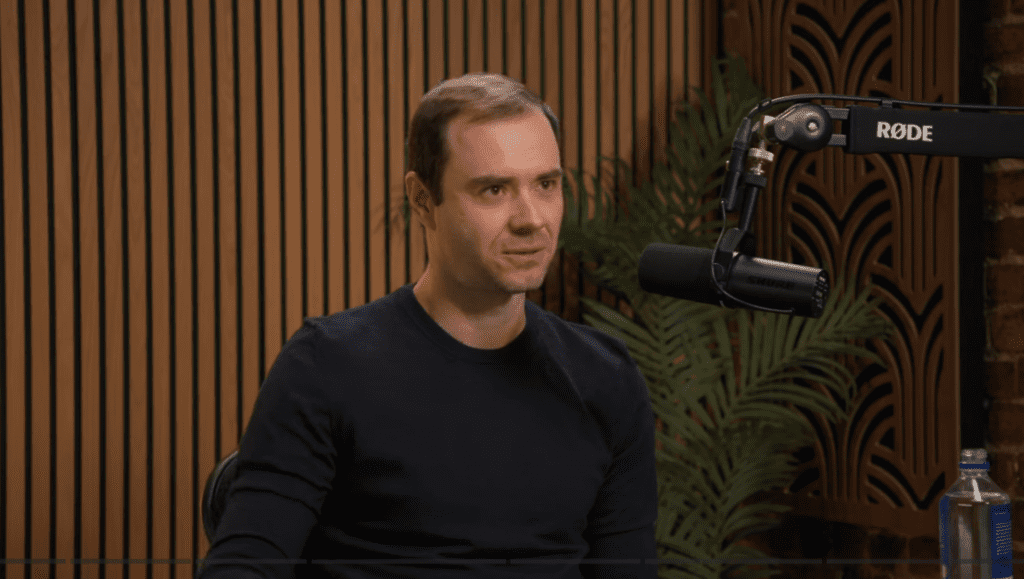
“A lot of this code shouldn’t exist,” Karpathy said, “and it’s just the neural network doing most of the work.” Using an AI-generated menu system as his example, he argued that the extrapolation of this trend leads somewhere genuinely strange.
“You could imagine completely neural computers in a certain sense,” he said. “You feed raw videos — imagine a device that takes raw videos or audio into basically what’s a neural net, and uses diffusion to render a UI that is unique for that moment.”
He then reached for history to make the idea feel less outlandish. “In the early days of computing, people were a little bit confused as to whether computers would look like calculators or computers would look like neural nets. In the 50s and 60s, it was not really obvious which way it would go. And of course, we went down the calculator path and ended up building classical computing. And then neural nets are currently running virtualized on existing computers.”
The inversion Karpathy is describing — neural nets as the primary substrate, with the CPU as an assistant — is the crux of his argument. “I think a lot of this will flip, and the neural net becomes kind of like the host process. And the CPU becomes kind of like the co-processor.”
He pointed to data to support the trajectory. “Intelligence compute of neural networks is going to take over and become the dominant spend of flops.” From there, he sketched out what that world might look like: “You could imagine something really weird and foreign, where neural nets are doing most of the heavy lifting. They’re using tool use as just like a historical appendage for some kinds of deterministic tasks. But what’s really running the show is these neural nets that are networked in a certain way.”
He closed with a note of measured optimism: “You can imagine something extremely foreign as the extrapolation, but I think we’re going to probably get there, sort of piece by piece.”
The implications are considerable. If neural networks become the host architecture rather than just an application layer, the entire stack of modern computing — operating systems, programming paradigms, chip design — comes into question. Karpathy has a track record of seeing these shifts early. He coined the term “vibe coding”, a concept that went from weekend curiosity to industry standard within a year. He has described the properties of LLMs as analogous to public utilities like electricity, and has written about AI agents autonomously running machine learning experiments without human involvement — a closed loop that points toward exactly the kind of self-directing intelligence his neural computer vision assumes.
The hardware industry is already moving in this direction, if not yet consciously framing it in Karpathy’s terms. NVIDIA’s Jensen Huang has argued that the world is undergoing a platform shift from hand-coded software on general-purpose machines to machine learning software running on accelerators. Huang has gone further, saying that AI has made all enterprise datacenters out of date — a sign that the infrastructure of classical computing is already being questioned at the highest levels. Karpathy’s vision is the logical endpoint of that trajectory: not just better hardware for AI, but hardware defined by AI.
The “piece by piece” caveat is important. This is not a prediction of overnight revolution. But the 1950s frame Karpathy invokes is instructive — the calculator path wasn’t inevitable. It was a choice shaped by the technology and ideas available at the time. The ideas available now are different.