There had been some initial skepticism around how useful AI could be at Math, but some of the world’s best mathematicians are coming around to its usefulness.
Terence Tao — Fields Medal winner, Director of Special Projects at IPAM (the Institute for Pure and Applied Mathematics), and widely regarded as the greatest living mathematician — has been thinking carefully about what AI actually unlocks. In a recent promotional video shared by OpenAI, he described something more interesting than productivity gains: a fundamental shift in how intellectual work gets done.
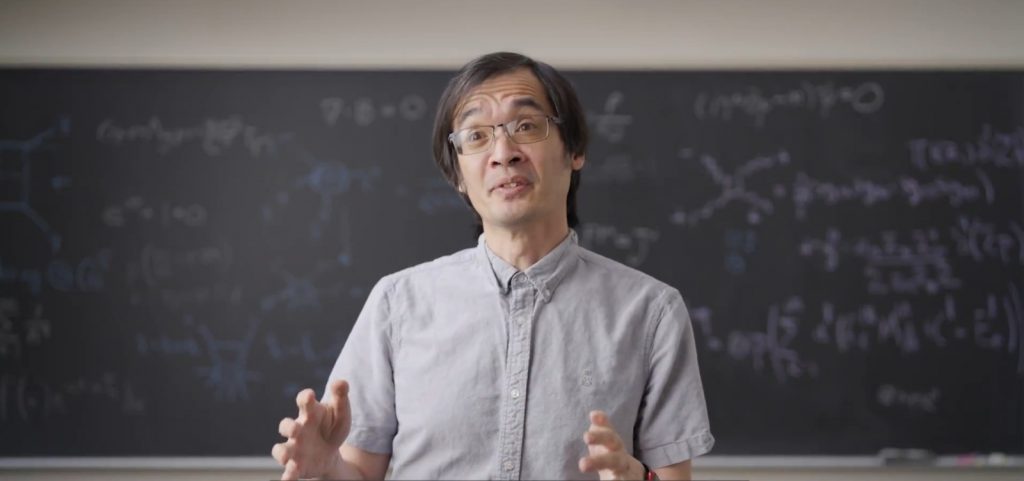
“AI has really been improving very rapidly,” Tao said. “It allows me to experiment. I will try crazier things.”
The image this conjures is not of a mathematician delegating to a machine. It’s closer to a jazz session — two minds feeling their way through a problem together. “We can vibe on the blackboard,” Tao explained, “and then if there’s a computation that neither of us wants to do, we can just get our AI tool to finish that.”
He also pointed to something more quietly consequential: the ability to search mathematical literature with far greater precision than before. “I can search literature much more accurately and effectively than I could before, so I’m doing way more AI-assisted mathematics and collaborative projects. And now I think it’s ready for primetime.”
OpenAI Chief Research Officer Mark Chen, speaking in the same video, gave a sense of how the company frames this internally: “Fundamentally, at OpenAI, we care about being at the frontier in terms of automating science, the economy, and ourselves. We care less about winning a Nobel Prize or a Fields Medal, and more about enabling a hundred mathematicians out there to do that for themselves.”
Tao’s most interesting observation, though, was about the broader cognitive cost of intellectual work — and what happens when that cost drops.
“We lived in a world of cognitive friction until very recently, where every task required us to use our brain. And so we didn’t really think about it. We just thought this was the cost of doing something intellectual. But now we have AI and the other technologies that can bring these frictions down to zero.”
He also offered a thought about what a healthier AI-assisted research culture might look like: “I hope when AI usage becomes more commonplace, people will also post not just their final product, but all the different paths they used to get there, because that’s also very useful information. I think we can find some way to have the best of both worlds.”
Tao’s comments land in the middle of a period of rapid, and genuinely remarkable, AI progress in mathematics. Both OpenAI and Google delivered gold-medal-level performances at the 2025 International Mathematics Olympiad — a competition held since 1959 and long considered beyond AI’s reach. DeepSeek joined them, releasing DeepSeek Math V2, an open-source model that also hit gold-medal level, scoring a near-perfect 118 out of 120 on the Putnam 2024 competition. OpenAI then went on to deliver a gold-medal performance at the International Informatics Olympiad as well, competing under the same conditions as human contestants.
Tao himself has been a consistent and careful observer of what these systems can and can’t do. He has previously noted that AI-generated proofs can look superficially flawless while hiding subtle errors no human mathematician would make — a product of how reinforcement learning trains models to appear correct. He’s coined the phrase “artificial general cleverness” to describe what current AI actually is: systems with an unusually broad capacity for ad-hoc problem solving, powerful when paired with verification, but not yet genuine intelligence. And he has argued that humans and AI will have complementary strengths for at least the next decade or two.
The Erdős problems offer another data point. GPT 5.2 Pro helped solve Erdős Problem #281 — a number theory problem open since 1980 — with Tao verifying the proof and calling it “perhaps the most unambiguous instance” of AI solving an open mathematical problem. Harmonic, Robinhood CEO Vlad Tenev’s mathematical AI startup, has also solved a separate Erdős problem open for thirty years.
What makes Tao’s framing valuable is its precision. He’s not describing automation. He’s describing a reduction in friction — the kind that lets a researcher attempt something they would have quietly abandoned before, or follow a hunch they would have set aside. The question isn’t whether AI is replacing mathematicians. It’s whether mathematicians who use AI well will increasingly outpace those who don’t. Given who is saying it, and what’s already happened, the answer looks fairly clear.