After repeatedly warning about job losses over the last few years, more and more AI leaders are now saying that AI won’t really eliminate many jobs.
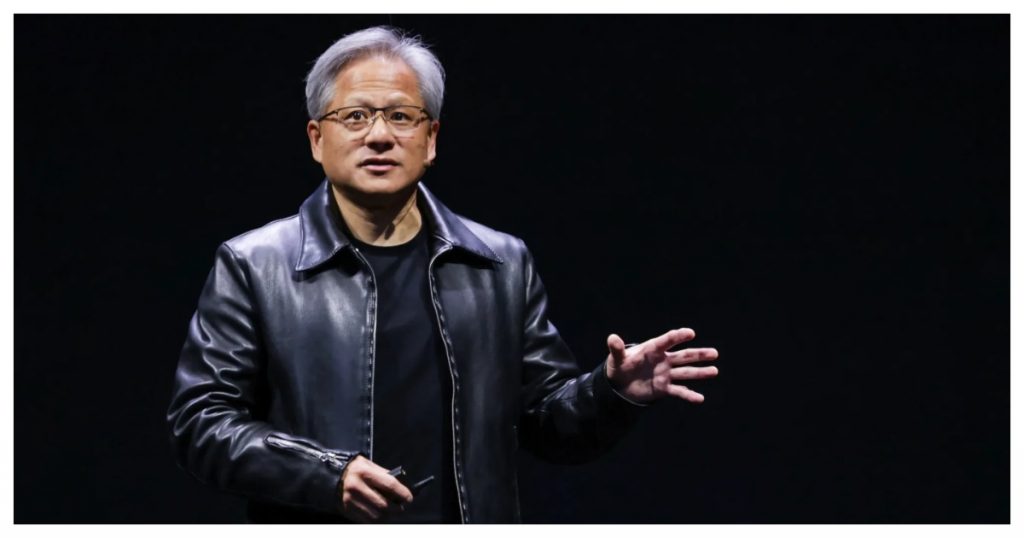
NVIDIA CEO Jensen Huang has pushed back hard against the prevailing narrative that AI is a job killer. Speaking at Computex 2026 in Taipei, Huang argued that AI is not shrinking the software engineering workforce — it’s expanding it, and the numbers back him up.
“$9 trillion of productivity is generated by $3 trillion of salary. That $3 trillion worth of salary is now producing nearly three times as much output. It’s effectively $9 trillion of productivity from $3 trillion of salaries. Does that make any sense? The difference is absolutely extraordinary. This is the potential, this is the promise of AI.”
The math Huang is referencing is grounded in GitHub data. Commits — updates to project files — have nearly tripled in the first few months of 2026, rising from 300 million in 2023 to 500 million in 2025 and continuing upward this year. That productivity explosion, Huang says, changes the hiring calculus entirely.
“The number of engineers, software engineers, is actually increasing. People talk about AI reducing jobs — complete nonsense. It’s causing more software engineers to be hired, and the reason for that is very simple.”
His logic is straightforward: when a single engineer can generate outsized economic output, the incentive is to hire more of them, not fewer.
“If you can hire a software engineer and you could generate $9 trillion worth of productive work, why wouldn’t you want to hire more software engineers? If that line was flat, then obviously people will hire fewer software engineers. But because the output is so incredible, people want to hire more software engineers. This is going to show up in our economy somehow soon. And so the first thing is: useful AI has arrived. Now, what does that mean?”
The implications of Huang’s argument are significant — and contested. He is essentially making a classic productivity-expansion case: that AI, like electricity or the internet before it, grows the economic pie rather than just redistributing slices of it. If engineers become dramatically more productive, demand for engineering work expands to match.
But the picture on the ground is more complicated. Software developer job postings in the US are down nearly 70% from their post-Covid peak, according to FRED data, suggesting that in the near term at least, companies are getting more out of fewer hires. A Stanford study found that AI is hitting entry-level jobs the hardest, with employment for software developers aged 22–25 falling nearly 20% from its 2022 peak. Salesforce has said it won’t hire any software engineers in 2025 after AI boosted its engineering output by over 30%. These aren’t outliers — they reflect a broader pattern of companies doing more with less, at least for now.
Huang’s own position has evolved. He famously warned that “you’re not going to lose your job to AI, but you’re going to lose your job to somebody who uses AI” — a framing that acknowledges disruption even while rejecting doom. His newer argument goes further: that the productivity gains are large enough to pull total headcount up, not just reshape who gets hired.
Whether that optimism proves correct may depend on whether companies choose to reinvest AI-driven productivity into more hiring or simply pocket the margin. History offers some comfort — 12 new categories of jobs are already emerging around AI integration, from workflow designers to model auditors. But history also shows that transitions take time, and the workers caught in the middle don’t always benefit from the eventual upswing. Huang is almost certainly right that useful AI has arrived. Whether its promise lands evenly is a different question.