There are plenty of concerns being raised about how IT services companies will adapt in the AI era, but one of the biggest players in the space seems confident of its ability to thrive in the new paradigm.
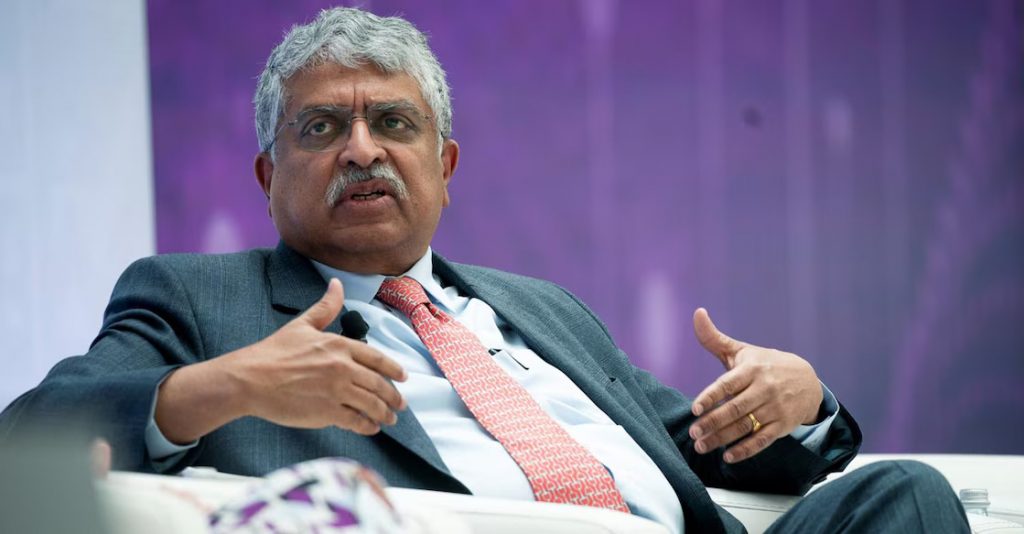
Infosys Chairman Nandan Nilekani addressed the existential question hanging over the Indian IT industry head-on, acknowledging that AI represents a technology transition unlike anything the sector has faced before. “Given that AI is a much larger and disruptive technology transition than ever before, the questions are louder and the doubts are more insistent,” he said. The core concern he named is one that the industry has been quietly wrestling with: if AI can automate coding, what exactly is the value proposition of a large IT services firm?
His answer was unambiguous. “AI will not replace companies like ours; it will amplify those who move with purpose and adapt with speed.”
The statement carries weight because Nilekani didn’t arrive at it by dismissing the disruption. He acknowledged that GenAI has fundamentally changed the software development landscape — and that the companies which survive this shift will be those that embrace the best tools while understanding what still requires human and institutional expertise. Enterprise context, he argued, is where that expertise lives. Large clients don’t just need code. They need solutions that fit within existing technology investments, meet data governance requirements specific to their organization, and are built with the kind of rigorous testing and cybersecurity architecture that no off-the-shelf AI tool is going to provide out of the box.
The framing matters. The concern Nilekani is pushing back has been voiced loudly by people with serious credibility. Vinod Khosla predicted that software IT services will “mostly disappear” in their current form because of AI, arguing that companies which don’t radically transform their business models won’t survive. Khosla’s concern was that AI lowers the cost of services so dramatically that incumbents face a race to the bottom — and that most of them are adjusting incrementally rather than transforming radically. That is about as direct a challenge to Nilekani’s optimism as one can find.
Nilekani’s counter-argument rests on what he calls the “AI deployment gap.” Enterprise clients, he said, are not short on AI tools — they are short on the ability to deploy those tools in a way that actually works within their existing infrastructure and obligations. That gap, in his view, is where firms like Infosys earn their keep. Closing it requires understanding a client’s systems, their regulatory environment, their legacy architecture, and their risk tolerance. It is work that sits well outside the scope of a coding assistant or a general-purpose model.
Three years into the GenAI era, that case is harder to dismiss than it might have seemed in 2022. The early predictions — that large IT firms would be rapidly hollowed out — have not materialized in a simple, linear way. What has emerged instead is a more complicated picture: enterprises want AI, but they are discovering that deploying it at scale inside their organizations is genuinely difficult, and the firms helping them do it are the ones with the deepest existing relationships and the most contextual knowledge. Whether that window stays open long enough for incumbents to fully adapt is the question Khosla has been pressing. Nilekani’s answer, at least, is that Infosys intends to be on the right side of it.