Chipmakers are looking to move up the value chain with model companies.
AMD has agreed to acquire World Labs, the spatial intelligence startup founded by AI pioneer Fei-Fei Li, in an all-stock deal valued at approximately $8.2 billion. Li will join AMD as Executive Vice President and Chief Scientist, reporting directly to CEO Lisa Su.
The transaction is expected to close by the end of 2026, subject to regulatory approvals and customary closing conditions. Once it does, the World Labs team will continue its work on AI model research as a frontier research group inside AMD. The price makes World Labs AMD’s second-largest acquisition ever, behind only its roughly $50 billion purchase of Xilinx in 2022.
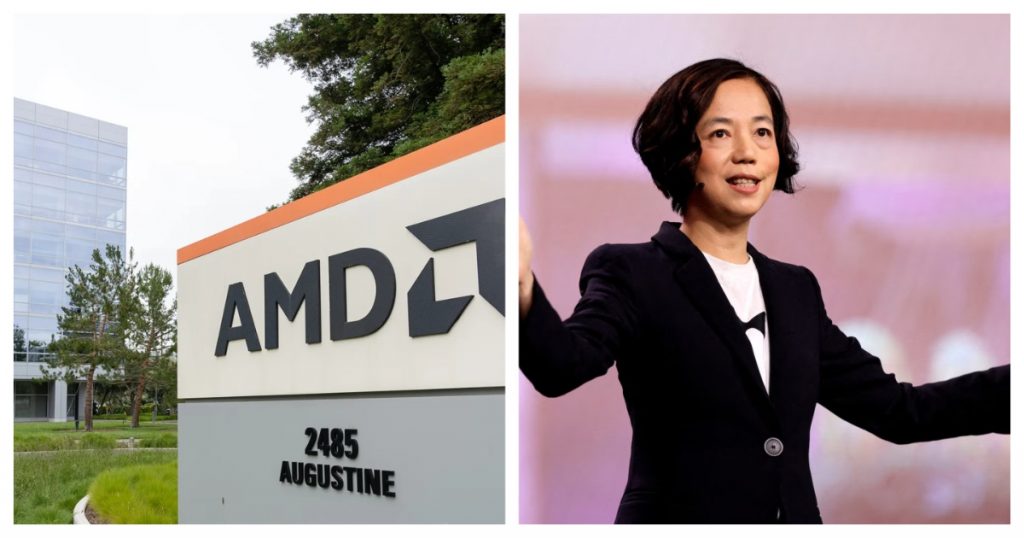
Why AMD wants a world models lab
The deal gives AMD something chipmakers rarely own: a frontier model lab. As AI moves beyond chatbots into reasoning, robotics, simulation and physical AI, the demands on compute infrastructure are becoming more varied. AMD says World Labs’ expertise will give it deeper insight into how workloads are evolving, and help shape its hardware, software and systems roadmaps.
The move also positions AMD against Nvidia, which has been expanding into physical AI and simulation with its own platforms.
Li made the hardware argument directly in her announcement post, writing that without a focused hardware effort, AI is “hobbled in efficiency.” She said scaling World Labs’ work required “getting closer to the hardware,” and described Su as an early investor and friend who has backed the company since its earliest days.
What AMD is buying
World Labs was founded at the beginning of 2024 by Li along with Ben Mildenhall and Justin Johnson, and is built around the idea that language alone isn’t enough for AI models to tackle real-world problems. The company raised $1 billion in fresh funding in February, in a round that included AMD, Nvidia and Autodesk, and launched Marble, its first commercial product, which generates explorable 3D worlds from text, images or video.
More recently, the company released Atlas, an “omni” world model that predicts new camera views from 2D images. Li says it has essentially solved sparse reconstruction, a long-standing computer vision problem, by combining generative models with multiview geometry, and it outperforms even specialized models on the task. World Labs also acquired robotics simulation startup SceniX in July, giving it a path from generated worlds to training robots.
According to Li, interest in Atlas has spanned RL environments for robotics, scene generation for therapy and entertainment, and real-world reconstruction for real estate, design and construction.
A long relationship
AMD and World Labs were already close. AMD participated in the latest funding round, and the two began a deep technical partnership last year focused on model training and inference optimization on AMD GPUs. Li has said that working together made a full combination feel like a natural next step.
For Li, the deal is another turn in a career that has moved from academia to industry and back to building. She created ImageNet, founded Google Cloud’s AI unit as chief scientist, and was founding director of Stanford’s Human-Centered AI institute before starting World Labs.
Li and AMD have both said they intend to keep pushing the frontier openly with the community and the wider ecosystem, with the goal of providing open models and platforms for running AI end to end, from hardware to software to models to data.