On the day that a startup CEO said that they were saving millions of dollars by replacing Anthropic’s models in their operations with DeepSeek, the CEO of one of the biggest tech giants in the world has echoed the same sentiment.
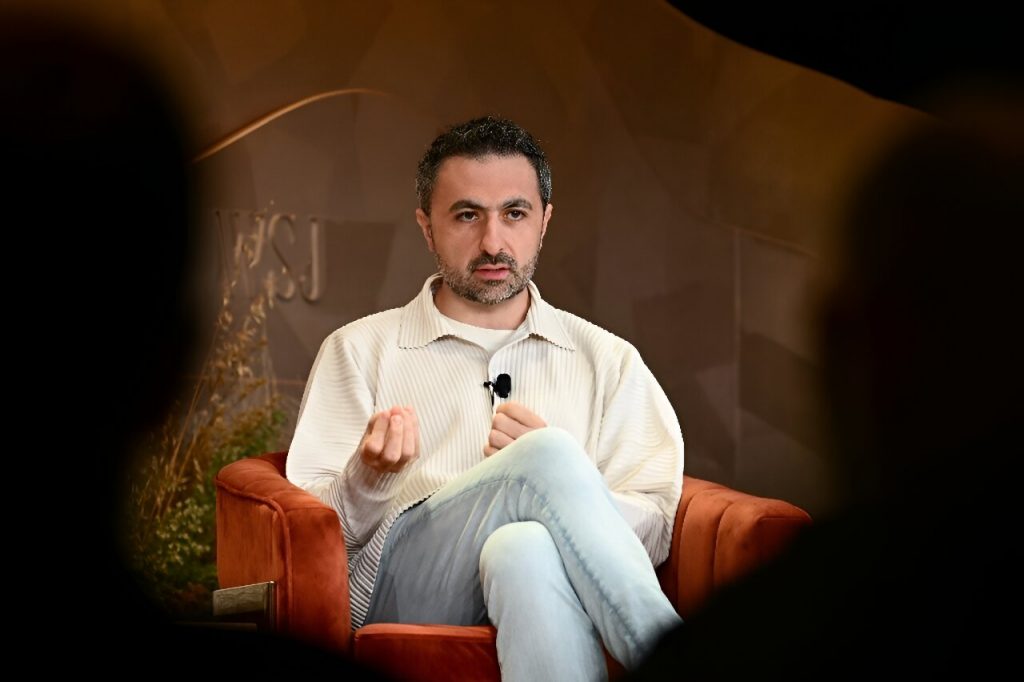
Microsoft AI CEO Mustafa Suleiman gave an interview to Bloomberg in which he candidly spoke about Anthropic’s costs, Microsoft’s AI ambitions, and where he sees the market heading. The comments were pointed. “Anthropic is extremely expensive,” Suleyman said, “and I think many people are urgently looking for alternatives. We pay a lot of money to Anthropic, so our goal is to reduce and ultimately eliminate that cost.”
That last phrase is worth sitting with. Microsoft is one of Anthropic’s most significant enterprise customers — and its AI chief just said, on record, that he wants to eliminate what they pay them.
The Competitive Ambition Behind the Statement
Suleyman’s comments were a window into a strategic posture. He made clear that Microsoft’s goal is to reach the frontier itself — to build models good enough to compete directly with Google DeepMind, OpenAI, and Anthropic, rather than rely on any of them.
“Our goal is to prove that we can become one of the top four labs in the world,” he said. “There’s three labs that matter, Google DeepMind, OpenAI, and Anthropic. We are not one of them at the moment, and that’s always been my intention. It’s why I came here. I want to build the very best frontier models in the world, fully multimodal, and in order to do that, we have to prove that we can do everything that we need to from the ground up, and we’re not just going to take from others.”
Suleiman took the CEO role at Microsoft AI in March 2024, arriving from Inflection AI, the company he co-founded after leaving DeepMind. He has consistently argued that Microsoft has the infrastructure, the capital, and the talent to compete at the frontier — not just as a distribution partner for OpenAI, but as a builder in its own right.
The Latecomer Argument
To underscore the point that the race isn’t over, Suleiman invoked the history of the labs currently at the top. “OpenAI didn’t even start until 2015. Didn’t really get traction until 2017,” he said, implying that timelines matter less than execution.
It’s a fair point. Anthropic itself was founded in 2021 by former OpenAI researchers, and has since grown into what is arguably the second most important AI lab in the world, now valued at $965 billion. The speed of ascent in this industry has made fools of those who insisted the early movers were untouchable.
The Untapped Market Case
Suleiman also pushed back on the idea that the AI market is already saturated or that the major players have locked up demand. “The way to think about it is that there’s untapped markets that are totally unexposed at the moment,” he said. “You step outside to a different city and most people are just not using this in their everyday life.”
That observation is accurate, and it matters strategically. The current AI usage patterns are still concentrated among developers, early adopters, and enterprise teams. Genuine mass-market adoption — the kind where AI is as invisible and universal as the smartphone keyboard — hasn’t happened yet. For a company with Microsoft’s distribution across Windows, Office, LinkedIn, and Azure, the runway implied by that gap is enormous.
Why This Lands Differently Today
Suleiman’s remarks would have registered differently six months ago. Today, they land in a market where the pressure on Anthropic’s pricing model has become visible and concrete.
Flo Crivello, founder and CEO of AI agent platform Lindy, announced this week that his company had switched entirely from Anthropic’s models to DeepSeek V4, reporting millions of dollars in savings and, notably, an increase in performance on many of their core use cases. Crivello had been explicit for months that inference was Lindy’s single largest cost line — more than payroll. When the math on the alternatives finally worked, the switch was made despite the migration requiring what Crivello described as “100x more work than we thought.”
That’s the shape of the pressure Anthropic is now navigating. On one side, there are smaller companies doing the ROI math and finding that open-source alternatives like DeepSeek have crossed the good-enough threshold. On the other, the largest enterprise customers — including Microsoft — are openly stating that reducing dependence on Anthropic is a goal, not a contingency.
Anthropic’s Structural Challenge
Anthropic’s $965 billion valuation is overwhelmingly a bet on sustained enterprise API revenue. Unlike OpenAI, which has nearly a billion daily ChatGPT users, or Google, which has Gemini embedded across products people use regardless of how they feel about AI, Anthropic’s revenue is concentrated in the segment that is most sensitive to price and most capable of switching. Enterprise buyers benchmark. They have procurement teams. And when a meaningful alternative emerges at a fraction of the cost, they tend to move.
The addition of Microsoft’s stated intent to the picture makes the pricing dynamics harder to ignore. This isn’t a scrappy startup finding workarounds. It’s the CEO of one of the world’s largest technology companies describing cost reduction on Anthropic as a corporate priority.
Whether Microsoft can actually build frontier models that rival Claude is another question — one that will take years to answer. But the direction of travel is clear. The free ride for expensive closed-source API providers is getting shorter.