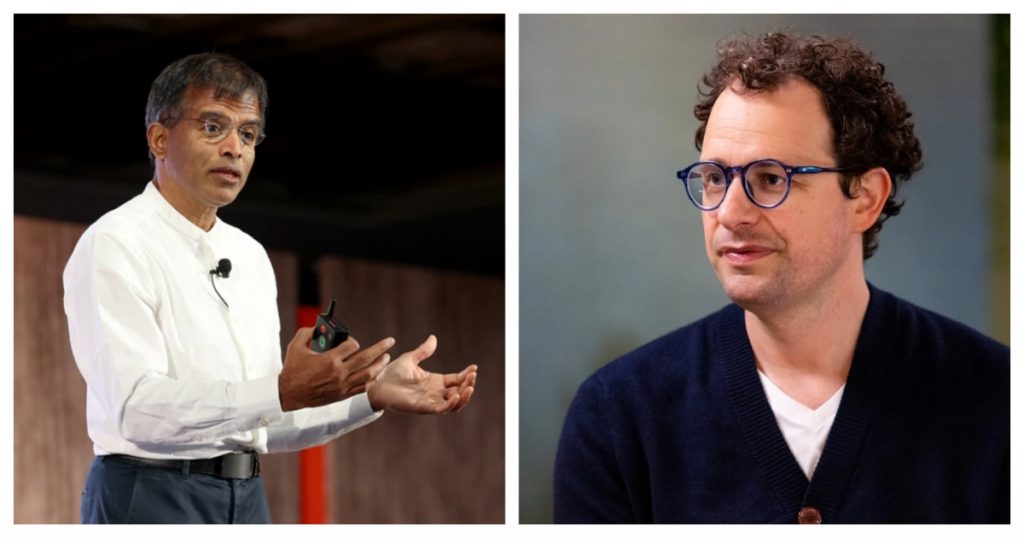
NYU Stern valuation professor Ashwath Damodaran has weighed in on Anthropic’s IPO, and his verdict on the company’s governance design is unsparing. In a new post valuing the Claude maker at $1.45 trillion, Damodaran singles out Anthropic’s combination of a public benefit corporation structure and its founder-controlled voting rights as one of the most self-serving setups he has seen among major IPOs, comparing it unfavorably to the dual-class structures at companies like Alphabet and Meta.
Anthropic is incorporated as a public benefit corporation, a structure that legally permits its board to weigh factors beyond shareholder returns when making decisions. Its prospectus spells this out directly, stating that the company may make choices that balance stockholder interests, the interests of those affected by its conduct, and its stated company purpose, even when doing so hurts business performance or the stock price in the short, medium, or long term.
Damodaran notes that given the public anxiety around AI as a destructive force, a worry CEO Dario Amodei has himself amplified, this kind of insulation from shareholder pressure could look like a safeguard. But he argues the real effect runs the other way: the structure does not protect society from AI’s harms so much as it concentrates decision-making power in a small group at the top of the company, on the hope that they wield it responsibly. For investors who have previously watched corporate leadership use ESG or “responsibility” language as cover for self-interested behavior, he suggests Anthropic’s design takes that same pattern to an extreme.
Layered on top of the PBC structure is Anthropic’s voting architecture, detailed in its S-1 filing. The company’s seven co-founders — Dario Amodei, Daniela Amodei, Tom Brown, Jack Clark, Jared Kaplan, Sam McCandlish, and Christopher Olah — hold their stock through an entity called Anthropic Founders LLC, which carries a single share of Class F common stock. That share is automatically entitled to 50.1% of total shareholder voting power on most matters put to a vote, regardless of how much the founders’ economic stake in the company gets diluted by future fundraising, acquisitions, or employee compensation. The arrangement holds as long as at least three of the seven founders retain a minimum ownership stake.
Separately, Anthropic’s Long-Term Benefit Trust, an independent body established in 2023 and run by trustees including former Federal Reserve Chair Ben Bernanke, holds a special Class T share that gives it the power to appoint a majority of the company’s board. Public investors buying into the IPO get ordinary Class A shares, worth one vote each, and little practical influence over either the board composition or the outcome of most shareholder votes.
Damodaran says he does not categorically rule out investing in companies with dual-class voting structures; he holds shares in Alphabet and Meta, both of which let founders retain outsized control through separate share classes. But he argues Anthropic’s combination of the two mechanisms, a PBC charter that gives the company legal cover to prioritize its mission over shareholder returns, stacked with a voting design engineered to keep control locked in founder hands indefinitely, goes further than anything those companies have done. It is this pairing, he writes, that he finds so deviously self-serving it would put Kim Jong Un to shame.
The comparison lands at a moment of unusually high scrutiny for Anthropic’s finances and governance. The company’s S-1 disclosed a $80.7 billion net loss for the first half of 2026 against $16.3 billion in revenue, figures that have fed into debate over whether Anthropic’s roughly trillion-dollar valuation range is justified by its underlying business or driven primarily by investor sentiment around the broader AI boom.
Damodaran’s larger point is less about Anthropic’s intentions and more about what the structure permits. A board shielded by PBC language, combined with a voting bloc that cannot be diluted away, gives Anthropic’s founders durable control that outlasts their shrinking ownership stake. Whether that insulation is used to safeguard the company’s safety mission or simply to entrench its leadership, Damodaran argues, is a bet public shareholders have no real way to enforce once they’ve bought in.