It appears that those most distant from the actual work seem to believe that AI can fully automate it.
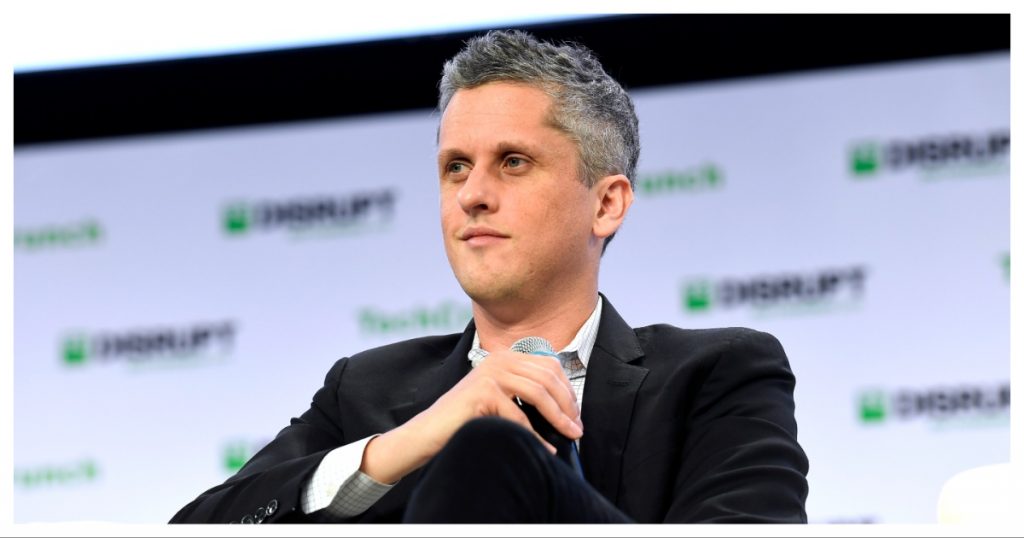
That’s the uncomfortable truth embedded in a recent post by Box CEO Aaron Levie. Levie’s argument is precise and pointed — CEOs are structurally positioned to misread what AI can actually do, because they interact with the technology at the demo layer, never at the delivery layer.
The Happy Path Problem
When a CEO fires up an AI agent and watches it generate a polished contract or spit out a working prototype, what they see is the output. What they don’t see is everything that has to happen next — the legal review, the clause verification, the integration with existing contract repositories, the edge cases the model confidently got wrong. They got the highlight reel. The engineering team gets the blooper reel.
Levie puts it bluntly: “Look, I made this awesome product prototype.” Yes, but you didn’t have to review the code before it went into production and fix a bunch of issues. “Look, I generated a contract.” Yes, but you didn’t verify all the terms before it goes out to the counterparty.
This is the happy path problem. AI, at its demo best, is extraordinarily compelling. The gap between a compelling demo and a production-grade, enterprise-reliable workflow is where AI projects go to die — and where the people closest to the work live every day.
Why CEOs Are Especially Vulnerable
This isn’t a criticism of intelligence. It’s a criticism of position. CEOs are, by design, removed from last-mile execution. That distance is what makes them effective strategists. But it also makes them unreliable judges of operational complexity.
When a CEO experiments with AI, they’re playing in a sandbox with no stakes, no review cycles, no compliance obligations, and no downstream dependencies. Of course it looks miraculous. There’s no one waiting on the other end to catch what the model hallucinated.
Meanwhile, Fortune 500 rank-and-file employees — the ones who actually have to deploy these systems — understand precisely how much invisible work surrounds any AI output worth trusting. They know what breaks, what needs to be checked, and what a model confidently wrong looks like in practice.
The Last Mile Is the Hard Part
Scale AI’s Alexandr Wang has made a related point about AI agent deployments: getting to 90% is relatively straightforward. Getting to 99% is where the real work lives — debugging edge cases, coordinating between agents, and handling everything that falls outside the training distribution. He draws the comparison to self-driving cars, an industry that has spent years getting humbled by the last mile.
Enterprise AI is no different. The prototype is the easy part. The hard part is the verification loop, the audit trail, the failure mode handling, the human-in-the-loop workflow that ensures the agent’s output can actually be trusted before it touches a customer, a counterparty, or a codebase.
Even Perplexity’s CEO Aravind Srinivas has flagged this — expressing skepticism about aggressive timelines for agentic workflows and pointing to unresolved challenges in security, web navigation, and system access that rarely show up in executive demos.
What Levie Is Actually Prescribing
Levie isn’t anti-AI. He runs a company whose future is directly tied to enterprise AI adoption. His prescription is the opposite of retreat: use AI more, not less. But use it in a way that forces contact with the real friction.
The best thing a CEO can do, he argues, is to use AI heavily enough that they come out the other side with an appreciation for both the upside and the real work. Not just the prototype. The code review. Not just the contract. The terms verification, the legacy contract integration, the workflow that makes it repeatable.
That’s a different kind of AI literacy than most executive AI workshops deliver. It requires CEOs to follow the workflow past the demo — into the messy middle where the actual value either gets captured or collapses.
A Pattern Worth Naming
Levie’s framing matters because it gives a name to something that’s been quietly distorting enterprise AI strategy for the past two years. Boards are setting timelines based on demo-layer impressions. Budgets are being allocated against outcomes that assume the happy path is the only path. And the people closest to execution — developers, legal teams, operations staff — are being asked to deliver on promises made by people who have never had to live with what the model gets wrong.
AI agents are promising, the productivity gains are real, and the technology is genuinely advancing. But between the demo and the dividend, there is an enormous amount of work that doesn’t show up in a LinkedIn post. Until more CEOs have done that work themselves, AI psychosis will remain an occupational hazard at the top of the org chart.