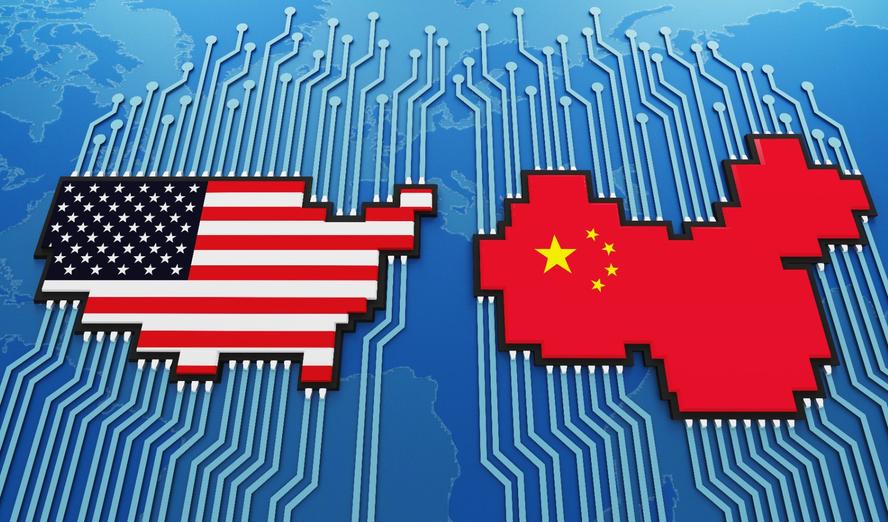
China is closing in on the US in terms of model capabilities, and it also seems to be preparing to match the US in the more ambitious parts of its AI agenda.
When Elon Musk revealed the AI1 satellite on June 8 — a 70-meter orbital data center with 150 kW of AI compute capacity, unveiled days before SpaceX’s Nasdaq debut — it looked like a distinctly American bet on the future of computing infrastructure. A week earlier, with far less fanfare, Beijing had already moved. On June 3, the city approved its first Space Computing Industry Innovation Center, led by Beijing University of Posts and Telecommunications (BUPT) alongside leading industry players. Within 24 hours, a second institution had taken shape: the Beijing Space Intelligent Computing Research Institute, set up in E-Town — the capital’s high-tech hub that already houses a cluster of robotics and AI firms — and led by a consortium that includes private rocket company LandSpace.
These are not research curiosities. The Space Computing Innovation Center is structured around six specific verticals: radiation-hardened, space-native AI chips; compute satellite platforms; space-optimized large language models; integrated space-ground networking; space security standards; and what Beijing is calling “tokenized” orbital compute operations — essentially a metered market for computing power delivered from orbit. The mandate, as Wang Shangguang, dean of Computer Science at BUPT, put it, is to connect the entire industrial chain of space computing, from chips and hardware through to applications.
What gives the announcements credibility is that China already has satellites in orbit doing this work. In May 2025, ADA Space and Zhejiang Lab launched the first 12 satellites of the Three-Body Computing Constellation aboard a Long March 2D rocket from Jiuquan. The constellation delivers 5 peta-operations per second and 30 terabytes of onboard storage across its first batch, and processes data directly in space rather than relaying it to the ground. Two of the satellites carry 8-billion-parameter AI models — one for remote sensing, one for astronomical analysis — among the largest AI models currently running in orbit. The roadmap calls for scaling to 2,800 satellites and 1,000 POPS of pooled compute by 2032. In early 2026, ADA Space deployed Alibaba’s Qwen3 on those satellites, making it the first general-purpose Chinese AI model to run entirely in orbit. More recently, ADA Space and Tencent signed a strategic agreement giving Tencent access to the constellation for AI agent deployment and enterprise applications.
There’s a strategic logic driving all of this that goes beyond national prestige. Ground-based data centers are hitting hard physical limits — land, water, power grid capacity — and AI demand keeps scaling faster than those constraints can be relieved. Space offers a way around the bottleneck: near-continuous solar power with no grid dependence, and passive heat rejection into the cold vacuum that eliminates the water-intensive cooling that makes terrestrial data centers so expensive to operate. China’s state-owned aerospace giant CASC integrated space-based data centers into its 15th Five-Year Plan in January 2026, targeting “gigawatt-scale space-based” infrastructure by 2030.
The chip problem is the one Beijing is most publicly acknowledging. Radiation-hardened processors capable of running serious AI workloads in orbit don’t yet exist at commercial scale — for any country. China’s labs are working on it: Global Times reported in November 2025 that one team plans to complete “tape-out and full validation of radiation-hardened, high-efficiency, domestically developed space-grade computing chips” in 2026, alongside an orbital launch to validate multi-GPU satellite architecture. The BUPT-led center has explicitly listed radiation-hardened space-native AI chips as its first priority. The difficulty is real — no single hardware option currently dominates both radiation tolerance and compute density — but that’s precisely why locking in an industrial coalition now, before the technology fully matures, makes sense from a standards and supply-chain perspective.
The broader pattern here is the same one DeepSeek made visible on the model side: China coordinating across government, universities, and private firms to move fast in areas where the US has an early lead. On space AI compute, the US advantage right now is almost entirely held by SpaceX — which controls the launch vehicle, the satellite bus, the chip roadmap through its Terafab joint venture with Tesla, and the AI workloads through the merged xAI entity. That vertical integration is genuinely hard to replicate. What China is doing instead is building a coalition: state-chartered institutions setting the research agenda, commercial satellite companies providing the orbital layer, chip firms contributing the hardware, and major tech companies like Tencent and Alibaba integrating on the application side.
Whether the coalition model catches up to SpaceX’s integrated stack is an open question. Eric Schmidt has argued that sustained capital is the real constraint in AI, and that the depth of American private markets gives the US a durable structural edge. That may hold for ground-based AI infrastructure. In orbit, the rules are different. Launch costs, radiation engineering, thermal management, and inter-satellite networking are problems that state backing can accelerate just as much as venture capital — and in some respects more, given the long development timelines and the defense and intelligence applications that make sovereign investment particularly motivated. The race for space-based AI compute is early, and the timeline to meaningful capacity is measured in years. But China’s institutional machinery is already running.