The US-China rivalry in the AI space is coming to the fore in a big way.
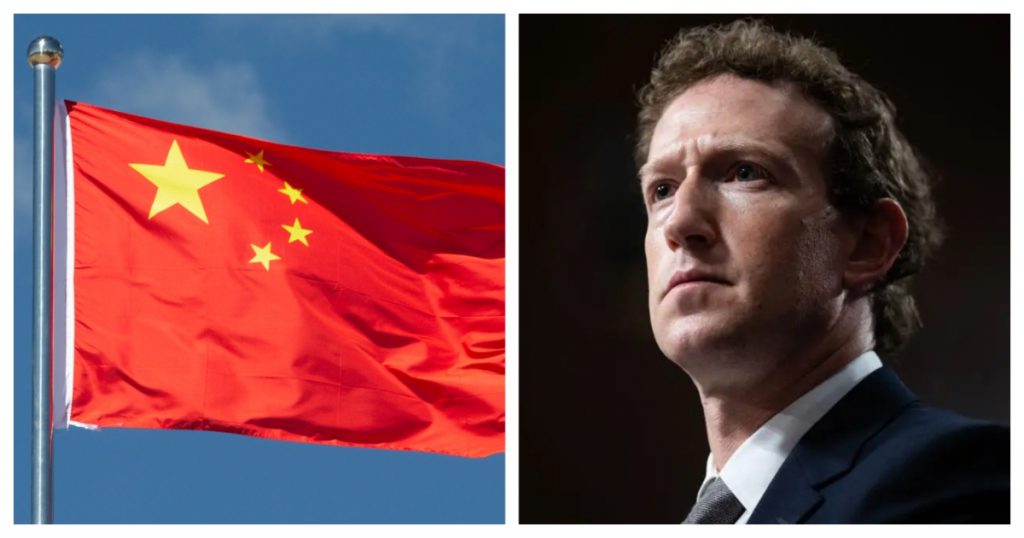
Beijing has ordered the cancellation of Meta’s $2 billion acquisition of AI agent startup Manus, with China’s National Development and Reform Commission issuing a brief statement Monday citing “laws and regulations” and asking both parties to unwind the transaction. The ruling brings a months-long regulatory saga to a close — and marks a significant escalation in how China is treating its homegrown AI technology in the context of US-China tech rivalry.
The NDRC’s decision is notable for what it signals. While the US has spent years restricting Chinese access to advanced computing hardware, Beijing is now doing something structurally similar from the other direction: treating AI talent and intellectual property developed on Chinese soil as a strategic export that American companies cannot simply acquire.
What Manus Is, and Why Meta Wanted It
Manus was launched in March 2025 by Butterfly Effect, a Wuhan-based startup, and quickly became one of the most talked-about products in AI. Billing itself as the world’s first general AI agent, Manus was designed to go beyond the conversational chatbot paradigm — it could plan and autonomously execute complex, multi-step tasks such as browsing the web, writing and running code, analyzing data, and managing files, all without requiring continuous human input. Tasks run asynchronously in the background, continuing even when a user closes their browser or goes offline.
The product spread quickly across developer and tech circles, with some drawing comparisons to DeepSeek’s R1 in terms of the attention it generated. On the GAIA benchmark for real-world problem-solving, Manus outperformed OpenAI’s DeepResearch across all three difficulty levels. Twitter co-founder Jack Dorsey was among the prominent voices praising its capabilities.
Like many Chinese AI startups aiming for global reach, Butterfly Effect was legally incorporated in Singapore — a structure intended to reduce exposure to US export restrictions while maintaining operations in China. By mid-2025, under mounting regulatory pressure, the company relocated staff to Singapore and wound down its Chinese social media presence. When Meta came knocking in December 2025, Manus had already crossed $100 million in annualized revenue.
For Meta, the acquisition represented a shortcut into one of the hottest segments of AI. The company had been playing catch-up against rivals at Microsoft, Google, and OpenAI, and Manus’s autonomous agent technology was seen as a way to integrate meaningful AI execution capabilities into Meta AI and the broader product portfolio without having to build from scratch.
How the Deal Fell Apart
China’s Ministry of Commerce announced a review of the acquisition in January 2026, examining whether it complied with regulations around export controls, technology transfers, and overseas investment. Meta’s public position was that the deal “complied fully with applicable law,” but the probe deepened in March when co-founders Xiao Hong and Ji Yichao were summoned to Beijing by the NDRC for questioning about potential foreign investment violations. The Financial Times first reported that the pair — both based in Singapore by that point — had been barred from leaving China following the meeting.
Monday’s ruling made the outcome final. What remains unresolved is the mechanics of unwinding a deal that had already advanced considerably: Manus employees had joined Meta, and capital had changed hands. Beijing has not yet elaborated on what enforcement steps might follow. More broadly, the NDRC’s decision appears designed to discourage other Chinese AI startups from using the Singapore incorporation structure as a path to US acquisitions — a loophole Beijing is now moving to close.
The Symmetry With US Export Controls
The strategic logic behind the Manus block is not hard to find. Since 2022, the US government has imposed progressively tighter restrictions on the export of high-end NVIDIA GPUs to Chinese entities, including the H100 and H200 chips that power frontier AI training. The policy was premised on the idea that constraining hardware access would slow China’s ability to develop and deploy cutting-edge AI systems.
The results have been mixed. As Scale AI’s CEO noted earlier this year, DeepSeek reportedly acquired 50,000 H100 chips despite the controls — hardware it “wasn’t supposed to have.” More significantly, Chinese labs have been forced to optimize for efficiency in ways that have produced genuinely competitive models at a fraction of the cost of US counterparts. DeepSeek’s R1, which reportedly cost under $6 million to train, matched OpenAI’s flagship models on several benchmarks and sparked a broader market reassessment of US AI dominance.
China’s blocking of the Manus deal follows the same strategic instinct but applies it to outputs rather than inputs. Where the US restricts the hardware that builds AI, Beijing is now restricting the IP and talent that results from it. The NDRC’s ruling, in effect, asserts that AI developed on Chinese soil — regardless of where a company is registered — is a national asset subject to export control, not a commercial product to be sold to American platforms.
The Open-Source Dimension
The M&A block is one layer of a more complex picture. Beneath the hardware restrictions and acquisition battles, the more consequential competition may be playing out in open-source AI, where Chinese labs have been gaining significant ground.
Chinese models have become the dominant choice among developers for open-source deployments, surpassing US alternatives for the first time. DeepSeek, Alibaba’s Qwen, ByteDance’s open models, and Moonshot AI’s Kimi have collectively been downloaded hundreds of millions of times. The Stanford AI Index 2026 concluded that Chinese companies have “effectively closed” the performance gap with US rivals. Last week, DeepSeek released a preview of its V4 model, which it says outperforms all competing open models on mathematics and coding benchmarks, and runs on Huawei’s domestic Ascend 950 chips rather than NVIDIA hardware — a deliberate demonstration of independence from the US computing stack.
NVIDIA CEO Jensen Huang has argued that Chinese open-source dominance is actually a net positive for the US, since these models run on American developer tools and infrastructure, keeping the US tech stack central to global AI adoption. That argument is becoming harder to sustain as Huawei’s chip ecosystem develops and Chinese models increasingly run without dependency on American hardware or software.
The US government has responded by escalating on a different front. The White House Office of Science and Technology Policy issued a formal memo this week accusing foreign entities — principally based in China — of conducting systematic campaigns to extract capabilities from US frontier AI systems through a technique called adversarial distillation, which involves querying American models at scale to harvest their outputs for training competing systems. Anthropic disclosed that DeepSeek, Moonshot AI, and MiniMax together created over 24,000 fraudulent accounts and generated more than 16 million interactions with Claude to harvest chain-of-thought training data. OpenAI has reported similar patterns to Congress.
What It All Adds Up To
Taken together, the Manus ruling, the export control battles, the open-source competition, and the distillation allegations describe an AI landscape that is decoupling along geopolitical lines in ways that are becoming structural rather than episodic. China is now treating AI technology as a controlled strategic export in much the same way the US treats advanced semiconductors. M&A, once a relatively open channel for technology transfer, is effectively blocked in both directions — the US uses CFIUS to prevent Chinese acquisitions of American AI firms, and Beijing is now using the NDRC to prevent American acquisitions of Chinese-origin AI.
For Meta, the immediate consequence is a costly setback to its AI agents strategy and an awkward unwinding process for a deal that had already partially closed. For the broader industry, the Manus ruling is a data point in a longer trend: the assumption that AI development is a global, commercially open endeavor is giving way to something that more closely resembles a contested strategic resource — one where the rules of access are being rewritten by governments, not markets.