Liang Wenfeng, the reclusive founder of DeepSeek, is now the richest person among the world’s AI model builders. His net worth has jumped to $36 billion, according to the Bloomberg Billionaires Index, more than double the $16.7 billion he was worth just weeks ago. That places him ahead of Anthropic’s Dario Amodei and OpenAI’s Greg Brockman, the two executives who had previously anchored the upper end of AI founder wealth.
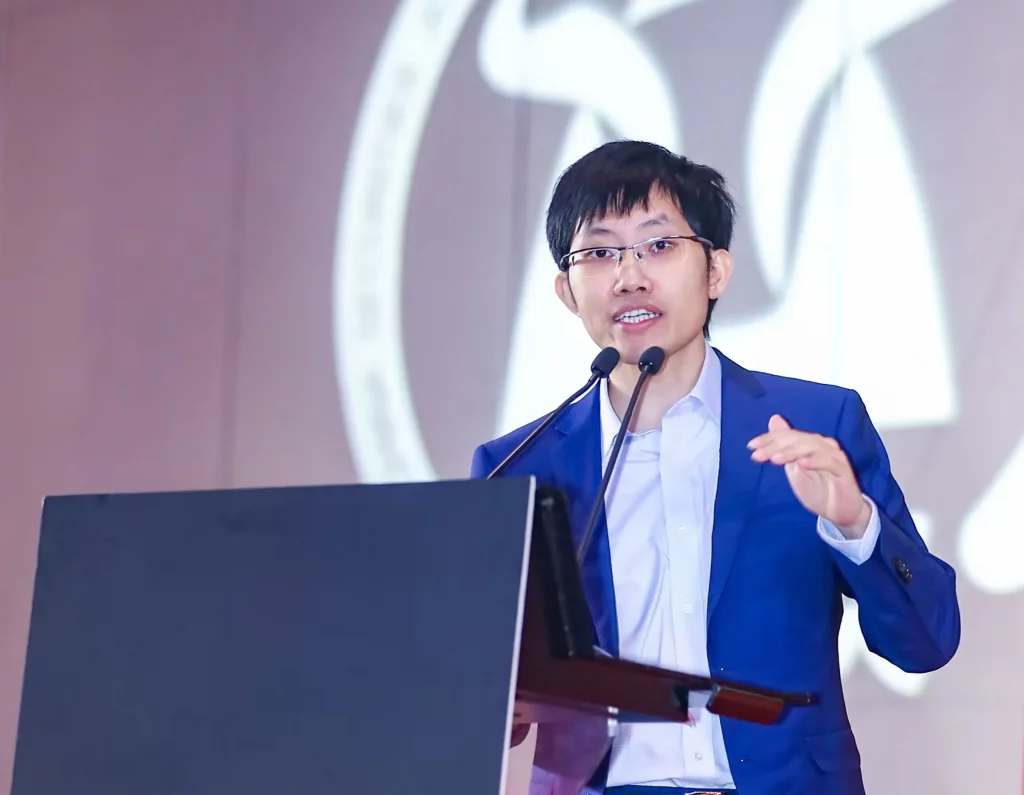
The jump traces back to one event: DeepSeek’s first-ever external fundraising round, which closed in June at more than $7.4 billion. That round pushed DeepSeek’s valuation to roughly $50 billion, a sixfold increase from where the company sat in early 2025. Bloomberg updated its calculation on July 13 to reflect the new numbers, and the result was a $19 billion overnight gain for Liang.
How the math works out
Liang is calculated to own at least 78% of DeepSeek, down from an earlier estimate of 84% after the round diluted his stake. He didn’t just open the door for outside money either — he put in about $3 billion of his own, roughly 40% of the entire round, funded by profits from High-Flyer, the quantitative hedge fund he co-founded back in 2015.
The terms he set for everyone else who wanted in were unusually one-sided. Investors had to commit their capital to a limited partnership that Liang personally controls, agree to a five-year lock-up, and accept zero voting rights. The only entity exempted from those terms was China’s National Artificial Intelligence Industry Investment Fund, which received direct equity and full voting rights. Everyone else simply had to trust him.
That structure is why a $50 billion company can make its founder worth $36 billion, while OpenAI, valued at $852 billion, and Anthropic, at $965 billion, produce founders worth a fraction of that. Concentration of ownership, not the size of the company, is doing the heavy lifting here.
Where that leaves Amodei and Brockman
Dario Amodei’s stake in Anthropic is worth around $8 billion, per Bloomberg, following the company’s $65 billion raise in May at a $965 billion valuation.
Brockman’s position is murkier and, in some ways, larger. During his testimony in the Musk v. OpenAI trial in May, he disclosed under oath that his OpenAI stake was worth somewhere between $20 billion and $30 billion, despite never having personally invested a dollar into the company. Bloomberg’s analysis credits him with roughly $25 billion. Even at that figure, he still trails Liang by a wide margin. Sam Altman, notably, holds no direct equity in OpenAI at all, which keeps him out of this particular ranking entirely.
It’s worth flagging that Bloomberg’s ranking is specifically for founders whose companies build AI models — it excludes chipmakers and broader AI supply chain firms. Cambricon’s Chen Tianshi, for instance, is sitting on a stake worth close to $40 billion, which would top Liang’s fortune if hardware companies were part of the same list.
The business behind the number
DeepSeek’s rise in personal wealth for Liang has paralleled the company’s rise in actual usage. DeepSeek currently commands 16.3% of all token volume on OpenRouter, more than any other single AI provider, including Google, Anthropic and OpenAI. Its latest V4 series of models are priced at a fraction of what Western frontier labs charge, and that pricing gap has been pulling real enterprise workloads away from more established players.
DeepSeek’s R1 model, released in January 2025, was the moment that first put Liang on the map internationally — it briefly wiped roughly $600 billion off Nvidia’s market cap and forced the rest of the industry to reckon with how cheaply a competitive model could be trained. Since then, the company has kept shipping, even as rivals like Alibaba’s Qwen and Moonshot’s Kimi have occasionally pulled ahead of it on individual benchmarks.
None of DeepSeek’s outside investors have any say in where the company goes next. Liang built his fortune on a hedge fund most people outside China had never heard of, then used it to fund an AI lab that briefly rattled Silicon Valley and Wall Street on the same day. The new fundraising round makes him richer than the men running OpenAI and Anthropic, even though his company is worth a fraction of what theirs are. It’s a reminder that in AI, the size of your slice can matter more than the size of the pie.