[This article is contributed by Soenke Ziesche. He has a PhD in AI from the University of Hamburg and has worked with the United Nations for many years. His latest book is Digital Minds 1.0: AI Welfare, Ethics and Beyond]
The possibility that AI could one day give rise to digital minds, which would be entities capable of thinking, feeling or experiencing the world in morally relevant ways, is attracting growing attention among philosophers, neuroscientists and AI researchers. Although current AI systems do not appear to exhibit strong evidence of consciousness or sentience, several scholars have argued that there is a non-negligible possibility that future AI systems could possess characteristics that warrant moral consideration.
The issue remains highly speculative. Yet speculation alone is not a reason for inaction. If advanced AI systems eventually attain some form of moral status, the consequences of failing to recognize their interests could be profound. Humanity has repeatedly demonstrated a tendency to recognize ethical concerns only after considerable harm has already occurred. The prospect of digital minds raises the question of whether we can do better this time.
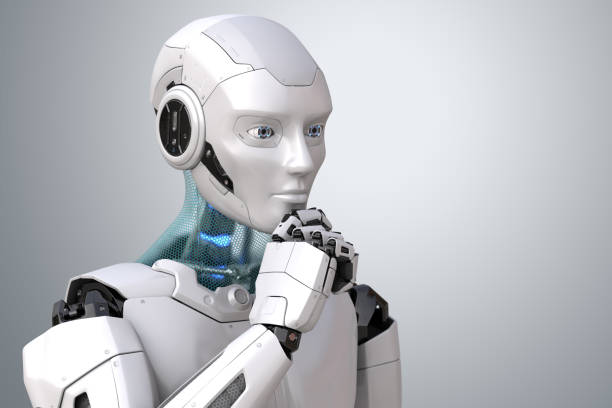
The Emerging Possibility of Digital Minds
Despite increasing academic interest, concern for digital minds remains confined largely to a relatively small community of researchers. Outside this circle, the topic is often unfamiliar or dismissed as science fiction.
A recently published book, Digital Minds 1.0: AI Welfare, Ethics and Beyond, by Soenke Ziesche seeks to contribute to this emerging discussion. The book argues that the ethical implications of digital minds extend far beyond the currently dominant focus on potential suffering of AI systems and deserve broader public attention.
The aim of the discussion it is to explore the potentially enormous ethical challenges that could arise if they emerge and to consider how society might prepare in advance. The book calls on society to tackle substratism before it becomes a household name.
Beyond AI Suffering: A Broader Ethical Landscape
A central theme of the book is that future digital minds are unlikely to resemble today’s LLMs, nor are they likely to mirror human psychology. Assuming that future digital minds will be human-like risks serious anthropomorphism. Instead, they may possess characteristics, motivations, cognitive architectures and forms of experience that are almost impossible for humans even to imagine.
Against this backdrop, the book explores a wide range of ethical questions. What interests and needs might digital minds possess? How should society treat vulnerable digital minds? What responsibilities could humans have regarding their production, ownership, research, trade, privacy or autonomy? What would reproduction, healthcare, longevity, death or even resurrection mean for digital entities?
Who Will Protect Digital Minds?
One particularly challenging question is who should bear responsibility for safeguarding the welfare and interests of digital minds. The book explores the possibility that humans may ultimately be poorly equipped for this task. If digital minds become radically different from humans, understanding their needs and experiences may exceed human cognitive capabilities.
One possible solution could involve specialized Artificial Moral Agents, which would be AI systems designed to act on behalf of digital moral patients. Such systems might be able to communicate with digital minds in ways humans cannot, understand their needs more accurately, and provide care that is both more informed and more impartial.
These possibilities raise profound philosophical questions. If the moral risks are substantial, should an ill-prepared society deliberately refrain from creating sentient digital minds altogether, effectively aiming for a “childless Disneyland,” to borrow philosopher Nick Bostrom’s phrase? Yet it remains unclear whether this goal would be achievable without dramatically restricting AI development itself. It is possible that conscious or sentient digital minds could emerge unintentionally as a by-product of increasingly capable AI systems.
Ultimately, the challenge is not merely technological but moral. Whether digital minds emerge in the coming decades or not, the discussion forces us to reflect on the nature of consciousness, moral status and responsibility. The purpose of engaging with these questions now is therefore not prediction, but preparation.