ElevenLabs has closed a $300 million employee tender offer that values the AI voice company at $22 billion, twice the valuation it carried at its Series D in February. The tender was led by Wellington Management and T. Rowe Price.
The valuation marks a steep climb for a company that raised its first round in 2022 at a valuation of just $9 million. That round was announced alongside Eleven v1, the company’s first text-to-speech model. Four years on, ElevenLabs has just released two new text-to-speech models, Eleven v4 and v4 Turbo, which it describes as its fastest and most emotive yet and says are already leading independent benchmarks.
Enterprise now 55% of revenue
The growth story at ElevenLabs is increasingly about enterprise rather than individual creators. Businesses now account for 55% of the company’s revenue, driven by adoption of ElevenAgents, its platform for deploying conversational AI agents connected to a customer’s knowledge and systems. ElevenLabs says its technology is used in daily operations at five of the world’s ten largest tech companies, five of the ten largest insurers, and four of the ten largest telecom firms.
Since February, organisations including Stripe, Deutsche Telekom, DoorDash’s SevenRooms, Admiral, Customers Bank and Cadence have rolled out ElevenAgents, as have the governments of Ukraine and Greece. The company says its agents now handle more than 15 million conversations a week, three times the level in February, for tasks such as processing refunds, renewing insurance policies, upgrading phone plans and booking healthcare appointments. ElevenAgents’ annual recurring revenue has also more than tripled over the same period.
ElevenLabs also pointed to an analysis of its customers which found that voice agents resolve issues 31% faster than chat agents on average. The company says the number of businesses rolling out multichannel support on its platform, where a single customer conversation might move from WhatsApp to a phone call to an email, has doubled since February. It has also built verticalised agent products for financial services, healthcare, government, retail and telecom.
A step up from its earlier rounds
The latest valuation continues a rapid run for the company. ElevenLabs was valued at $3.3 billion when it raised $180 million in early 2025, and the $500 million Series D led by Sequoia Capital took that to $11 billion this February. The tender doubles that figure again in about eight months.
A number of new investors participated in the tender, including EQT, Goldman Sachs, GIC, OTPP, Sapphire Ventures, and BDT & MSD. Existing backers Andreessen Horowitz, Lightspeed, ICONIQ, D.E. Shaw, Evantic, DISRUPTIVE and Alkeon also took part.
Research, product and deployment
ElevenLabs says its edge comes from owning the full stack, working at three levels. On the research side, it builds models that speak, listen and translate in more than 90 languages, and recent releases include Eleven v4 and Scribe v2 Medical, a transcription model built for healthcare. On the product side, it often builds the application layer itself so that models and products can be tuned together for expressiveness, latency and reliability. On deployment, forward-deployed engineers and researchers work with customers to adapt its models and agents to local language, culture, industry and brand.
The company has also been widening its product range beyond voice, including with ElevenMusic, a platform for creating and discovering AI-generated music.
“The combination of research, product, and deployment has proved an important structural advantage,” said Emma Norchet of T. Rowe Price, adding that the team can improve every layer of the stack and deliver value quickly to enterprise clients.
Liquidity for employees
Unlike a primary funding round, a tender offer lets staff sell existing shares rather than bringing new capital into the company. ElevenLabs now has over 800 employees, and says it is committed to giving them regular opportunities for liquidity. The company has also made a point of running a flat organisation, having done away with job titles altogether.
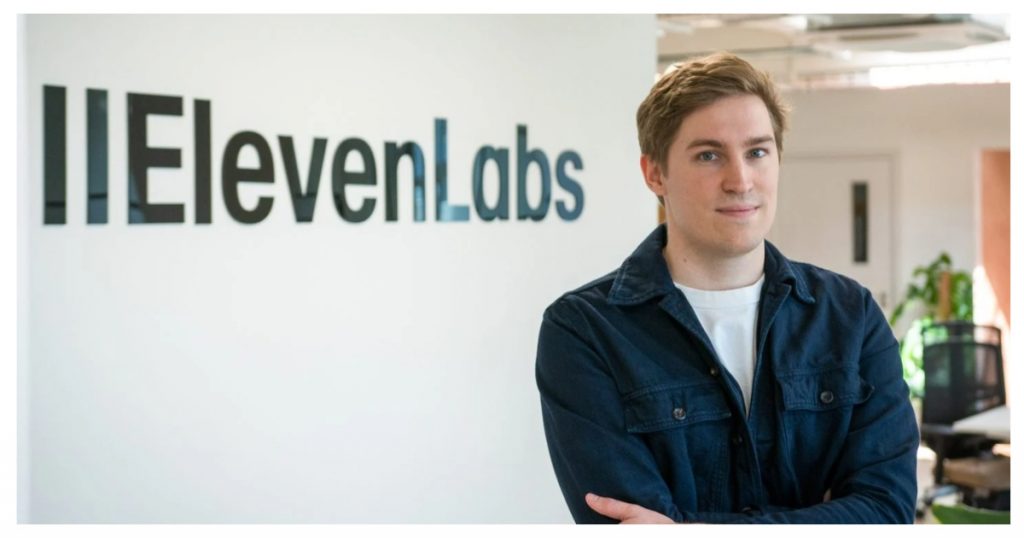
Cofounder and CEO Mati Staniszewski said it was important to let employees share in some of the value they are creating for customers and the wider world as the company grows. In a post announcing the tender, he said the round was “for the team that built the last four years.”
Staniszewski has framed the company’s mission as making AI interact with people the way people interact with each other, arguing that how well AI communicates will largely determine how widely it is adopted across the economy.