Four MIT classmates who dropped out of college in 2022 to build an AI coding tool are now sitting on a combined $22 billion, after SpaceX agreed to buy their company, Cursor, for $60 billion in an all-stock deal this week.
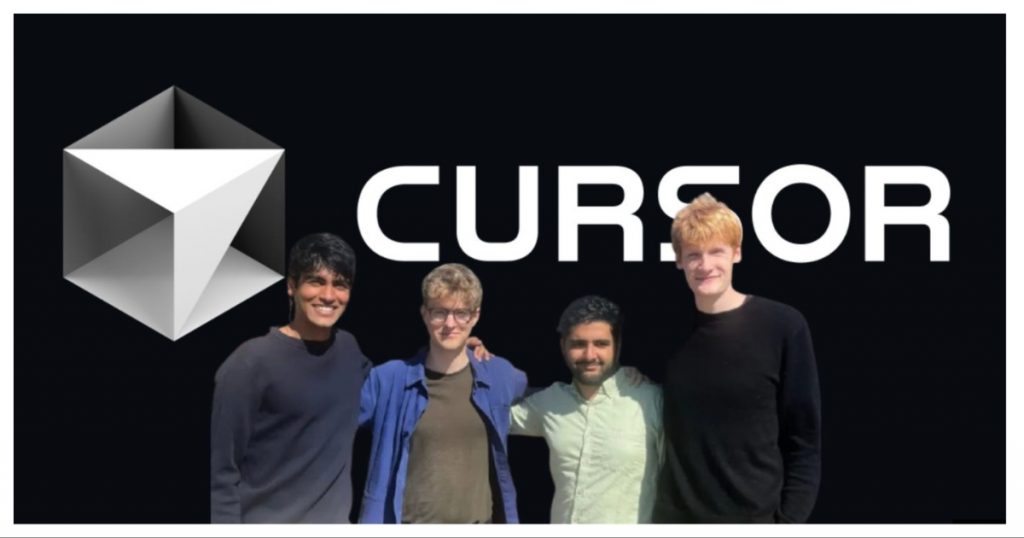
Michael Truell, Sualeh Asif, Aman Sanger and Arvid Lunnemark co-founded Anysphere, the company behind Cursor, in 2022. None of them is older than 26. Each holds roughly a 9% stake in the company, which the Bloomberg Billionaires Index now values at $5.5 billion apiece, a sharp climb from the $1.3 billion each was worth back in November, when Cursor last priced a funding round at $29.3 billion. The co-founders crossed into billionaire territory only seven months ago. They have now multiplied that fortune more than fourfold, largely on the back of SpaceX’s own stock, since the acquisition is structured entirely in equity. Each Anysphere share will convert into SpaceX Class A stock once the deal closes, which the companies expect sometime in the third quarter of this year.
The deal caps a run that started in a fairly unglamorous place. Truell, Asif, Sanger and Lunnemark met as undergraduates at MIT and initially set out to build an AI copilot for mechanical engineers, a field none of them had any formal background in. Truell described the early going on a podcast last year as “a blind man and the elephant problem from the get-go.” After a few months of going nowhere, the four pivoted to something closer to their own training, an AI-native code editor, and incorporated Anysphere later that year, turning down standard tech-industry job offers in the process.
The company’s rise from there has been one of the steeper climbs software has seen. The OpenAI Startup Fund backed Anysphere’s $8 million seed round in 2023. A Series A the following year, led by Andreessen Horowitz, valued the company at $400 million. Cursor crossed $100 million in annualised revenue by January 2025, doubled that figure within two months, and hit $1 billion in annualised revenue by November, the same month Anysphere’s Series D priced the company at $29.3 billion and made all four founders billionaires on paper for the first time. By this June, that revenue figure had climbed to roughly $4 billion, with the company claiming its tools are used across 64-67% of the Fortune 500 and write more than a billion lines of code a day.
SpaceX’s interest in Cursor wasn’t sudden. The two companies had already struck an agreement back in April giving SpaceX the option to either acquire Cursor outright for $60 billion or pay $10 billion for continued access to its models, structured around a joint effort to train a coding model using Colossus, SpaceX’s supercomputer cluster. SpaceX chose to wait until after its own IPO to exercise that option, in part to avoid extra paperwork during the listing process. With the listing now behind it, having made Elon Musk the world’s first trillionaire and pushed SpaceX’s market cap past $2.5 trillion, the company has gone ahead with the buyout. Markets approved: SpaceX shares jumped as much as 16% on the announcement, which meant the all-stock deal effectively funded itself within hours of trading.
Of the four founders, Lunnemark’s path to this payday has been the most unusual. A math olympiad gold medalist from Sweden who worked briefly as a quant trader at Jane Street before MIT, he stepped away from Cursor in October to start his own venture focused on “safer AI,” writing on his blog at the time that he was leaving with “a mix of feelings.” He is still being counted among the four billionaires this week, suggesting his stake survived the exit largely intact.
The strategic logic on SpaceX’s side centers on Grok, the AI model under its xAI division, which has struggled to compete in coding despite Musk’s broader AI ambitions. Analysts have framed the purchase as an attempt to give Grok’s coding capabilities a jolt using Cursor’s distribution among professional developers and a research team with a working product, including Composer 2.5, Cursor’s in-house model that already ranks third on Artificial Analysis’s coding benchmark behind Claude Code and Codex. SpaceX President Gwynne Shotwell told CNBC the companies plan to “collaborate closely,” adding that Cursor’s existing models give SpaceX something to learn from rather than build from scratch.
The acquisition also continues a consolidation race that has been playing out around Cursor for over a year. OpenAI explored buying the company before turning instead to rival Windsurf, and Google entered the same market with its own AI-native editor, Antigravity, despite having backed Cursor’s last funding round only months earlier. Nearly every major AI lab has, at some point, tried to get closer to the team SpaceX has now locked down.
For Truell, Asif, Sanger and Lunnemark, the bigger story may simply be how little time it took. Four years ago they were college dropouts pitching an idea to mechanical engineers who had no use for it. Today they are among the youngest multibillionaires in tech history, with the bulk of that wealth arriving in the space of a single year.