AI progress is sure leading to some odd resignation letters.
A senior Google engineer has resigned from the company, saying he could no longer continue working on technology meant to make AI systems faster and cheaper at a moment when he believes AI is already moving faster than society can handle.
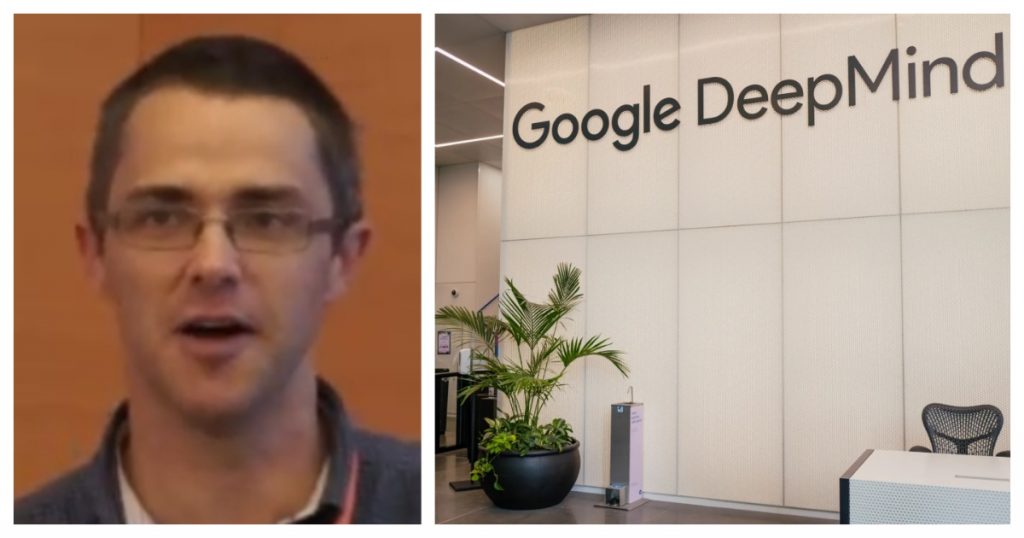
Robert O’Callahan, a longtime Google Deepmind engineer based in New Zealand, announced his resignation in a blog post titled “Goodbye Google,” in which he said his team’s work on next-generation chip design tools for AI hardware was fundamentally at odds with his own convictions about the pace of AI development. “My team’s goal is ultimately to make AI much cheaper and lower-latency, and I don’t think that’s good for people right now,” he wrote, adding that he firmly believes “AI progress is currently far too rapid.”
O’Callahan is not a typical Silicon Valley name. He has spent decades in the tech industry but has lived in New Zealand for most of that time, putting him outside both the American tech bubble and the “rationalist community” whose warnings about AI he says nonetheless deserve serious consideration. He is also an elder and occasional lay preacher at a Presbyterian church in Auckland, and describes his decision to leave in explicitly religious terms, saying that ignoring the impact of his work “would not be a Jesus-following thing to do.” Outside Google, he is known for building and maintaining Pernosco and rr, tools used for debugging software, and he plans to keep working on both.
His specific role was not on AI capability research itself but on improving tools used in chip design — work he said he had rationalized for a while as “relatively harmless,” until he concluded its main effect would be accelerating the development of a new generation of AI chips. Faster, cheaper chips, he argued, would make AI more pervasive and more capable, particularly given that labs have learned to boost model performance simply by running more inference at scale. He said he raised his reservations directly with his manager before ultimately deciding to leave, and chose to stay on long enough to hand off his work responsibly rather than depart abruptly.
O’Callahan was careful to distance his decision from the wave of high-profile AI safety departures that have dominated headlines in recent weeks, saying the timing was coincidental and driven mostly by a long-planned backpacking trip. Even so, his resignation lands in the middle of a broader reckoning inside frontier AI labs over the speed of development. Most notably, Anthropic pretraining researcher Jacob Coxon quit earlier this month, saying that people actually building frontier systems privately believe the technology could pose an existential risk to humanity within the decade, and that neither Anthropic nor OpenAI, his two former employers, was acting responsibly given that belief. Coxon’s post went viral, drawing endorsement from Anthropic’s own alignment researchers and eventually prompting Anthropic CEO Dario Amodei to say publicly that he agreed with Coxon more than he disagreed with him.
Now it is worth noting some reasons for skepticism about how much any of this reveals about the industry as a whole. Google, Anthropic and OpenAI each employ thousands of people, so a handful of departures, however widely shared online, may not amount to a meaningful trend rather than a small number of individuals making personal choices. Many of the researchers and engineers involved, including at senior levels, have also already accumulated significant wealth through equity in these companies, which raises the possibility that some are simply choosing to move on to other pursuits rather than being driven primarily by newfound alarm about AI’s trajectory. And as with any public resignation statement, there is no way to independently verify that the stated reasons are the full or only story; people leaving jobs sometimes have additional personal, financial or interpersonal motivations they do not disclose publicly.
But O’Callahan’s exit nevertheless adds a hardware and infrastructure angle to a resignation trend that, until now, has been dominated by safety and alignment researchers rather than engineers working further down the AI supply chain. Whether more departures follow from teams working on the physical infrastructure of AI — chips, data centers and inference systems — rather than model training itself remains to be seen. For now, O’Callahan says he does not have a fixed plan beyond continuing his existing open-source work and exploring how AI agents debug code, adding only that he wants whatever he builds next to be “unambiguously pro-human.”