The money is pouring into AI-led drug discovery, and the company at the front of the line just got a lot more of it.
Isomorphic Labs, the Alphabet-owned AI drug design company founded by Google DeepMind CEO Demis Hassabis, has closed a $5 billion Series C funding round co-led by Greenoaks and Sequoia Capital. Hassabis announced the raise on X, saying the funding would accelerate the company’s mission to “Solve All Disease.”
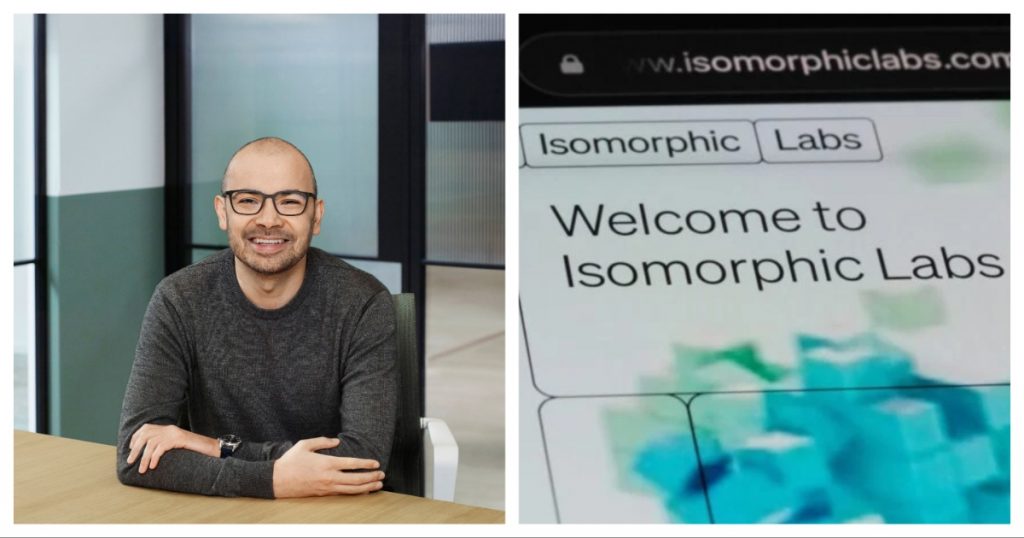
“Thrilled to announce $5B in funding for @IsomorphicLabs to accelerate our mission to Solve All Disease,” Hassabis wrote. “We continue to make rapid progress reimagining drug design from first principles with AI to radically cut the time & cost to find new medicines. Gradually, then all at once…”
The round was oversubscribed. Andreessen Horowitz (a16z) and several other new investors joined Greenoaks and Sequoia, while Alphabet continued to invest significantly. Existing backers Thrive Capital, MGX, GV, CapitalG, Temasek and the UK Sovereign AI Fund also participated. Isomorphic didn’t disclose a valuation, though Bloomberg had reported earlier this month that the company was in talks to raise around $5 billion at a valuation of roughly $50 billion.
A Rapid Fundraising Run
The pace of Isomorphic’s fundraising has been remarkable. The company raised its first external round of $600 million, led by Thrive Capital, in March 2025. It followed that with a $2.1 billion Series B, also led by Thrive, in May 2026. Barely six months later, it has now more than doubled that figure with the Series C, taking its total external funding to around $7.7 billion.
The investor lineup also tells a story. Sequoia and Greenoaks are two of the most prominent growth investors in Silicon Valley, and a16z’s participation means three of the biggest names in venture capital are now betting on Isomorphic’s approach.
Where The Money Will Go
Isomorphic says it will use the capital to scale its proprietary drug design engine, IsoDDE, which is a set of foundational simulation models that work across multiple therapeutic areas and drug modalities, supported by in-house AI agents that reason over complex biological systems. The funding will also go toward building out the company’s pipeline of AI-designed drug candidates, a partner ecosystem around disease biology, global AI-led bioengineering infrastructure, and AI-first translational and clinical development capabilities to move candidates into trials.
The company says it has seen positive preclinical results in oncology and immunology, both in its internal programs and with partners, and expects these to lead to clinical entry. Isomorphic has partnerships with pharma giants including Novartis, Eli Lilly and Johnson & Johnson.
“Our drug design engine is generating molecules with unprecedented precision and speed,” Hassabis said in the company’s announcement, adding that the round would help it build foundational biology models and move its first therapeutic programs toward clinical trials.
“Every week we are making repeatable scientific advancements enabled by our models,” said Max Jaderberg, President of Isomorphic Labs. “These translate directly into better molecular profiles with the potential to be new medicines and unlock some of the hardest problems in drug discovery.”
Investors were equally bullish. “Discovering and developing new medicines is an optimization challenge of almost infinite scale,” said Neil Mehta, Founder and Managing Partner at Greenoaks. Sequoia partner Konstantine Buhler said that “Isomorphic Labs is building foundational technology for the future of medicine.”
From AlphaFold To A Drug Pipeline
Isomorphic was spun out of DeepMind in 2021, building on the success of AlphaFold, the AI system that predicted the structures of virtually all known proteins and earned Hassabis and John Jumper the 2024 Nobel Prize in Chemistry. The company co-developed AlphaFold 3 with Google DeepMind, and its newer IsoDDE engine is reported to significantly outperform AlphaFold 3 on difficult benchmarks such as predicting how drugs bind to novel protein pockets.
But as Isomorphic itself acknowledges, a protein structure isn’t a medicine. A drug has to hit its target, avoid hitting similar molecules, and safely change the course of a disease. That’s the far harder problem the company is now trying to crack, and the one that will ultimately determine whether its sky-high funding is justified.
Hassabis has been talking about this goal for a while. He has said that AI could let humanity have a real crack at solving all disease in the next 10-15 years, and had earlier predicted that the first AI-created drugs would be in clinics by the end of 2025. That timeline has slipped somewhat. While Isomorphic said last year it was “very close” to starting human trials for AI-generated medicines, it is yet to put a drug into the clinic, and is still describing its first therapeutic programs as moving “toward” trials.
The Bet On AI-Designed Medicines
The stakes are enormous. Developing a single new drug traditionally takes more than a decade and costs billions of dollars, with the vast majority of candidates failing along the way. If AI can shift most of the discovery process from the wet lab to the computer, as Hassabis has long argued, it could compress those timelines from years to months and dramatically cut the cost of bringing new medicines to market.
Investors are clearly willing to pay up for that possibility. A $5 billion raise is the kind of number usually reserved for frontier AI labs building large language models, not drug discovery startups that are yet to put a molecule into humans. It dwarfs the rounds raised by rivals in the AI drug discovery space, and signals that the market sees Isomorphic less as a biotech and more as a foundational AI company that happens to be pointed at biology.
The next milestone to watch won’t be a valuation, though. It will be whether Isomorphic’s first AI-designed drug candidates actually enter human trials, and how they perform once they get there. With $5 billion in fresh capital and some of the biggest names in tech backing it, Isomorphic now has the runway to find out. As Hassabis put it: gradually, then all at once.