Former OpenAI Scientist Ilya Sutskever hadn’t allowed a peep to come out from SSI, his new venture, but he now has indicated that the company is onto something.
NVIDIA and Safe Superintelligence Inc. (SSI) announced a long-term partnership on Monday, with the chipmaker making what it called a “substantial investment” in Sutskever’s company. Bloomberg reported the number behind that vague language: $5 billion, one of the largest checks NVIDIA has written for a single AI lab. In exchange, SSI gets access to NVIDIA’s next-generation Vera Rubin platform, which the company says will expand its compute by an order of magnitude.
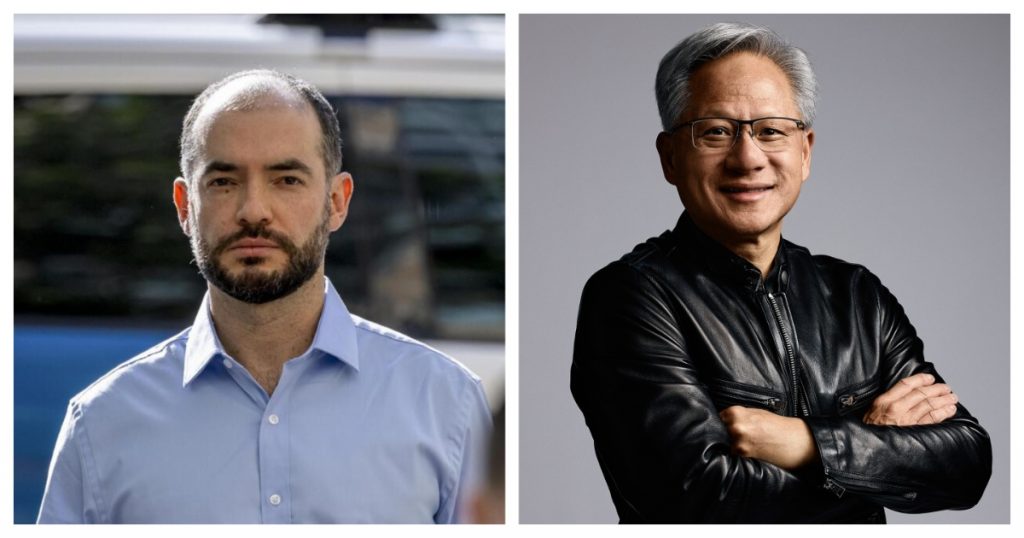
That’s a striking jump for a company that has spent two years saying almost nothing about what it’s actually building. SSI was founded in June 2024 by Sutskever, along with Daniel Gross and Daniel Levy, with a single stated mission: reach safe superintelligence, and do it without the distraction of shipping products along the way. SSI raised $1 billion within months of launching, and has since climbed to a $32 billion valuation, all while employing only a few dozen people and publishing nothing about its research.
The deal itself
NVIDIA framed the arrangement as the result of due diligence it doesn’t usually get to do. In its press release, the company said it had been granted “rare access” into SSI’s closely guarded research before deciding to invest, and that the partnership was designed to accelerate the startup’s next phase of growth. Beyond the capital and the compute, the two companies said they will also collaborate on the technical advancement of NVIDIA’s current and future platforms, with SSI’s research feeding back into how NVIDIA builds its chips.
Jensen Huang, NVIDIA’s founder and CEO, tied the investment directly to Sutskever’s track record rather than to any product SSI has shown. “Ilya has pioneered fundamental breakthroughs at the foundation of modern AI, beginning with AlexNet,” Huang said. “We are excited to see what new breakthroughs SSI will discover powered by our Vera Rubin platform.”
Sutskever’s own statement was shorter, and pointed at the thing everyone in the industry has been asking about SSI since it launched: what is it actually doing with all that money and silence. “We have research that is worthy of scaling up, and having access to a big NVIDIA computer will let us do so,” he said. “We’re incredibly proud to be partnering with Jensen and the NVIDIA team, and we are confident that our big bet on the Vera Rubin platform will take us to the next level.”
Daniel Levy, SSI’s co-founder, posted his own take on X shortly after the announcement: “Deep learning happens when a small, cracked team operates a big computer. The computer just got bigger.”
From TPUs to Grace Blackwell’s successor
The NVIDIA deal marks a notable shift in SSI’s infrastructure story. Since April 2025, SSI’s compute needs had largely been served by Google Cloud, which supplied the startup with its Ironwood TPU v7p chips, capable of being deployed in pods of over 9,000 units. Alphabet was also an investor in SSI at the time, giving Google both an equity stake and a critical-path role as the company’s cloud vendor. The TPU relationship was read across the industry as an unusual break from the default choice of NVIDIA GPUs that almost every other frontier lab, from OpenAI to Anthropic, relies on for training.
SSI hasn’t said whether the Vera Rubin systems will replace that TPU infrastructure or simply run alongside it. Large labs increasingly hedge across multiple hardware providers given how constrained compute supply remains, and SSI now appears to be doing the same, just with far more capital behind it than most.
Why NVIDIA is doing this
NVIDIA’s investment in SSI isn’t really about the return on a single check, even a $5 billion one. It’s part of a pattern the company has been building for a while now, where it takes equity positions in the very labs buying its chips, locking in demand while also getting a front-row seat into research that could shape how the next generation of hardware gets designed. NVIDIA has already backed OpenAI, xAI, and several other labs in recent years, and the SSI deal extends that strategy into a company that, unlike its peers, has no product, no revenue, and no near-term plan to have either.
That’s precisely what makes the bet notable. SSI has previously turned down a Meta acquisition offer, according to a CNBC report, preferring to stay independent and keep pursuing its research on its own terms. Sutskever has argued publicly that scaling existing model architectures with more data and bigger clusters is running into diminishing returns, and that SSI’s approach is built around finding new scientific ideas rather than just brute-forcing progress. NVIDIA is essentially betting that if anyone can find that next idea, it’s the person who helped build AlexNet and shaped the GPT line at OpenAI, and that being close to him when he finds it is worth billions upfront.
For SSI, the calculus is simpler. Research ambitions mean nothing without the compute to test them at scale, and Sutskever has now secured two of the industry’s largest chip suppliers as both backers and infrastructure partners. Whatever SSI has been building quietly for two years, it’s about to get a lot more room to run.