It turns out that seeing AI in action for the first time takes your breath away, even if you’re the President of the United States.
A new book by Maggie Haberman and Jonathan Swan, Regime Change: Inside the Imperial Presidency of Donald Trump, describes a moment inside the Oval Office where OpenAI president Greg Brockman hooked his laptop up to a TV near Trump’s chair and pulled up the ChatGPT interface. According to the book, Trump had walked into the meeting looking exhausted, and the expression on his face changed the moment the chatbot appeared on screen, shifting into something closer to open curiosity.
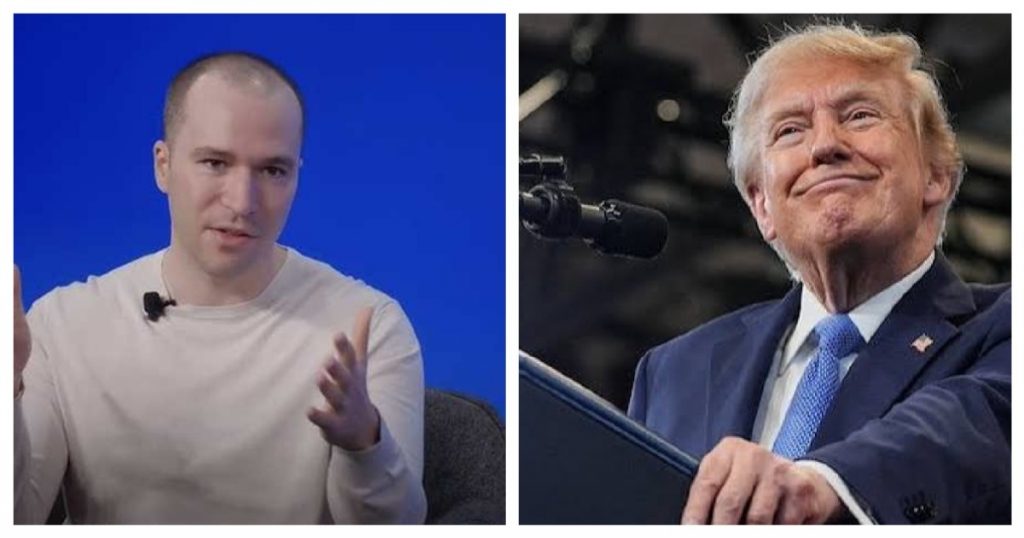
To make the point land, Brockman didn’t just talk about what the model could do. He pasted in the full text of an executive order on AI policy from Trump’s first term and asked ChatGPT to condense it into a single sentence where every word began with the same letter. The answer appeared almost instantly. Brockman then asked the model to rework the same order into a poem, and it did that too.
Trump reportedly read through the poem line by line, taken aback by how polished the language sounded. “Those words it’s using,” he said, according to the book. “They’re beautiful.” He then turned to one of his aides in the room and joked that the technology might end up taking his job. The aide, apparently already a ChatGPT user, told the President he’d been using it himself and that it had sharpened his own work.
That appears to have been the turning point in the meeting. Trump, according to the account in the book, grew genuinely curious about the mechanics behind the tool and pressed Brockman and the other OpenAI executive present on how the technology was actually built, and where its limits were.
A Demo Built To Impress
The choice of material for the demo was deliberate. Trump’s first-term executive order on AI, signed back in 2019, was the kind of document a sitting president would recognize instantly, and using AI to rewrite his own policy language in a constrained, almost playful format was a clever way to show off the model’s flexibility without requiring any technical explanation upfront. Reworking a government document into a poem is not the kind of demo most enterprise software gets to run, and it seems to have worked precisely because it didn’t feel like a pitch.
It also fits into a broader pattern of how OpenAI has approached Washington since Trump’s return to office. Brockman and Sam Altman have spent the past year building a far closer relationship with the administration than existed during the Biden years, when AI safety regulation was the dominant theme coming out of the White House. Trump’s own AI executive order, signed shortly after his second inauguration, rolled back the previous administration’s safety-reporting requirements and directed agencies to draft a new AI Action Plan aimed at cementing American dominance in the field, a framing that lines up closely with the message OpenAI’s leadership has been pushing in its own public statements.
Why This Moment Matters
Anecdotes like this tend to get dismissed as color, the kind of scene that makes for a good book excerpt but doesn’t really tell you anything. That reading misses the point here. A demo that gets a head of state personally invested in a specific product, rather than just briefed on a policy category, changes how that administration engages with the company behind it going forward.
OpenAI has clearly understood this. The company has leaned into government-facing partnerships over the last year, from federal deployment deals to direct engagement with officials on AI policy, and Brockman himself has increasingly taken on the role of the company’s technical face in rooms where a policy pitch alone would not land the same way. Getting a reaction like Trump’s, on camera or off, is the kind of validation that shapes how a company gets treated by an administration that has made AI leadership a stated national priority.
The book’s account also offers a small window into how differently AI tools read to people encountering them without the daily familiarity that has built up across the tech industry. For most people who write prompts every day, a constrained rewrite or an instant poem is a parlor trick. For someone experiencing it live for the first time, it can look like something else entirely.