AI researchers might not have a lot of time left to contribute to its development, a senior AI researcher has said.
Jerry Tworek spent close to seven years at OpenAI, rising to become one of the most influential researchers behind the company’s biggest breakthroughs, including GPT-4, ChatGPT, Codex, and the o1 and o3 reasoning models. He left the company in January 2026 to start Core Automation, an AI research lab where he now serves as CEO. In a recent interview, Tworek was asked how much longer humans will remain central to AI research itself, and his answer was surprisingly specific.
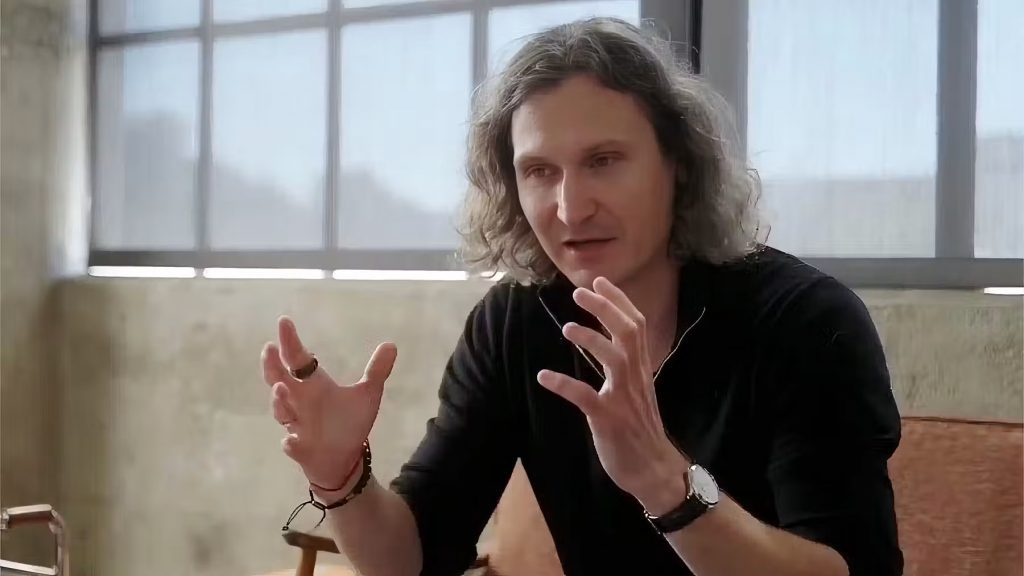
“We still have some time. My rough estimate is at least two years for when human researchers are a meaningful part of the AI research discovery process,” Tworek said. He described a mood that has taken hold across AI labs, where researchers keep telling each other that the work they are doing right now may not need them for much longer. “What you often hear AI researchers repeating right now in the field is, ‘Oh, we have a last few days of work, so let’s work while we still can, and then we’ll all take a break.'”
That sense of urgency, Tworek admitted, has come at a personal cost. “The industry is moving very quickly, and it is in many ways very exhausting, very tiring to be working at this pace for so many years,” he said. Yet he framed the exhaustion as a trade-off worth making, given what he believes is at stake. “It’s probably worth it if we think these are the most important times of our career and our work,” he added.
Tworek was careful, however, not to overstate where AI systems currently stand when it comes to actually doing research rather than assisting with it. He argued that today’s models still fall well short of functioning as independent researchers, no matter how quickly the industry around them is moving. “We’ll have to have agents have a much higher level understanding of a research field and research directions,” he said, pointing to a gap between what models can generate and what they can actually understand.
According to Tworek, the core problem is not a lack of ideas from AI systems, but the quality of those ideas. “Anyone who has used models for doing research has seen that agents generate pretty low quality insights,” he said. “They are high creativity, but high creativity in a very low quality way in which the ideas are generated. They are diverse. They are generally not very good.” He went on to describe what he sees as the real bottleneck: the accumulated depth that comes from a human career spent inside a single field. “There is no such thing yet for a model to represent humans who have spent 10 years researching AI technologies, who have this level of depth of understanding of the objects we are really working with here.”
Tworek’s framing sits somewhere between the more dramatic predictions coming out of Silicon Valley and the skepticism of researchers who think AI-driven science is still mostly a marketing narrative. His comments echo a broader claim made by OpenAI CFO Sarah Friar, who has said AI agents will soon be capable of producing novel scientific discoveries and theorems on their own. Google DeepMind has already pointed to early signs of this shift with AlphaEvolve, which CEO Demis Hassabis has said is now being used to discover and optimize its own algorithms, a loop he described as flywheels spinning faster by the day. Even outside the big labs, independent efforts like Andrej Karpathy’s autoresearch project have shown that agents can run dozens of AI research experiments unsupervised overnight, inching toward the kind of closed-loop, self-improving research process Tworek is describing, even if the output quality has not caught up yet.
What makes Tworek’s timeline notable is that he is not an outside commentator speculating about a field he doesn’t understand. He built the very systems he is now describing as insufficient, and he chose to leave one of the best-resourced labs in the world to pursue this problem on his own terms. His departure fits into a pattern of senior researchers walking away from the giants of the industry to chase research directions they feel are being neglected in favour of shipping products, a trend that has already produced a growing list of AI researchers quitting big labs to launch their own startups. If the people building frontier models are the ones setting the clock on their own obsolescence, it says something about how close the industry believes it actually is, regardless of how the technology is marketed to the public.
The two-year window also raises uncomfortable questions for the thousands of people currently training to become AI researchers, and for the labs currently hiring them. If agents genuinely close the gap on research taste and depth within that timeframe, the value of a PhD spent developing intuition for a narrow field could shrink dramatically, even as demand for people who can supervise, direct, and validate those same agents grows. Tworek’s own answer hints at this future without fully spelling it out: research may not disappear as a human activity, but the researchers left standing will likely be the ones managing fleets of agents rather than generating ideas from scratch, a shift that mirrors the disruption already spreading through software engineering and other white-collar fields as automation moves up the skill ladder rather than staying confined to routine tasks.