As the internet’s security teams scramble through what has become one of the roughest weeks in recent memory, Anthropic’s Deputy Chief Information Security Officer Jason D. Clinton has a message that is less reassurance than resignation: this was always coming, and it’s going to get worse before it gets better.
Clinton’s warning, posted on X, came as emergency patches for two critical PHP flaws were still rippling through infrastructure teams worldwide, and as India’s eMudhra grappled with the fallout of a digital certificate key compromise that has become a case study in how a single credentialing mistake can cascade into a global scare.
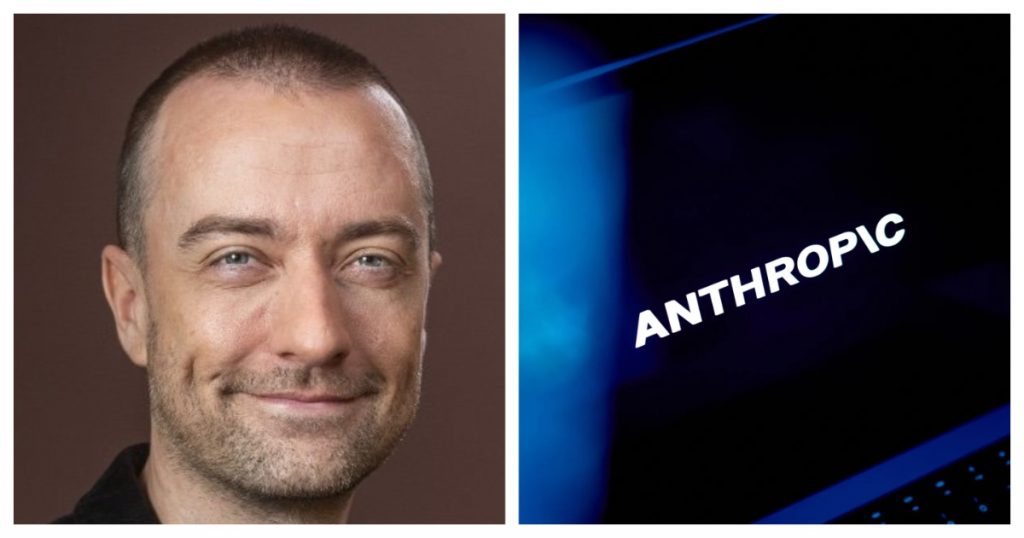
“As bad as things have gotten in the past 4 days, they are going to get a lot worse before they get better,” Clinton wrote. “Security leaders, never let a crisis go to waste: please go to your boards and ask for help right now. Not for AI, for the basics. (We need to hold on for ~18 months.)”
The post was quote-tweeted by a user accusing Anthropic and its peers of having created the very conditions security teams are now scrambling to contain — “you and your cohorts created this monster, now you want us to help you clean it up.” Clinton’s reply was blunt and unapologetic: “yes. it was always going to be this way. we tried to warn the world.”
A ‘Vulnerability Tsunami’ Still Building
Clinton’s framing centers on what he has previously described as a coming “vulnerability tsunami” — a period in which frontier AI models become dramatically better at discovering, analyzing, and weaponizing software flaws faster than defenders can patch them. He has argued that network isolation measures like air-gaps and data diodes need to be deployed now, rather than organizations waiting on software fixes that may not arrive in time.
The week’s events have offered an unsettling preview of that dynamic. Cloudflare’s CEO noted that exploit attempts against the disclosed PHP vulnerabilities jumped from thousands to millions within hours of the flaw becoming public, while governments moved to get ahead of the fallout — Japan’s Prime Minister and the US’s FBI both issued public warnings urging organizations to patch immediately. Separately, cloud platform Railway disclosed its own security breach that paused deployments over fears that customer secrets had been exposed, and Node.js shipped fixes for a critical Brotli decoder flaw that could have allowed remote code execution, prompting Vercel to push out emergency firewall rules of its own.
eMudhra, meanwhile, has become the week’s cautionary tale on the business side of the ledger. The company’s certificate key compromise has wiped out roughly ₹1,450 crore in market capitalization in just two days, after its stock had already hit a 20% lower circuit on news of the breach. Security researchers piecing through the incident have speculated that the root cause may have been startlingly basic — a possible mix-up between 256-bit cryptographic keys and the numbers 0 through 256, the kind of fundamental hygiene failure Clinton insists needs fixing before any AI-native defense can help.
Notably, the dual-use nature of frontier models has already shown up in this very episode: OpenAI has said its GPT-5.6 Sol model helped flag one of the critical PHP vulnerabilities that triggered the scramble — a reminder that the same capabilities helping defenders audit code can just as easily be turned toward finding and exploiting flaws first.
The 18-Month Horizon: Getting To ‘Vulnzero’
Asked by users on X what actually changes at the end of his proposed 18-month window, Clinton pointed to a term he’s coined for the eventual destination: “vulnzero.” His explanation is that scaling laws will eventually push frontier-level, “cyber mythos-class” reasoning capabilities down into small, cheap models — inexpensive enough that software teams everywhere can run real-time security verification on every line of code for fractions of a cent, stopping entire classes of bugs from ever shipping in the first place.
It’s a vision that leans on the same kind of advanced reasoning Anthropic has been showcasing elsewhere in its research, including Claude’s recent work solving a 25-year-old NIST cryptography mystery around the origin of ECDSA curve seeds — the kind of deep, patient technical reasoning Clinton believes will eventually be compiled into every developer’s toolchain by default.
Until then, though, Clinton’s advice to fellow security executives is strikingly old-fashioned. Rather than rushing to bolt on half-finished AI security products in the middle of a live crisis, he’s urging CISOs to use this exact moment of board-level attention to secure funding for fundamentals — patch management, access control, network segmentation — the unglamorous groundwork that no model, however capable, can substitute for in the interim.
For Clinton, the current chaos isn’t a surprise so much as a confirmation. As he put it in response to his critics: it was always going to be this way.