Google had already been hit by a couple of major departures, but it’s just seen the biggest one yet.
Jeff Dean, who has spent 27 years at Google and was serving as its Chief Scientist, has announced he is leaving to start his own company. The new venture is called Discovery Loop, and Dean isn’t going alone. He’s bringing along three of his longest-running collaborators at Google: Sanjay Ghemawat, Oriol Vinyals, and Quoc Le, engineers whose names are attached to some of the most consequential systems in modern computing. Google’s stock was down 5% over the news.
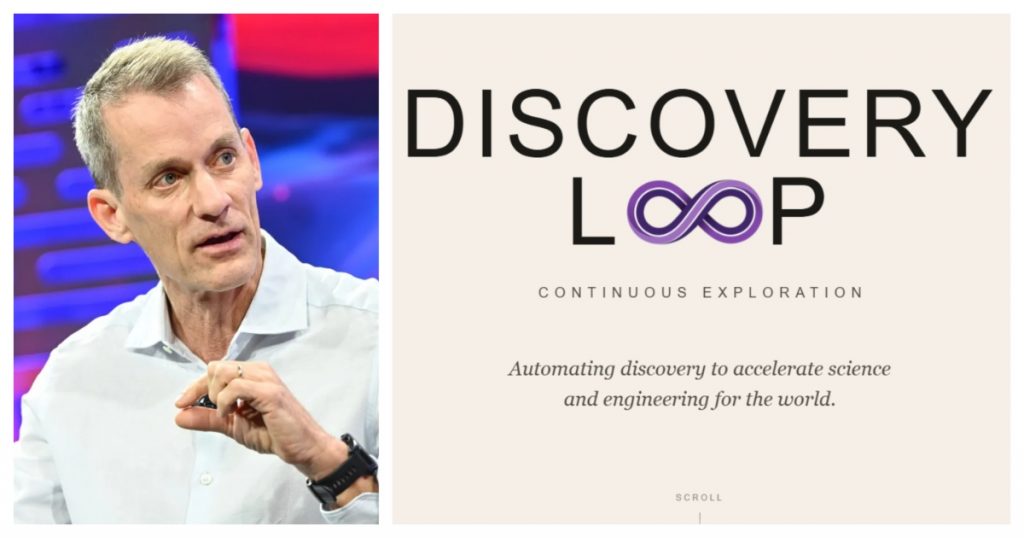
Dean announced the news himself on X, describing Discovery Loop as a Public Benefit Corporation built around a single idea: automating machine learning, science, and engineering to speed up how discoveries get made. In his post, he noted that the four founders have worked together for anywhere between 14 and 30 years, and have spent that time building products, infrastructure, and AI models that are used by billions of people every day.
The timing is notable. Google DeepMind has been dealing with an unusually rough stretch of high-profile exits lately, including Transformer co-author Noam Shazeer’s move to OpenAI and AlphaFold creator John Jumper’s departure to Anthropic, both within the same week in June. Dean’s exit is a different kind of loss altogether. He isn’t a recent hire or a research lead brought in through an acquisition. He is one of the people who built Google’s technical culture from the inside, going back to the earliest days of the company’s search infrastructure.
According to Discovery Loop’s website, the company’s premise is that scientific and engineering progress is bottlenecked by a process that hasn’t fundamentally changed in decades: someone proposes an experiment, runs it, studies the results, and then repeats the cycle. That loop, done by hand, doesn’t scale. Discovery Loop wants to use frontier AI models along with large-scale compute to run that loop automatically, and to run thousands of iterations of it in parallel instead of one at a time.
The company plans to begin with machine learning research and engineering specifically, using its own systems to optimize its own technology stack before branching into other fields. From there, the founders say they want to go after what the National Academy of Engineering calls its Grand Challenges: things like better medicines, clean water access, affordable solar power, and securing cyberspace. It’s an ambitious list, and one that puts Discovery Loop in the same conversation as other recent labs betting on AI-driven scientific discovery, a category that has already pulled talent out of Google before, as covered in our rundown of researchers who left major labs to build their own science-focused startups.
Sundar Pichai posted his own tribute to Dean shortly after the announcement, thanking him for what he called an incredible 27-year run, and confirming that Google itself will be involved with Discovery Loop as a founding investor and Cloud partner. Pichai singled out Dean and Ghemawat specifically, calling it a privilege to have worked alongside them.
Demis Hassabis replaces Jeff Dean as Chief Scientist at Alphabet. He’s additionally stepping into a new role as Chair of Google DeepMind.
On the team page, Discovery Loop lists out just how much of the current AI and infrastructure landscape the four founders have had a hand in: Google Search, Google Ads, Google File System, MapReduce, BigTable, Spanner, TensorFlow, TPUs, AlphaChip, AlphaStar, AlphaCode, AlphaFold, Gemini, word2vec, sequence-to-sequence models, chain of thought reasoning, and mixture-of-experts architectures, among others. Between them, the founders count themselves among the most cited researchers in both artificial intelligence and distributed systems.
Dean has talked before about what draws him to this kind of work. In an email exchange with a computer science student last year, he described the job as fundamentally about puzzle-solving, done alongside colleagues he called smart, insightful, and constantly teaching him new things. Discovery Loop appears to be Dean’s attempt to take that same instinct and point it at a much larger puzzle: getting AI systems to run the scientific method itself, without needing a human to close every loop.
The company says it’s building a lean, in-person team in the near term, and is currently hiring.