Less than a week after he walked away from the company he co-founded, Jensen Huang has made it clear he isn’t quite ready to let go of NVIDIA.
In his first public statement since resigning, the former NVIDIA CEO apologised for his conduct, said he would cooperate fully with the board’s independent investigation, and then made a striking offer: if the board decides it wants him back, he will return as CEO.
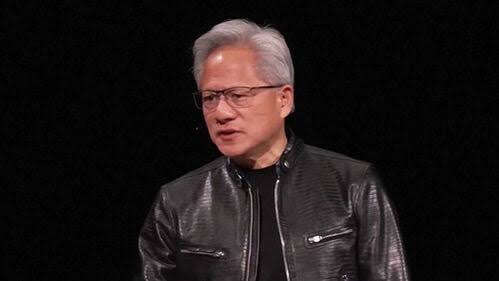
“Since my departure, I’ve seen an outpouring of calls from NVIDIA’s employees, investors, business partners, and customers for me to return as CEO,” Huang wrote. “If the Board of Directors decides that my return is in the best interest of our shareholders, our employees, the company, and America, I would be honored to answer these calls and return as CEO.”
A Contrite Tone, And An Open Door
Much of the statement is an apology. Huang acknowledged that he “did not live up to the standards expected of everyone at NVIDIA” and that he had “made serious mistakes” in his personal life.
“I created problems for the Board that I deeply regret,” he wrote. “I own my mistakes completely, and I am committed to cooperating with the Board’s independent investigation.”
He closed with a personal note to his family: “I love you, and I will spend the rest of my life being worthy of yours.”
But woven through the apology is a carefully constructed case for his return. Huang points out that NVIDIA is navigating “complex technology, market, competitive, and geopolitical dynamics,” and that many stakeholders continue to reach out to him directly. He calls NVIDIA “a once-in-a-generation company” and his “life’s work.”
Notably, the statement leans heavily on patriotism. Huang reminds readers that he came to the United States 53 years ago, calls becoming an American citizen “one of the greatest gifts and proudest moments” of his life, and says that “nowhere but in America could a company like NVIDIA be possible.” His conditions for returning include not just shareholders and employees, but “America” itself. Given that the scandal at the centre of his exit involves national security concerns, the framing appears deliberate.
How We Got Here
The statement caps an extraordinary few weeks for the world’s most valuable chipmaker. In late October, the New York Times reported that Huang had a close relationship with Alice Huang, a Singapore-based executive at Megaspeed, an NVIDIA customer, whom US intelligence officials believe was recruited by China’s Ministry of State Security. On November 8, NVIDIA’s board opened an independent investigation into Huang, while publicly expressing confidence in his leadership. Huang admitted to the affair in an email to staff the same weekend.
Things then moved quickly. The Times reported a second relationship, this time with a senior NVIDIA executive who reported directly to Huang, and NVIDIA’s stock fell nearly 8% in after-hours trade. Within hours, reports emerged that the board was preparing to oust Huang and had been working with an outside firm to identify possible replacements.
On November 12, NVIDIA announced that Huang had resigned as president, CEO and board member, effective immediately, ending a 33-year run. CFO Colette Kress was named interim CEO while retaining her finance role, and longtime director Harvey C. Jones became the board’s first-ever chair. NVIDIA’s announcement did not give a reason for Huang’s departure.
The “Stand With Jensen” Campaign
Huang’s statement doesn’t come in a vacuum. Within days of his exit, a “Stand With Jensen” petition calling for his reinstatement while the investigation runs its course had gathered more than 180,000 signatures, including thousands of NVIDIA employees. Elon Musk, Shopify CEO Tobi Lütke, Uber co-founder Travis Kalanick and Epic Games CEO Tim Sweeney are among the high-profile signatories. President Donald Trump has also said he would support Huang’s return.
Not everyone has rushed to take sides. Sam Altman, who famously returned to OpenAI days after being fired by its board in 2023, has said he doesn’t know enough to say whether Huang should be reinstated. The comparison to Altman is inevitable, though: in both cases, a founder-figure was pushed out abruptly and employees quickly mobilised to demand a reversal.
The Board Isn’t Budging — For Now
There is one major obstacle to a Huang comeback: the board itself. Multiple outlets, including CNBC, the Wall Street Journal, Reuters and CBS News, have reported that NVIDIA’s directors are not considering reinstating Huang as CEO or in any other role, and that their focus remains on the national security investigation and the search for a permanent successor. NVIDIA had not publicly responded to Huang’s statement at the time of writing.
That makes the timing of the statement interesting. It landed just hours before NVIDIA’s first earnings report since his departure, a moment when investors will be scrutinising not just the numbers but the company’s leadership story. The company has reportedly lost hundreds of billions of dollars in market value since the investigation was announced, and the selloff has spilled over into the wider AI infrastructure ecosystem.
Why It Matters For AI
It’s hard to overstate how central Huang has been to the current AI boom. Over the last decade, he steered NVIDIA from a gaming graphics company into the backbone of modern AI, with its GPUs and CUDA software stack powering most frontier model training. He’s argued that NVIDIA has fundamentally reinvented what computers can do, and he has personally driven many of the company’s biggest bets, from aggressive investments in its own customers to its sprawling AI factory and data centre vision. His famously flat management style — he has said he tries not to have regular one-on-one meetings with his staff — also meant an unusual amount of the company’s direction flowed directly from him.
That’s precisely why his supporters argue he’s irreplaceable, and precisely why the board’s decision carries so much weight. The question NVIDIA’s directors now face is whether the risks raised by the investigation outweigh the value of the man who built the company. Huang has made his position clear. The ball is now firmly in the board’s court.