AI is already being heavily used in coding, but top executives of some of the biggest non-tech companies in the world are also using it to make decisions.
McDonald’s CEO Chris Kempczinski recently revealed that he is using Google’s Gemini to brainstorm new menu ideas — and he’s serious enough about the results to pitch them to his own team. Kempczinski, who has described himself as a “supersubscriber to every AI tool out there,” shared the details in an Instagram reel, offering a rare and candid look at how generative AI is making its way into the highest levels of corporate decision-making at one of the world’s most recognizable brands.
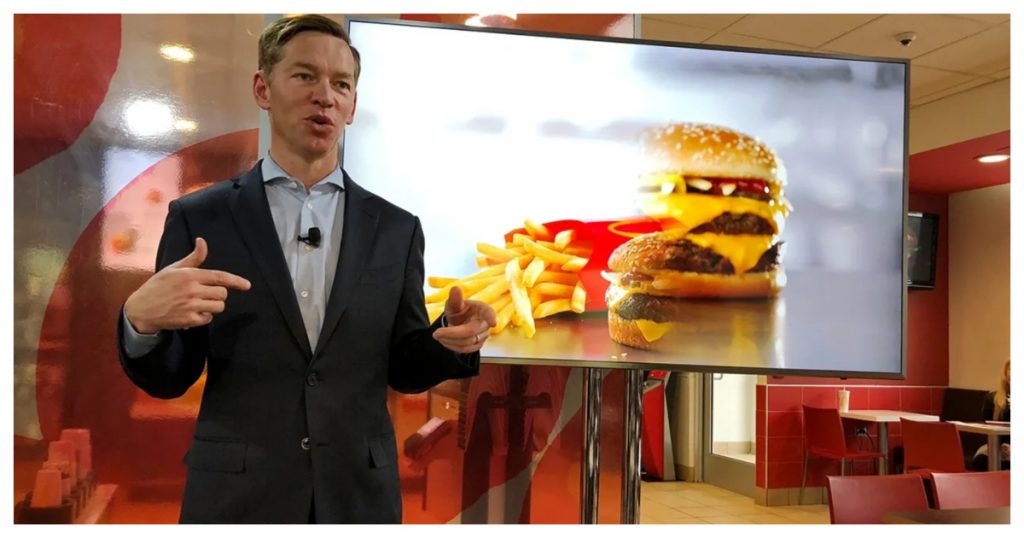
“Another thing that I had fun playing around with,” Kempczinski said, “is I asked Gemini: ‘Take a look at the food trends that are going on all around the world, take a look at McDonald’s menu, and come back and give me your couple of best ideas for menu innovation that would work at McDonald’s in the US on a limited time only basis.'”
Gemini came back with two ideas — and the CEO was impressed by both. “Two big ideas,” he said. “I kind of like them both.”
The first suggestion was McRib Nuggets. “Consider that for a second,” Kempczinski said. The second was leaning into Korean flavours — specifically, using Korean sauces on both nuggets and burgers.
“So I threw those to the menu team,” he said. “Who knows what they’re going to do with it. Maybe nothing, maybe something. But those are just two ideas, two ways that I’m starting to use AI here at McDonald’s and in my personal life.”
The ideas aren’t as far-fetched as they might sound. The McRib is one of McDonald’s most consistently anticipated limited-time items, and Korean flavours have been gaining mainstream traction across the fast food industry for years. Whether or not either idea makes it to the menu, the episode signals something more significant: that AI is now feeding into the earliest stages of product ideation at major consumer companies, not just optimising their back-end operations.
Kempczinski has been open about his appetite for AI well beyond menu planning. He has spoken about McDonald’s ambition to use data from its 150 million-strong digital ecosystem and up to 70 million daily transactions to personalise the customer experience — including showing drive-thru customers a menu board tailored specifically to them. This is the larger context in which his Gemini experiment sits: not a CEO dabbling with a chatbot, but one actively integrating AI into both personal workflows and corporate strategy.
He is hardly alone. Fortune 500 CEOs are broadly enthusiastic about AI adoption, even as rank-and-file employees have been slower to embrace it, according to Anthropic CEO Dario Amodei. Microsoft CEO Satya Nadella has spoken about delegating tasks to AI agents and “micro-steering” them — a model of working that maps closely to what Kempczinski is describing. Meanwhile, Reddit CEO Steve Huffman says he has not written a single line of code himself since December 2024, relying entirely on AI to do it for him.
What makes Kempczinski’s case distinct is the domain. Coding and email summarisation are obvious AI use cases. Menu ideation at a company with tens of thousands of locations, global supply chains, and franchisee relationships is a far more complex arena. A suggestion from Gemini that sounds compelling in a chatbox still has to survive food safety testing, supply chain sourcing, kitchen throughput modelling, and franchisee buy-in before it becomes a real product. “Maybe nothing, maybe something,” as Kempczinski put it — which is precisely the right framing. The value isn’t in blindly executing AI output; it’s in using AI to expand the idea set faster and more cheaply than traditional research cycles allow, then applying human judgment to filter what’s worth pursuing. Whether McRib Nuggets ever land on a tray, that’s a workflow more executives are going to be running.