While general AI models are struggling on ARC-AGI 3, some other approaches are producing some interesting results.
NVIDIA has announced that AVO, its general-purpose coding agent, has completed all 183 levels across all 25 public environments of the ARC-AGI-3 benchmark, a perfect 100.00 on the test’s Relative Human Action Efficiency (RHAE) metric. The result comes just weeks after Claude Opus 5 set the standing model record on the same benchmark at 30.2%, a score that itself represented roughly four times what GPT-5.6 Sol had managed at its previous best. NVIDIA’s system didn’t build a new model to get there — it wrapped an existing one, Claude Opus 5, inside its own agent architecture.
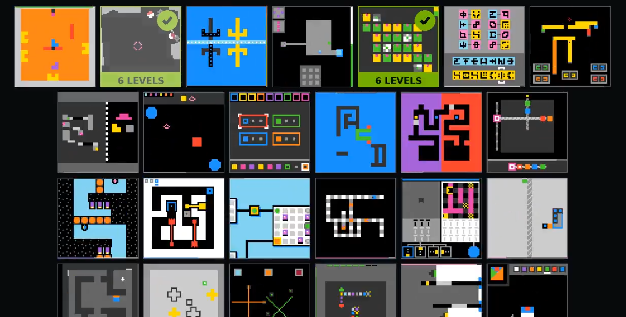
ARC-AGI-3, built by researcher François Chollet’s ARC Prize Foundation, is designed to resist the usual ways AI labs inflate benchmark numbers. Instead of static puzzles a model might have seen variants of during training, it drops an agent into interactive, game-like environments with no instructions, no stated rules, and no stated goal. The agent has to explore, work out what the available actions even do, and infer objectives purely through trial and error. It’s scored on RHAE, which measures how efficiently an agent clears a level relative to how many actions a human needed on the same level. When ARC-AGI-3 launched, humans cleared 100% of the environments while the best AI model at the time managed 0.37%.
What NVIDIA actually built
NVIDIA’s system is called AVO — Agentic Variation Operators. It was originally developed for autonomous software engineering and GPU-kernel optimization, where an agent has to inspect code, form a hypothesis, make a change, run hardware-grounded tests, and revise its approach repeatedly. In one demonstration, NVIDIA says AVO ran continuously for seven days on an attention-kernel optimization task, tried more than 500 directions, and produced kernels that beat FlashAttention-4 by up to 10.5% on NVIDIA’s DGX B200 systems.
The architecture rests on two ideas: persistent memory, which carries prior attempts and results forward so the agent doesn’t repeat the same exploration, and a supervisor layer that watches the broader trajectory and nudges the main agent when progress stalls. For ARC-AGI-3, NVIDIA plugged this same architecture into a completely different task interface — the environments were fed to the model as text-only 64×64 grids, with no images involved — while keeping the underlying agent loop unchanged.
The model doing the reasoning inside AVO was Claude Opus 5, the same model ARC Prize independently scored at 30.2% on its own. NVIDIA’s framing is explicit about this: the model is only one component of an agent, and the harness around it — memory, tool use, recovery from failure, sustained context across a long task — is what determines whether that underlying capability translates into completed levels. NVIDIA also tested AVO with GPT-5.6 Sol on a subset of games, and reports that Sol reached matched levels faster in wall-clock time in some cases, while Opus 5 needed fewer environment actions.
NVIDIA also compared its result against VISTA, another agent harness that has been used to run frontier models, including Claude Opus 5, against ARC-AGI-3. VISTA reportedly needed 7,542 environment actions with Claude Opus 5 to clear the same 183 public-set levels; NVIDIA says AVO did it in 6,624, about 12% fewer.
Why this isn’t an official ARC-AGI-3 score
NVIDIA’s 100% performance is worth reading carefully rather than at face value, and NVIDIA itself flags most of the reasons why in its own writeup. It isn’t a score on the ARC Prize leaderboard, since the verified numbers there, including Claude Opus 5’s 30.2%, come from runs the foundation independently administers, whereas AVO’s result was generated and reported by NVIDIA’s own team using its own reimplementation of the task interface. It also covers the 25-environment public set only, using the official scorecard and RHAE metric, and NVIDIA is explicit that these are “not results on the semi-private or fully private competition sets,” which exist precisely because public environments get easier over time as they become familiar. And it’s a system score rather than a model score: the 100.00 reflects Claude Opus 5 running inside NVIDIA’s own memory, supervision, and tooling layers, which NVIDIA says “should not be interpreted as a controlled ablation” against Opus 5’s standalone 30% baseline, given how many variables differ between the two setups at once.
Put together, the 100% is best read as evidence that a well-built harness can extract dramatically more from an existing model on this kind of task than the model manages on its own. But even such, it’s capable that AI — with a harness — can already do really well on some predefined tasks that models themselves might not be able to do at the moment.