As text models across the frontier labs seem to be converging — OpenAI, Google and Anthropic are all tied for first place on the Artificial Analysis Intelligence Index — OpenAI seems to be going the images route in a big way to differentiate itself from the rest.
OpenAI has officially launched ChatGPT Images 2.0, its most ambitious image generation product to date. Available now on the web and via API, the release signals that OpenAI is trying to redefine what an AI image tool can be.
Two Modes, Two Jobs
The product ships in two versions: Instant and Thinking.
Instant mode is built for speed. It’s the model that was quietly stress-tested on LMArena under the codename “duct tape” — a nod to OpenAI’s by-now-familiar tactic of battlefield-testing models under pseudonyms before a public reveal.
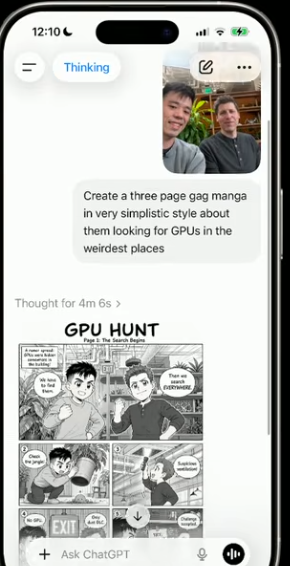
Thinking mode is a different beast. It reasons before it renders. The practical payoff: consistent characters across a manga series, coherent visual narratives, and complex multi-frame outputs that earlier models couldn’t hold together. Thinking mode is what could make ChatGPT Images 2.0 a serious creative tool, not just a novelty.
Interactive, Not Just Generative
The most consequential shift may be conceptual. “It’s an AI that you interactively talk to, and it responds,” said one OpenAI researcher during the demo. Users can generate an image, then talk to it — asking to zoom in, tweak a detail, change a character’s outfit, or shift the composition. The model remembers context and responds in kind.
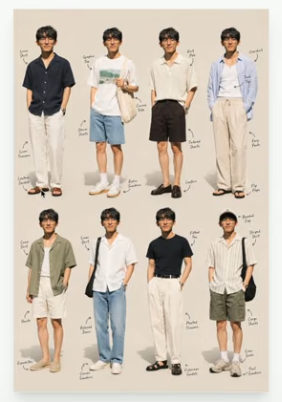
A live demo showed the model generating eight distinct summer outfits from a single uploaded photo. Another showed researchers asking the model to scan social media for reactions to the duct tape models, summarise the findings visually, and generate a QR code linking back to ChatGPT. That’s not image generation. That’s an entire workflow that OpenAI says can be done entirely through images.
What the Model Can Actually Do
The capability list from the livestream was dense:
- Manga and consistent characters — Thinking mode can sustain visual identity across panels, something that has tripped up every prior image model.
- Photorealistic output — Using the
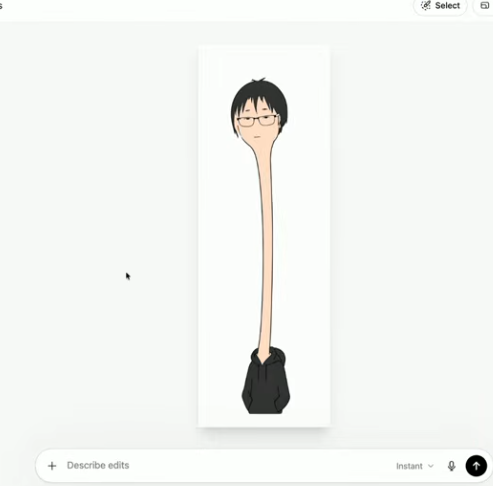
photorealisticprompt flag unlocks improved lighting and detail fidelity. - Flexible aspect ratios — A new in-interface button lets users switch aspect ratios on the fly, including extremely wide or tall formats.
- 360-degree panoramas — Full immersive image generation, in a single prompt.
- Logos — Clean, usable brand marks, not just aesthetic sketches.
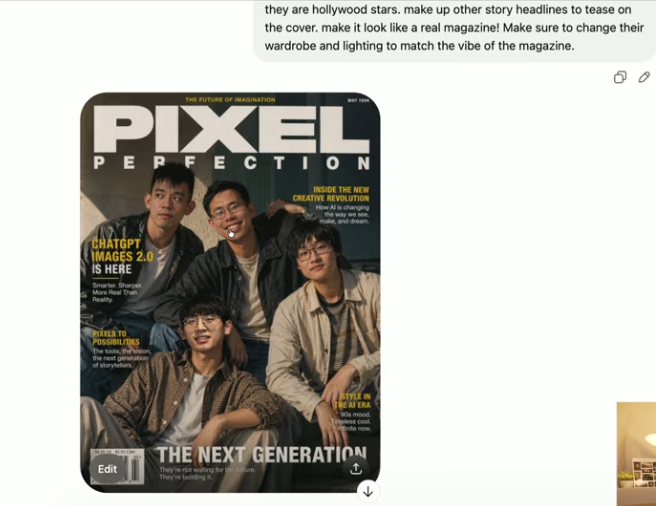
- Magazine covers — The presenters themselves were turned into a magazine cover during the demo. It was convincing.
Multilingual Capabilities
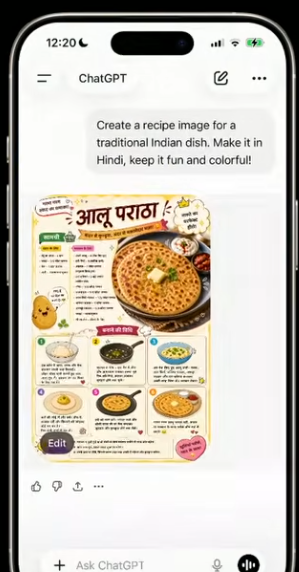
OpenAI made a pointed case for its text rendering. Earlier models struggled badly with non-Latin scripts — Hindi, Korean, and Japanese all have high character counts and complex rendering rules that broke previous systems.
Images 2.0 handles them. The demo included a recipe for aloo paratha generated entirely in Hindi, complete with images. More striking: the model was shown rendering specific text on a single grain of rice in a zoomed-in pile — accurate, legible, at near-microscopic scale.
This matters beyond the novelty. India is now ChatGPT’s fastest-growing market, and improving multilingual fidelity is a direct commercial play for OpenAI in markets where prior image tools felt foreign by design.
The Competitive Context
OpenAI’s image generation story has been turbulent. GPT Image 1.5 — launched to counter Google’s viral Nano Banana models — was a step forward, but it was still catching up. Nano Banana drew in millions of new users through shareable, viral formats. OpenAI’s response was technically sound but never achieved the same cultural traction.
Images 2.0 is a different kind of answer. Rather than matching Nano Banana feature-for-feature, OpenAI is building a higher ceiling: deeper interactivity, a thinking layer, and genuine utility for creators and developers. Whether that translates into the same viral momentum remains to be seen — but OpenAI seems to have bet big on the image play.
ChatGPT Images 2.0 is available now on the web platform and via the OpenAI API.