The world’s top AI model startups aren’t just focused on building the best models — they’re also looking to take a part of the gains from deploying these models at companies around the world.
OpenAI has closed more than $4 billion for a new joint venture called The Deployment Company, designed to accelerate the adoption of its AI software across enterprise clients. The round drew participation from 19 investors, including TPG Inc., Brookfield Asset Management, Advent, and Bain Capital, alongside SoftBank Group and Dragoneer Investment Group. The venture is valued at $10 billion, excluding the newly raised capital, with OpenAI retaining majority ownership and operational control.
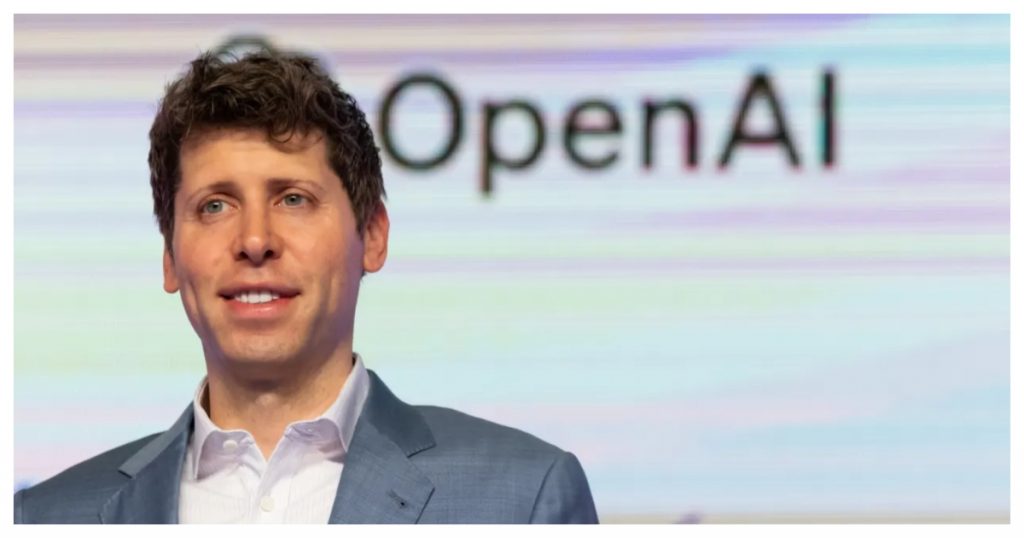
OpenAI itself is putting in $500 million upfront, with an option to contribute up to $1.5 billion more. Private equity investors are guaranteed a 17.5% annual return over a five-year window, with OpenAI retaining super-voting shares — a structure that keeps strategic control firmly in Sam Altman’s camp.
The Palantir Playbook
The operating model is deliberately hands-on. Rather than selling software licenses and walking away, The Deployment Company will embed engineers directly inside client organizations — identifying where OpenAI’s tools can have the most impact, then building and maintaining those systems over time. It’s a strategy closely modeled on Palantir’s forward-deployed engineer approach, which proved that the real value in enterprise software isn’t the license — it’s the implementation.
The venture builds on OpenAI’s existing Frontier enterprise platform, which already counts HP, Intuit, Oracle, State Farm, and Uber among its early adopters, and on “Frontier Alliances” with consulting giants BCG, McKinsey, Accenture, and Capgemini. The Deployment Company adds a new, more capital-intensive tier on top: one where OpenAI doesn’t just power the product, but runs the deployment.
Revenue follows the services-plus-software model — capturing value at the point of transformation rather than just at the model level.
Why Private Equity?
The choice of backers is strategic, not coincidental. Private equity firms own or influence an enormous swath of enterprise businesses, and they control how those companies allocate their software and AI budgets. By bringing TPG, Brookfield, Bain, and Advent into the structure, OpenAI gains something more valuable than capital: a distribution channel into hundreds of portfolio companies that are already under pressure from their PE sponsors to cut costs and boost productivity.
OpenAI has been losing ground in the enterprise API market — its share has dropped from 50% in 2023 to around 25% by mid-2025, with Anthropic and Google making significant gains. The Deployment Company is, in part, a structural response: if you can’t out-compete on the model alone, own the distribution.
Anthropic Fires Back — Immediately
Within minutes of OpenAI’s announcement, rival Anthropic made a move of its own. The Claude-maker announced a new AI-native enterprise services firm in partnership with Blackstone, Hellman & Friedman, and Goldman Sachs — backed by approximately $1.5 billion in committed capital. Apollo Global Management, General Atlantic, Leonard Green, GIC, and Sequoia Capital also joined the consortium.
The Anthropic venture targets mid-sized companies — regional health systems, community banks, multi-site manufacturers — that stand to gain significantly from frontier AI but lack the in-house engineering talent to deploy it. Anthropic’s own Applied AI engineers will be embedded directly in client engagements.
The strategic contrast is sharp. OpenAI’s Deployment Company is a volume play: pull as many PE portfolios as possible into a captive channel, fast. Anthropic’s venture is a credibility play: anchor Claude inside a smaller set of high-profile financial institutions whose endorsement sells the model to the broader market.
Anthropic can afford to be selective. Its annualized revenue run-rate has surged past $30 billion — up from $9 billion at end-2025 — and it now leads the enterprise LLM API market with roughly 40% share, according to Menlo Ventures data.
The Bigger Picture
Both moves signal the same underlying thesis: model quality alone doesn’t determine enterprise adoption — deployment does. For every dollar companies spend on software, they spend roughly six on services. That ratio has made consulting a multitrillion-dollar industry, and it’s now the territory that AI labs are explicitly moving into.
The Deployment Company’s formation is an acknowledgment by OpenAI that the next frontier of AI competition won’t be won purely in the lab. It will be won in the workflows, ERP systems, and operating rooms of the businesses that actually use the technology — and whoever controls that layer controls a disproportionate share of AI’s commercial future.