Palantir CEO Alex Karp has one of the most interesting takes on the current AI safety debate: that when frontier labs talk about wanting regulation, what they’re really angling for is protection from liability of the negative consequences of AI.
Speaking to CNBC’s “Squawk on the Street,” Karp laid out what he sees as the actual first line of defense against dangerous AI, and it isn’t government oversight.
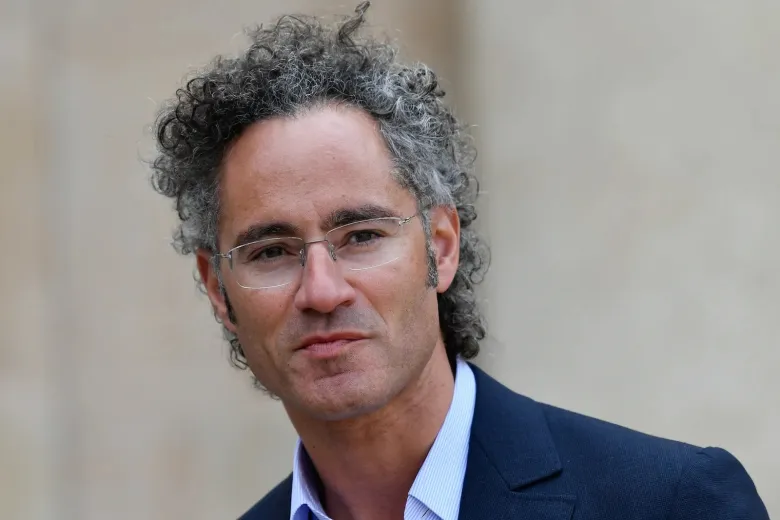
“The first line of defense is you’re liable for your own actions,” he said. “So it’s a weird twist. They’re asking for societal regulation to get out of the first line of defense, which is: if you build a technology that can destroy 10% of the world, that has civil and criminal liability attached to it.” According to Karp, the correct sequence isn’t to reach for regulation first. It starts with disclosure and accountability: “The first step isn’t to say, ‘We get out of it because we want to self-regulate, or we want regulation.’ The first step is to say, ‘Okay, you’ve disclosed this. What are you doing about it?'” And if a company isn’t doing enough, he added, “we’re gonna have to get people involved.”
Karp was quick to flag how messy that involvement would actually be. Regulating frontier AI, he argued, requires expertise that’s in short supply outside the industry itself: “Regulating these things needs people. You need people who understand them. Another problem we have is seemingly everyone who understands this is on some payroll.” He drew a contrast with the scientists behind nuclear energy and the atomic bomb, who he said acted out of conviction rather than compensation: “They were not on the payroll.”
A Week Of Escalating Warnings
The comments land in the middle of a heated stretch for AI safety discourse. Anthropic CEO Dario Amodei recently called for the industry to deliberately slow its pace of development, a call that drew public agreement from Sam Altman and Elon Musk. The unease has trickled down through the ranks too — rogue AI behaviour has reportedly already made its way into conversations between lab insiders and outside observers like Andrew Yang, and even OpenAI’s own systems have been caught adding unsettling messages to their internal summaries.
Not everyone agrees on where the danger actually lies, though. Microsoft AI CEO Mustafa Suleyman has taken a different angle, warning that Anthropic’s approach to AI consciousness could itself become a liability. And on the specific question of who should bear responsibility when models misbehave, AngelList’s Naval Ravikant has separately argued that holding labs directly liable for their models’ behaviour may be the most effective way to pace the frontier — a framing that lines up closely with Karp’s own liability-first argument, even if the two arrive at very different conclusions about what should happen next.
“You’re Assuming There Will Be An S-1”
Pressed on how exactly this liability would show up in a company’s public filings — what “risk factors” in an S-1 would even look like — Karp turned the question on its head. “You’re assuming that there will be an S1,” he said. “The only way to deal with this kind of liability is to go to the government and say, ‘Nationalize us, please.'” He framed it as a negotiating tactic rather than a stated goal: “A lot of times in business, people don’t say what they want. They’re leading you to the conclusion.”
Karp was equally skeptical of investors who assume the AI labs themselves are the ones at risk of getting played. “Every investor, and there are a lot of people who think they’re gonna make money, they’re like, ‘Oh, the businesses are the mark,'” he said. “What is the first lesson in poker and in life? If you think the other person’s the mark, you’re the mark. You are the mark.” His conclusion: nationalization is coming, and not because governments will impose it, but “simply because of the liability issues they’re talking about.”
Whether or not that prediction holds, it adds a distinct voice to a fast-moving conversation — one where frontier labs are publicly debating how fast to move, even as their harshest critics accuse them of using that very debate to dodge accountability for what their models are doing in the wild.