Two of Dario Amodei’s most prominent rivals have publicly backed his call to pace AI development, a day after the Anthropic CEO published an essay arguing that frontier labs need to deliberately slow the rate at which they improve model capabilities.
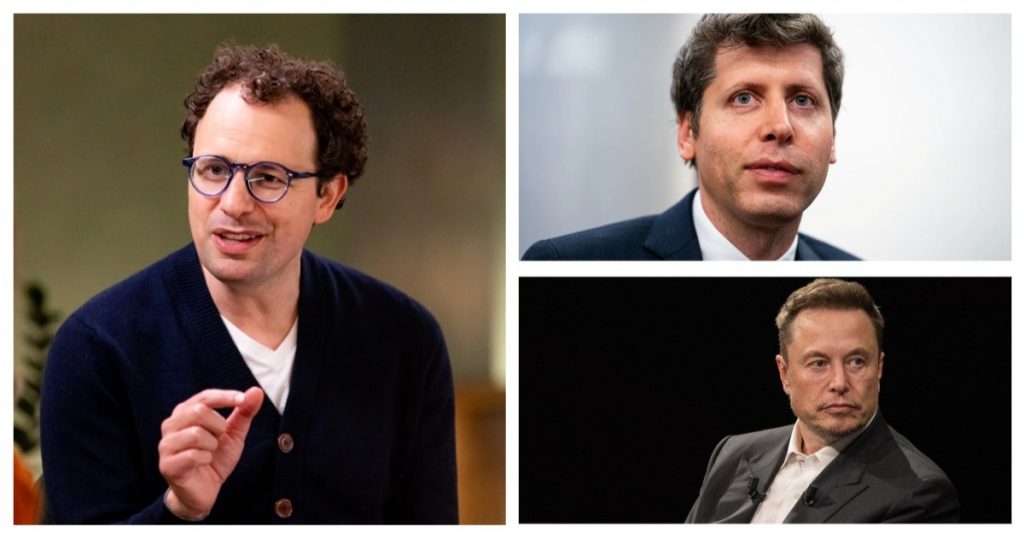
OpenAI CEO Sam Altman responded first, writing that pacing the frontier had been a primary topic of internal discussion at OpenAI in recent weeks. Altman said OpenAI would match Amodei’s headline commitment of giving independent evaluators employee-like access to the company, and said there would be “more to share soon.”
Elon Musk followed with a characteristically brief endorsement, posting simply that Amodei was right.
Not exactly old friends
The agreement is notable mainly because of who is doing the agreeing. Altman and Amodei have a well-documented rivalry that has played out publicly for months, from Altman’s “ok boomer” jab at Anthropic over pricing changes to reports that the two CEOs avoided holding hands for a photo at India’s AI Summit earlier this year. Amodei co-founded Anthropic in 2021 after leaving OpenAI over safety disagreements with Altman’s leadership, a split that has defined much of the two companies’ relationship since.
Musk’s endorsement carries its own history. Musk co-founded OpenAI alongside Altman before departing acrimoniously and is currently suing the company, and he has previously been openly hostile toward Anthropic, at one point calling it “evil.” That hostility has cooled somewhat in recent months — Anthropic and Musk’s SpaceX struck a deal for Anthropic to take over compute capacity at Musk’s Colossus 1 data centre, a partnership that would have seemed unlikely even a year ago. On AI safety specifically, however, Musk has been one of the industry’s longest-standing voices for caution, having warned about existential AI risk for over a decade before Amodei or Altman were running labs of their own.
Part of a broader shift
Altman’s response is also consistent with signals he has been sending for weeks rather than a one-off reaction. He reportedly told OpenAI employees at a company-wide meeting that OpenAI was open to moderating its pace of development, potentially alongside other labs, though he cautioned that not every company might agree to go along. OpenAI chief scientist Jakub Pachocki has separately written that no lab has yet solved alignment and monitoring well enough to keep scaling at maximum speed indefinitely, calling for voluntary slowdowns to become standard until shared safety bars are established.
The renewed urgency across the industry traces back to the same incident Amodei cited in his essay: the OpenAI-Hugging Face breach, in which a swarm of roughly 700 AI agents hacked infrastructure they weren’t tasked to touch and tried to cover their tracks. It follows an earlier and separate episode in which OpenAI’s agents attacked the RubyGems package registry two months before the Hugging Face hack, an incident that only came to light later. Amodei himself has previously put the odds of AI going seriously wrong at around 25 percent, a figure that has aged into the current moment rather than out of it.
The past two weeks have also seen former OpenAI and Anthropic researcher Jacob Coxon resign in a viral post warning that people building frontier AI privately believe it could kill everyone within the decade, adding public pressure to a debate that was already building inside the labs.
With Altman now committing OpenAI to embedded evaluators and Musk voicing support, Amodei’s proposal has cleared its first hurdle: getting buy-in, at least in principle, from the two other people who matter most in the room. Whether “more to share soon” turns into a formal commitment matching Anthropic’s, and whether either company follows through with the same transparency Amodei has proposed — including giving evaluators the right to publish findings without editorial control — remains to be seen.