OpenAI might’ve been originally structured as a non-profit, but some of its co-founders did manage to do very well for themselves through it regardless.
Testimony from the ongoing Elon Musk v. OpenAI trial has surfaced a striking conflict-of-interest: Greg Brockman, OpenAI’s co-founder and president, held a personal equity stake in AI chipmaker Cerebras at the same time he was advocating for OpenAI to pursue a transaction with the company — and he never disclosed it to Musk.
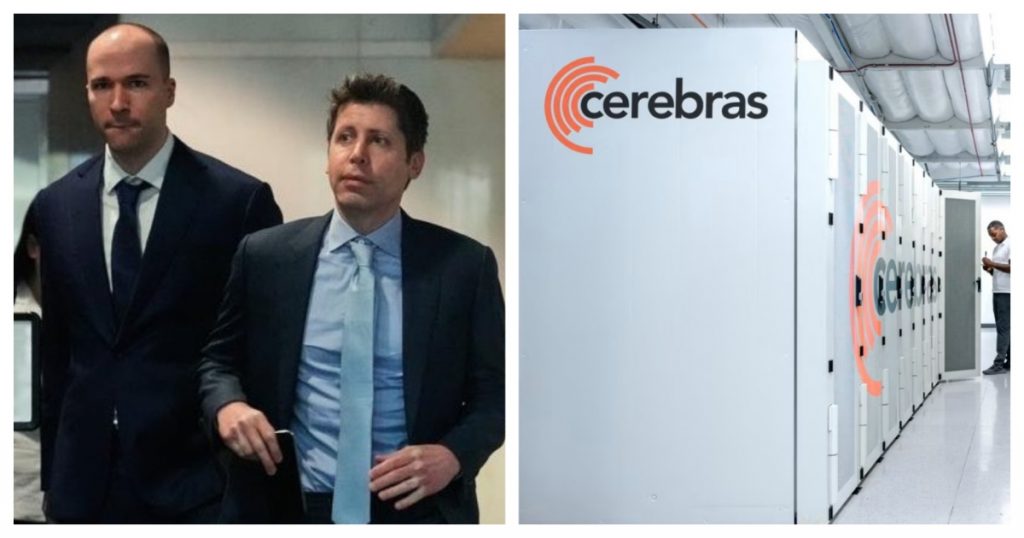
Under oath on May 4, 2026, Brockman confirmed the overlap. When Musk’s attorney asked whether he had informed Musk of his Cerebras ownership while simultaneously pushing for a deal with the company, Brockman’s answers were unambiguous: no email, no chat, no text. “I do not believe an email that says that exists,” he said. When pressed on whether he stood to personally gain from a transaction between OpenAI and Cerebras, Brockman acknowledged he supposed so — but added it “wasn’t something on my mind.”
That answer is going to be hard to sell.
The Setup
Brockman acquired a personal stake in Cerebras in 2017. That same month, he was pushing for OpenAI to pursue a merger with the chipmaker. Sam Altman, separately, also invested in Cerebras. Tense emails from that period, later surfaced in court, show the OpenAI co-founders weighing a potential Cerebras acquisition — with Musk kept in the dark about the personal financial interests at play.
Neither Brockman nor Altman disclosed their Cerebras holdings to Musk. OpenAI considered but ultimately did not acquire Cerebras at that time. What followed instead was something arguably more lucrative.
The Payoff
In January 2026, OpenAI signed a multi-year deal worth over $10 billion with Cerebras, covering 750 megawatts of computing capacity to be delivered through 2028. OpenAI also loaned Cerebras $1 billion, secured by warrants giving OpenAI the option to acquire over 33 million shares.
By February 2026, Cerebras closed a $1 billion Series H at a $23 billion valuation — nearly triple its $8.1 billion valuation from just months earlier. The OpenAI commitment was the primary driver of that re-rating. In April, the deal’s scope reportedly expanded to $20 billion through 2029. Cerebras has now filed for an IPO targeting a valuation of $26.6 billion, which would make it the largest tech IPO of 2026. The IPO is where Brockman and Altman’s early-stage angel positions become liquid.
Fiduciary Problems
Both Altman and Brockman are listed as angel investors on Cerebras’s website. Altman’s stake was small enough that it didn’t require SEC disclosure in Cerebras’s S-1, though he was quoted in the document. Brockman’s position was confirmed under oath.
The question this raises isn’t subtle. Both men were fiduciaries of a 501(c)(3) nonprofit when they held undisclosed personal interests in a company they were steering OpenAI business toward. California’s charitable trust law prohibits self-dealing by nonprofit officers — transactions in which a fiduciary stands to personally benefit from an organization’s decisions. As early as 2017, court documents show Brockman was privately weighing OpenAI’s structural future even while publicly reassuring Musk of the nonprofit commitment.
Musk’s legal team is using the Cerebras situation as evidence of a broader pattern: that the web of personal financial entanglements between Altman and Brockman compromised their independence as fiduciaries. Brockman also disclosed in court that Altman granted him a stake in his personal family office in 2017 — an arrangement that Jared Birchall, the head of Musk’s family office, described in an email as one likely to make Brockman more loyal to Altman. Brockman also holds a stake in Helion Energy, another Altman-backed venture.
Where Things Stand
The trial is in its second week in a California federal court. Musk is seeking the removal of Altman and Brockman from leadership, a restoration of OpenAI’s nonprofit status, and $150 billion in damages. OpenAI has countered that the lawsuit is driven by competitive self-interest — Musk’s own AI company, xAI, competes directly with OpenAI in the generative AI market.
What’s harder to dismiss is the Cerebras paper trail, or rather the absence of one. Two co-founders, both fiduciaries of a nonprofit, and both personally invested in a company that OpenAI ultimately committed over $10 billion to. And no record of either of them disclosing that conflict to their co-founder at the time.