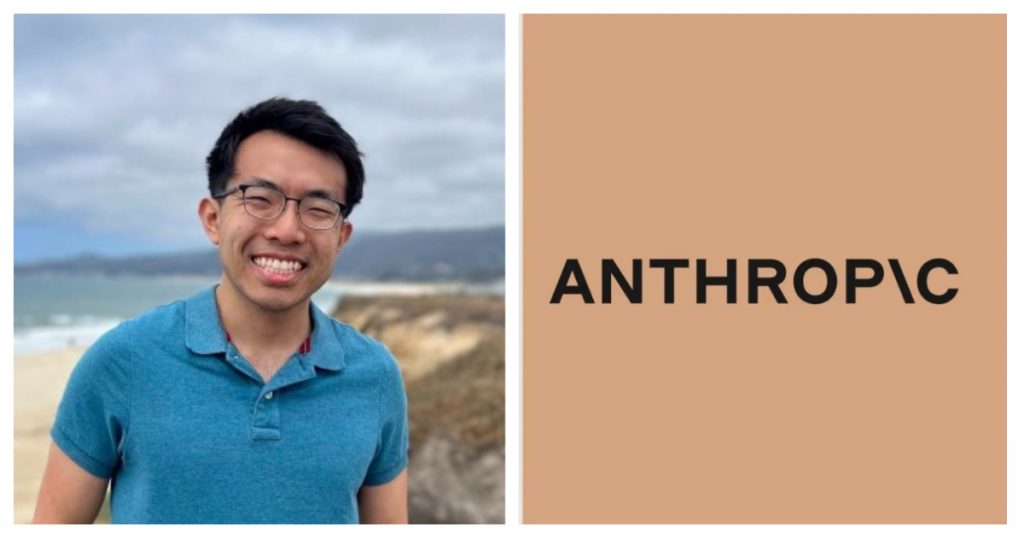
Clive Chan, one of the earliest engineers on OpenAI’s custom chip program, has joined Anthropic as a Member of Technical Staff. Chan announced the move on social media this week, describing himself as the second hardware hire on the chip team, where he spent the better part of two and a half years.
“Personal update: I’ve decided to leave OpenAI,” he wrote on X. “I’m proud to have been part of the custom chip program and grateful to everyone I got to build with and learn from along the way. The density of hardware talent on that team is extraordinary, and I don’t think there’s a better chip design team anywhere. It’s been a wild journey from second hardware hire, 2.4 years ago, to now, and I’m excited to watch these chips become one of the most important engines of AGI. At the same time, I haven’t been able to shake the pull to climb a new mountain from the bottom again! I joined Anthropic this week because I was deeply impressed with the team’s talent, values, and ambition, and I’m already energized by the pace and intensity of the past few days. It’s time to build,” he added.
His departure comes at a pointed moment. OpenAI and Broadcom announced a multiyear partnership to develop custom AI chips and networking hardware targeting 10 gigawatts of new data center capacity, with hardware deployment slated to begin in the second half of 2026. Chan worked directly on that program and acknowledged in his post that he “can’t say much about the chip just yet” — but pointed to the OpenAI-Broadcom announcement and said to “keep an eye out for stuff soon.”
Before OpenAI, Chan spent two and a half years at Tesla on Autopilot deep learning infrastructure, where he worked on an ML training ASIC — handling software framework bringup, datacenter codesign, hardware correctness, and power-efficient number formats, with weekly presentations to the CEO. Before that, he did a stint at QuEra Computing on quantum computer control systems, and co-founded the Canadian Hyperloop Conference. He studied Software Engineering at the University of Waterloo.
Anthropic, meanwhile, has been aggressively expanding its hardware footprint. The company trains Claude across AWS Trainium, Google TPUs, and NVIDIA GPUs, and has recently signed a deal with Google and Broadcom for multiple gigawatts of next-generation TPU capacity. Its revenue run-rate has crossed $47 billion, tripling in roughly three months, putting compute squarely at the center of the company’s constraints and ambitions. At that pace of growth, hardware efficiency isn’t an engineering concern — it’s a business-critical one.
Whether Anthropic is quietly building its own silicon program, or simply shoring up hardware expertise to optimize across its existing chip partnerships, Chan’s background makes him a useful addition either way. Someone who has built an ML training ASIC from the software layer up, worked on power-efficient number formats, and spent years thinking about matmuls and rooflines is not a generalist hire.
For OpenAI, losing early chip team members before the Broadcom program ships publicly is a minor distraction at most — the program is well underway and the core team remains. For Anthropic, the hire reflects a pattern: a company that has historically been seen as an AI model lab is steadily accumulating the kind of deep hardware talent that typically only accrues to companies building their own silicon.