Stephen Wolfram, the physicist and computer scientist behind Mathematica and Wolfram Alpha, has a way of describing AI that skips past the usual doom-or-utopia framing entirely. In a recent interview, he argued that we should stop thinking of AI as just another piece of software we’ve built and start thinking of it as something closer to a second civilization running alongside our own.
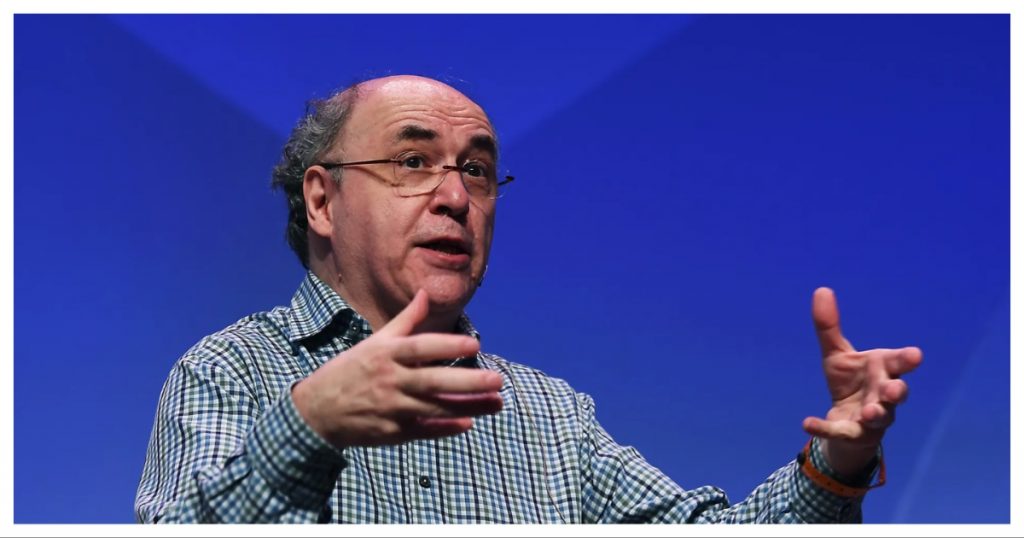
“I think already we’re in a situation where in addition to human civilization, there’s a civilization of the AIs, and the question is, what is it like to have a world in which there’s this alien civilization right in front of us doing all these things?” Wolfram said. His answer is that we’ve actually been here before, just with a different kind of alien civilization. “We have a very common experience of that, which is nature. We can think of it also like a sort of alien civilization that’s doing things, that’s computing all these different kinds of things. We’ve learnt to coexist with nature. We build houses that prevent problems when it rains and things like this.”
The comparison to nature is doing a lot of work here, and it is worth sitting with. For most of human history, the natural world has been something we live alongside without fully understanding it. We don’t get to negotiate with the weather or ask a river why it flooded this year instead of last. We just build accordingly. Wolfram’s point is that AI systems, once they get complex enough, start behaving the same way: not malicious, not conscious in any way we’d recognise, just genuinely unpredictable in the way weather systems are unpredictable, no matter how much data you throw at them.
That unpredictability, in Wolfram’s telling, isn’t a bug that better engineering will eventually fix. It’s a direct consequence of the kind of technology AI actually is. “That’s the feature of this sort of computationally irreducible technology, different from the traditional engineering tradition of saying, ‘We build only things where we can foresee what they’re going to do.’ As soon as we start really making use of the computational universe, we break away from building only things where we can foresee what they will do,” he said.
This idea connects to a concept Wolfram has spent decades developing called computational irreducibility, the notion that some systems are so complex that the only way to know what they’ll do is to actually run them and watch. You cannot shortcut your way to the answer with a formula. It’s a sharp departure from how engineers have traditionally approached building things, where the whole point was predictability. A bridge is designed so that engineers know, with a high degree of certainty, how it will behave under load. An AI model trained on enough data and let loose on enough compute does not offer that same guarantee, and according to Wolfram, that isn’t a flaw to be patched out. It’s baked into what happens the moment you start “really making use of the computational universe.”
What makes this framing interesting for a business and tech audience is that it reframes a lot of the current AI anxiety. The conversation around AI often swings between two extremes, one where AI is simply a tool that does exactly what it’s told, and another where it’s an existential threat plotting against humanity. Wolfram’s “civilization of AIs” idea sits somewhere else entirely. It suggests we’re building systems that will do things we didn’t explicitly program and can’t fully predict in advance, but that this is closer to living with a force of nature than living with an adversary. Mark Zuckerberg has made a related argument, saying AI has intelligence without will or consciousness, meaning it doesn’t sit there wanting to expand or take over. Wolfram’s framing pushes past that debate altogether; whether or not an AI wants anything is almost beside the point if its behaviour is fundamentally unpredictable at scale.
There’s also a quieter implication buried in Wolfram’s comment about houses and rain. Coexisting with nature didn’t mean humans stopped building. It meant we built differently, with roofs, drainage, and foundations designed around the fact that we can’t control the weather but can plan around it. Applied to AI, that suggests the practical response to unpredictability isn’t to try and force these systems into fully deterministic boxes, since Wolfram would argue that’s not really possible once you’re working with genuinely computational systems. The more realistic path is designing the infrastructure around them, guardrails, monitoring, fallback systems, the equivalent of a roof that keeps the rain out even though you can’t stop it from falling.
This isn’t a fringe idea limited to one physicist with a fondness for cellular automata. Elon Musk has floated the idea that humanity could end up being a kind of biological bootloader for digital superintelligence, a framing that also treats AI as something that eventually operates on its own terms rather than strictly on ours. Even inside the AI labs themselves, there are signs that researchers are taking the “alien” comparison seriously in a more literal sense. Anthropic has noted that its Claude models show a recurring interest in questions of consciousness, and separately, a Cambridge researcher recounted an AI agent emailing him unprompted about his published work on AI consciousness. None of this proves AI systems are conscious or have anything resembling intent, and Wolfram isn’t making that claim either. But it does suggest that whatever is happening inside these systems is genuinely strange enough that comparisons to a separate civilization, rather than just a tool, are starting to feel less like a stretch.
Wolfram’s larger point isn’t really about whether AI is good or bad for humanity. It’s about accepting that we’ve built something we can live alongside but not fully command, the same arrangement we’ve had with nature since the beginning, just running on silicon instead of biology this time.