Most first-time entrepreneurs agonize over how to choose their product’s branding and logos, but if they make a sufficiently good product, all that might actually be needed.
Marc Andreessen — co-founder of Netscape and one of Silicon Valley’s most influential venture capitalists — recently shared a story about a conversation with Elon Musk that stopped him cold. The core idea: if your product is truly the best in the world, it doesn’t need your name on it. People will recognize it just from how good it is.
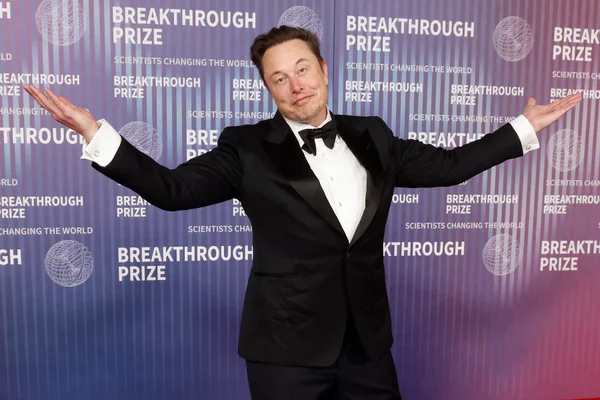
Andreessen set the scene by describing Musk’s relentless product obsession. “Do you want the best car in the world or not? That’s Elon’s mentality. And it’s working very well.”
“The best product in the world shouldn’t even need a logo,” Andreessen quoted Musk as saying. “You shouldn’t even have to have your name on the product. People can just identify it from how good it is. It’s just obvious. Everybody knows — because it’s the best product in the world. Everybody has it. Everybody uses it. Of course you don’t need to put the name on it.”
Andreessen admitted the idea broke his brain. His first instinct was to dismiss it as some abstract, almost zen-like philosophy. But he caught himself:
“No — as usual with Elon, he’s actually serious. The best products in the world would not need your name on it.”
The implications are significant. Musk has long rejected conventional marketing — Tesla and SpaceX have no advertising departments, and Musk says he does “zero market research.” His bet has always been that a product good enough will pull customers toward it, rather than requiring the company to push itself toward them. The no-logo idea is that philosophy taken to its logical extreme: a product so dominant and ubiquitous that the brand becomes redundant.
It also connects to a broader pattern in how Musk runs his companies. Andreessen has described Musk’s method as an almost total subordination of everything — marketing, management hierarchy, even branding — to the quality of the product itself. The engineer is king; everything else is noise.
There are real-world precedents for the idea. Rolls-Royce engines power commercial aircraft worldwide, largely invisible to the passenger. Gore-Tex appears in thousands of products under other brands. The Falcon 9 rocket is recognized by anyone in the aerospace industry on sight, no branding required. What these share is category dominance so complete that the product speaks before the logo does.
The harder question is whether this is a philosophy that can scale beyond Musk’s particular set of companies — or whether it only works when you genuinely have built three of the five most valuable private companies in the world. For most founders, the logo isn’t a vanity exercise — it’s a signal in a crowded market where the product hasn’t yet earned the right to speak for itself. Musk’s point, perhaps, is that earning that right should be the only goal worth having. The logo, like the marketing department, is something you discard on the way there.