The richest people in the world all started their own companies, but starting a company just to get rich might not yield great results.
Kevin O’Leary — the blunt-talking investor best known as “Mr. Wonderful” on Shark Tank — has a warning for anyone eyeing entrepreneurship as a fast lane to wealth: it won’t work. In a candid reflection on what actually drives great business outcomes, O’Leary argues that money-motivated founders are virtually guaranteed to fall short, and that the biggest exits he’s ever witnessed were built by people who weren’t even thinking about the payday.
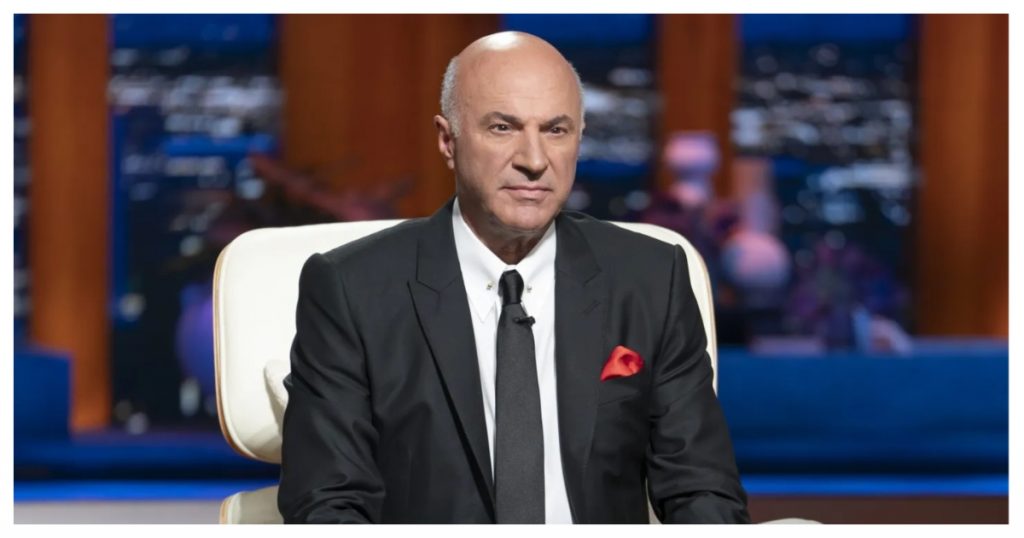
“If you’re hungry for money, I guarantee you’ll fail, a hundred percent. If you start into entrepreneurship, on a journey, and all you care about is getting rich, you will fail. You will fail miserably.”
The point isn’t that money is irrelevant — it’s that it’s the wrong north star. O’Leary draws the distinction clearly: the founders who end up wealthy are the ones who were consumed by the problem they were solving, not the outcome they were chasing.
“Every entrepreneur — not some, every single one that achieved some massive liquidity event I’ve talked to, and I’ve met many of them — they don’t even remember the day it happened. They just woke up and said, ‘Oh my goodness, I’m filthy rich.’ But they weren’t calculating for that. It is because they created something of such value that someone else said, ‘Well, we want to buy that business.'”
O’Leary then reaches for the most personal illustration he has — the sale of The Learning Company, the educational software firm he co-founded, which Mattel acquired for $4.2 billion in 1999.
“That’s what happened to me. I woke up one day, and we sold The Learning Company for four point two billion dollars. I was one of the founding members. I had founder shares. I wasn’t even thinking about that the night before when we were negotiating the deal.”
What happened the morning after is perhaps the most telling detail. With billions in the bank, the founding team did the only thing they knew how to do.
“The funny thing was, when we all came back to the office — the ten of us that were founders — we didn’t know anything else except to go back to work. We didn’t even know what to do. So the only difference was we were filthy rich.”
O’Leary’s instinct here echoes a broader shift in how serious thinkers are approaching entrepreneurship and career motivation. Ben Horowitz, co-founder of Andreessen Horowitz, made a similar argument when he told Columbia graduates to stop following their passion and instead follow their contribution — to find what they’re genuinely good at and put that into the world. The implication is the same: inward-facing motivations (wealth, passion, recognition) are weaker engines than outward ones (solving a real problem, creating real value).
Jerry Seinfeld has made a related point about work and motivation — arguing that fascination sustains people far better than passion, which tends to be performative and fragile. What O’Leary is describing in his founding team is exactly that: people so absorbed in building something that the billion-dollar outcome registered almost as an afterthought.
The pattern holds across some of the most consequential startup stories. The founders who built lasting companies — and the ones investors keep returning to — tend to be mission-driven rather than exit-driven. The money, when it comes, arrives as a consequence of value created, not a reward for ambition alone.
O’Leary has spent decades on both sides of this equation — as a founder who lived through a landmark exit, and as an investor who has evaluated thousands of pitches. His conclusion is unambiguous: the surest way to miss the wealth is to make the wealth the point.