Many tech founders had been offered impressive sums of money right when they began their businesses, and Netflix is another name on the list.
Netflix cofounder Marc Randolph recently recalled a meeting with Jeff Bezos that took place very early in the company’s life — a time when Netflix was barely a year old, having launched in April 1998 as a DVD-by-mail service. Bezos, already building Amazon into something formidable, came to the table curious about what Netflix was and where it was headed.
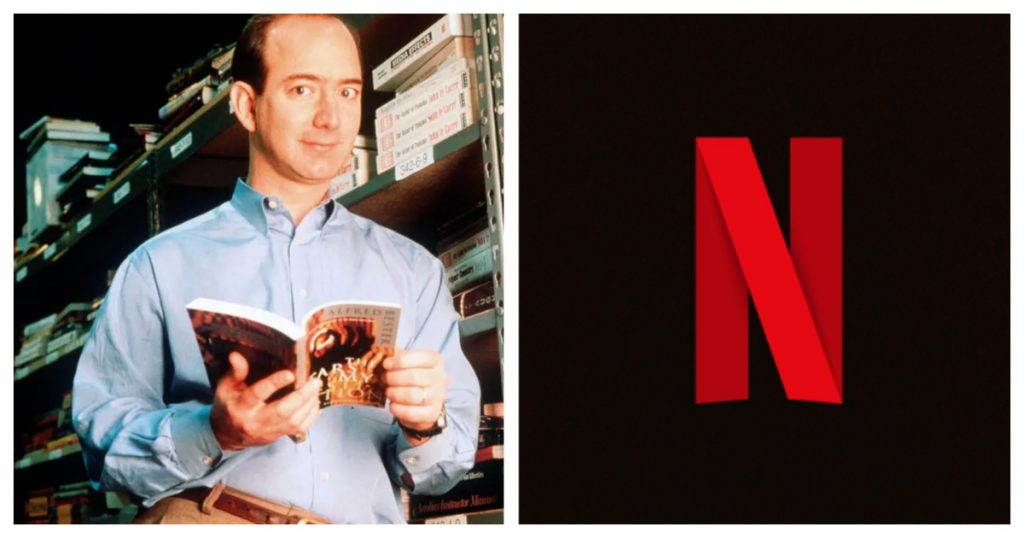
The meeting went well enough, but it was the parting remark from Amazon’s CFO that made the whole thing memorable. As she was showing Randolph and Reed Hastings to the door, she mentioned that in the event Amazon decided to move forward, the offer would likely land “in the low eight figures” — which the two founders interpreted as somewhere between $10 and $15 million.
For a company that had only been running 12 to 18 months, that wasn’t a figure to scoff at. Randolph has said that he and Hastings looked at each other and thought it wasn’t a bad return for the time they’d put in. But they walked away anyway.
Their reasoning was grounded in how much they’d already built. By that point, Netflix had a functioning e-commerce website up and running, had managed to source every DVD then available on the market, and had worked out the logistics of getting movies to customers and back. The hard problems, as Randolph put it, had already been solved. Handing it to Bezos at that stage didn’t sit right with them.
Jeff Bezos has always had an eye for platforms that could absorb into Amazon’s growing empire, and a DVD rental and delivery service in 1998 would have fit naturally alongside what Amazon was already doing with physical media. Whether he would have eventually steered it toward streaming or run it purely as a logistics business is anyone’s guess, but the acquisition never happened.
Netflix went on to become one of the most valuable media companies in the world — worth hundreds of billions of dollars — and the $15 million offer became the kind of anecdote that gets told to illustrate how early-stage valuations rarely capture what a company is actually capable of becoming. For Randolph and Hastings, the confidence they had at the time turned out to be completely justified.