There are investment opportunities always lying in wait if one keeps their eyes and ears open.
Shaquille O’Neal — four-time NBA champion, cultural icon, and shrewd early-stage investor — has made a habit of spotting those opportunities before most people know they exist. His early bet on Ring, the smart doorbell company that Amazon acquired for over a billion dollars, is perhaps the cleanest illustration of his instincts at work: a chance encounter, a product that genuinely impressed him, and a handshake deal struck on his own terms.
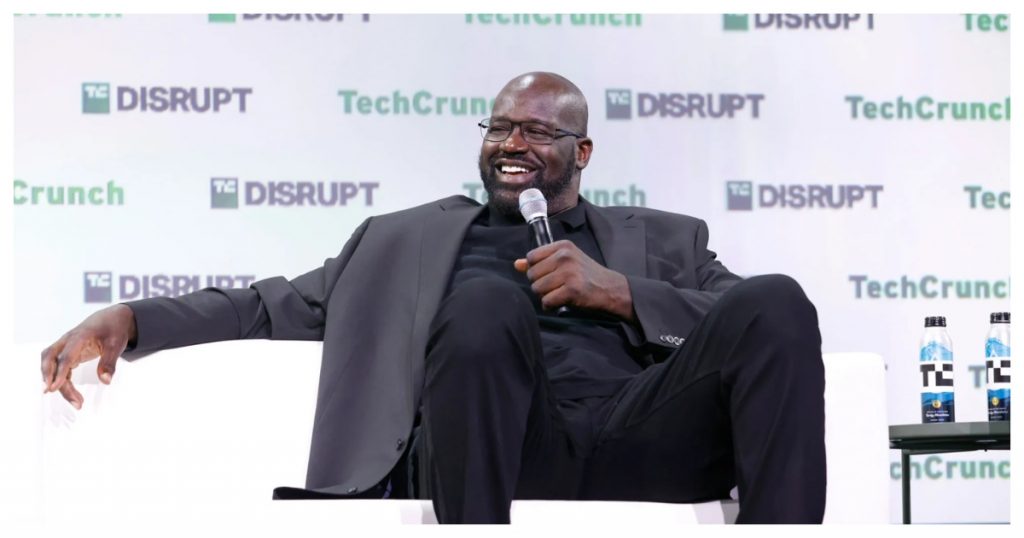
The story begins not in a boardroom, but with a security problem. O’Neal needed cameras for his homes and called a professional firm. As he recounts it:
“I call a security company, say, ‘Hey, man, I need some cameras,’ ’cause people are still crazy now. The guy comes to the house — eighty thousand. I’m not paying eighty thousand. I call another company — sixty-five thousand. I’m not paying that either.”
Priced out by the professionals, he went to Best Buy instead — shopping for TVs — and noticed something on the shelf.
“I see this little Ring camera. And the crazy thing about it is I hooked it up myself. I put it on the door, I forgot about it. I’m way in China, me and my man Rock, and somebody rings the bell, and I’m talking to him. I was like, ‘Damn, my people don’t know about this.'”
That moment of genuine surprise — realising he could answer his own front door from the other side of the world — was all the conviction he needed. When O’Neal spotted Ring’s booth at the Consumer Electronics Show in 2015, he walked straight up to founder Jamie Siminoff.
“I went to the conference, I told the guy, ‘Hey, my name is Shaquille O’Neal. I want to invest in your company, and you’re gonna pay me to do commercials, and then whatever happens, happens.’ So I invested some money in it, and then a year later — Jeff Bezos bought the company.”
O’Neal invested $1 million for an equity stake and became Ring’s brand ambassador — its self-styled “home court defender” — starring in television campaigns as the company’s profile grew rapidly. He wasn’t alone for long. Richard Branson put in $28 million in 2015, pushing Ring’s valuation to $60 million. In 2018, Amazon acquired Ring for a reported $1.2 to $1.8 billion. O’Neal’s instinct, and his willingness to act on it without overcomplicating the terms, had paid off spectacularly.
The Ring investment is part of a broader pattern that runs through O’Neal’s entire post-basketball career. His first major venture bet was on Google in 1999 — before it was a household name. Since then, he has backed Lyft, Vitaminwater, and more recently Edsoma, an AI-powered literacy platform for children in which he is the lead investor, and Campus, an accredited online community college backed by OpenAI CEO Sam Altman. Across food and beverage, he has owned franchises of Papa John’s, Five Guys, Auntie Anne’s, and Krispy Kreme, and holds a stake in Authentic Brands Group, the parent of Reebok. His net worth is estimated at over $500 million.
The throughline is simple: O’Neal invests in things he uses and understands. It is the same instinct that led InfoEdge’s Sanjeev Bhikchandani to cold-email Zomato’s founders after quietly using the site for months — a Rs. 4.7 crore bet that grew over a thousand times in value. It is also what Warren Buffett and Charlie Munger famously failed to do with Google — they had direct evidence of its economics through their own subsidiary, GEICO, and still missed the investment. The opportunity was hiding in plain sight. O’Neal simply looked down at a shelf in Best Buy, saw it, and wrote the cheque.