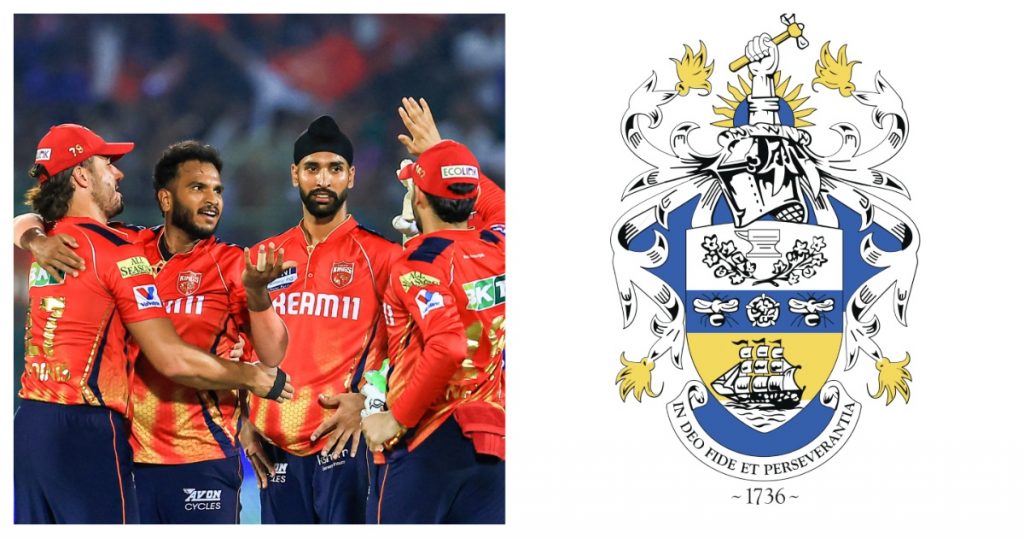
When Punjab Kings play an IPL match, most people are focused on the match and its implications for the tournament. But very few know that the company that owns the Punjab Kings is older than the IPL, older than T20 cricket, even older than independent India. The company was building ships for the British Navy nearly 300 years before the IPL — or even cricket — existed. That’s the strange, sprawling story of the Wadia Group, the oldest company in India, and one that most Indians interact with almost daily without realising it.
The group’s footprint today runs from the biscuits in your kitchen to the bedsheets on your bed to the cricket team you argue about every April. But it all began in a Surat shipyard in 1736.
A Shipbuilder Named Lovji
The Wadia story starts with Lovji Nusserwanjee Wadia, a master shipwright from a Parsi family, who in 1736 signed a contract with the British East India Company to build ships and docks in Bombay. The British needed a reliable port to anchor their ambitions in Asia, and Lovji had the skill to give them exactly that.
He moved his operations from Surat to Bombay, and along with his brother Sorabji, built the Bombay dry dock in 1750, the first of its kind in Asia. This wasn’t a small local workshop. Over the following decades, the Wadia shipyards built some of the most significant vessels of the era, including warships for the Royal Navy like HMS Minden, HMS Cornwallis, and HMS Trincomalee. Legend has it that the American national anthem, “The Star-Spangled Banner,” was written by Francis Scott Key while watching the bombardment of Fort McHenry from aboard HMS Minden, a ship built at the Wadia docks.
For nearly 150 years, shipbuilding was the family’s core business, and it’s what made Bombay a strategically valuable port for the British long before the city became India’s financial capital. The Wadias effectively helped engineer the port infrastructure that Bombay’s entire commercial future was built on.
From Ships To Textiles
As the age of wooden ships gave way to steam and steel, the family began looking beyond shipbuilding. In 1879, they set up Bombay Dyeing, a textile manufacturing company that would go on to become one of the most recognisable names in Indian households, known for decades for its bedsheets, towels and furnishings.
Bombay Dyeing has had its share of boardroom drama. In 1971, patriarch Neville Wadia was negotiating to sell the company and move abroad. His son, a young Nusli Wadia, opposed the sale, rallied employees to buy up shares to prevent a takeover, and eventually convinced his father to hold on to the business. Nusli took over as chairman in 1977 and has run the group ever since, becoming one of India’s most litigious and combative industrialists in the process, most famously in his very public falling out with old friend Ratan Tata and the Tata Group after the Cyrus Mistry ouster in 2016.
Before textiles, in 1863, the family had also set up the Bombay Burmah Trading Corporation, originally built around the teak trade in Burma. It remains significant today as the oldest publicly traded company in India, and functions as the group’s holding structure, owning stakes across most other Wadia businesses.
The Biscuit That Made Them A Household Name
If ships and textiles built the Wadia fortune, it’s biscuits that made the family a part of everyday Indian life. Britannia wasn’t originally a Wadia company. It was founded in 1892 in Calcutta by a group of British businessmen with a modest investment, and changed hands multiple times over the following century, including a stint under Kolkata businessman Rajan Pillai, whose ownership battle with the Wadias and French partner Danone in the early 1990s became one of Indian corporate history’s more dramatic sagas. Pillai eventually lost control of the company and died in Tihar Jail while facing extradition proceedings.
The Wadia Group took charge of Britannia in the early 1990s, and under their stewardship it grew into one of India’s largest FMCG companies, with brands like Good Day, Tiger, NutriChoice and Marie Gold reaching roughly half of Indian households. Today, Britannia is the crown jewel of the group’s listed businesses, and its position on the Nifty 50 makes it by far the most visible Wadia company to ordinary investors.
Taking To The Skies, Then Grounding
In 2005, Nusli’s son Jeh Wadia decided the group needed a presence in Indian aviation, and launched GoAir as a low-cost carrier at a time when Air India, Kingfisher, SpiceJet and Air Asia were fighting for the same skies. GoAir carved out a niche through aggressive pricing and lean operations, and was later rebranded as Go First in 2021 as part of a broader repositioning.
The airline’s story, unfortunately, didn’t have a happy ending. Engine supply issues with Pratt & Whitney, mounting debt, and years of losses pushed Go First into insolvency proceedings in May 2023, and the airline has remained grounded since, making it one of the more high-profile aviation collapses in recent Indian business history.
Punjab Kings And The Rest Of The Portfolio
The most culturally visible Wadia asset for most young Indians today has nothing to do with ships, textiles or biscuits. When the Indian Premier League launched in 2008, Ness Wadia, alongside actress Preity Zinta and businessman Mohit Burman, bought the franchise that became Kings XI Punjab, rebranded as Punjab Kings in 2021. The ownership group has had its own controversies over the years, including a public falling out between Zinta and Wadia, and more recent tensions among the co-owners over shareholding. Still, the franchise has been a permanent IPL fixture since the league’s inception, and it’s arguably the single biggest reason younger Indians recognise the Wadia name at all.
Beyond the marquee names, the group’s holdings stretch into real estate through Bombay Realty, chemicals through National Peroxide, engineering services through Wadia Techno-Engineering, and even media, through Gladrags magazine, run by Maureen Wadia, Nusli’s wife and a former air hostess.
A Family Business In Every Sense
What makes the Wadia Group unusual isn’t just its age, it’s that the same family has run it, uninterrupted, for nine generations. From Lovji the shipbuilder to Nusli the corporate warrior to his sons Ness and Jeh running airlines, textiles and cricket teams, the Wadias have managed something few Indian business families can claim: nearly three centuries of continuous ownership without the empire being sold off, broken up, or absorbed into a larger conglomerate.
The group’s current revenues sit at roughly ₹28,000 crore, a fraction of giants like Tata or Reliance, but its story runs deeper into India’s commercial history than either of them. Long before there was a Bombay Stock Exchange, or a Sensex, or an IPL, there was a Parsi shipbuilder in Surat signing a contract with the East India Company. Everything else followed from there.