The TCS conversion case appears to have opened a can of worms in India’s corporate world.
Social media users have questioned Lenskart for allowing its store employees to wear hijabs, but disallowing them from wearing a bindi or a kalawa. As per internal documents shared on social media, Lenskart’s guidelines explicitly allow hijabs for its store employees. However, they are prohibited from wearing bindis or Hindu religious threads on their wrists.
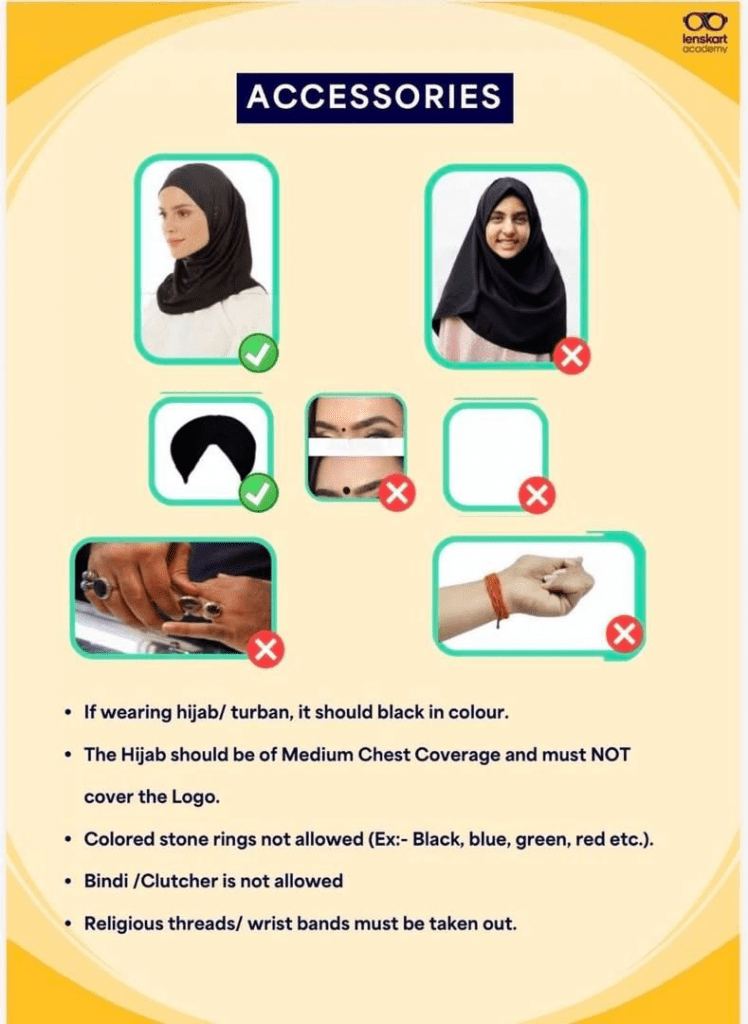
This was reiterated in a detailed ‘Lenskart Style Guide‘ by Lenskart Academy, which was leaked on the internet earlier today. The guide detailed all manner of guidelines on the appearance of Lenskart’s store staff, and also included the same stipulation about allowing the hijab while disallowing the bindi.

These images went viral on X. “Rising concerns about selective policies in corporates. After @TCS, @Lenskart_com has come under the spotlight. Religious symbols like hijab and turban are allowed, but kalava and bindi aren’t…and sindoor is discouraged from being visible,” wrote an X user.
Others asked why Hindus were being discriminated against. “Would you care to explain why Hindus are being discriminated against, in your company? How exactly does a Bindi or Tilak create a problem for your reps,” wrote another user.
Users began tagging Lenskart CEO Peeyush Bansal — also a judge on Shark Tank — for an explanation.
A user wrote to India’s National Human Rights Commission and tagged the Home Ministry in what seemed like a straightdforward case of religious discrimination. “Wrote to @India_NHRC against anti Hindu discriminatory practices targeting Hindu Married women employees & girls at @Lenskart_com training academy/offices run by @peyushbansal Sought FIR & strict action against Lenskart officials & CEO for these alleged anti hindu guidelines,” wrote an X account.
And some users began saying they’d boycott Lenskart for its discriminatory stance.
It does seem to be a pretty egregious case of discrimination. The bindi isn’t just a fashion accessory — it represents the third eye or the Ajna chakra for Hindus, and is a part of their religious attire. The bindi signifies Hindu identity, divine connection, and prosperity, with a red bindi often indicating a married woman. It also serves as a cultural symbol of heritage, beauty, and protection. Lenskart can choose to either ban all religious markers or allow them — allowing prominent markers from some religions while disallowing much more subtle markers from others seems to make little sense.
OfficeChai has written to Lenskart for clarification. We’ll update the article if we hear back from them.