OpenAI has appointed Prabhjeet Singh, former President of Uber India and South Asia, as its Managing Director for India. Singh will join in September and report to Kiran Mani, who was named OpenAI’s Managing Director for Asia-Pacific in March 2026. As the company’s most senior leader in the country, Singh will be responsible for consumer growth, enterprise adoption, and partnerships.
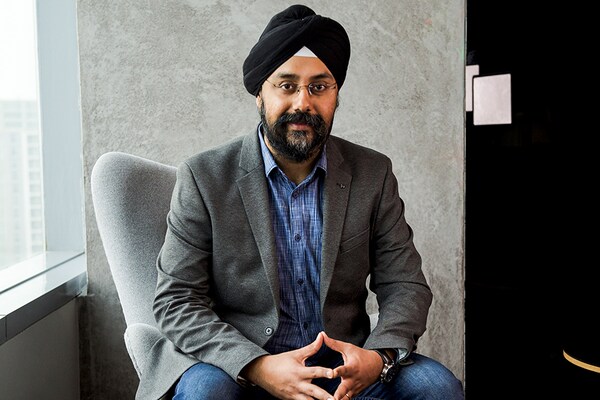
It’s a significant hire. Singh spent nearly a decade at Uber, joining in August 2015 as Head of Strategy & Planning after nearly ten years at McKinsey & Company, where he was an Associate Partner advising clients across financial services, telecom, and consumer technology. At Uber, he worked his way up through a string of roles covering cities, growth, and regional general management before being named President of India and South Asia. In that role, he oversaw Uber’s mobility business across India, Bangladesh, and Sri Lanka, and led several India-first product innovations — including scaling the Auto and Moto categories — that were later exported to other emerging markets. He’s an IIT Kharagpur and IIM Ahmedabad alumnus, and was recognized with IIM-A’s Young Alumni Achiever’s Award in 2023. Before McKinsey, he began his career as a Senior Analyst at Lehman Brothers.
Singh’s profile fits what OpenAI needs right now in India. The country has become one of the company’s most important markets — over 100 million weekly ChatGPT users, a user base skewing young and heavily engaged with coding tools like Codex. The challenge at this stage isn’t awareness; it’s converting that consumer traction into enterprise revenue and meaningful partnerships. That’s largely what Singh built his career doing — adapting a global platform to India’s specific conditions, building operations from the ground up, and competing against well-funded local rivals.
OpenAI’s India buildout has been moving quickly. The company hired its first India-based employee in 2025, focused on government relations, then opened a New Delhi office and began hiring sales roles across Delhi, Mumbai, and Bengaluru. It has since elevated Pragya Mishra to head of strategy and global affairs in India and brought on Raghav Gupta to lead education initiatives for India and APAC. Offices in Mumbai and Bengaluru are planned for later this year. The infrastructure side is also taking shape: as part of the Stargate initiative, OpenAI and Tata Group announced a partnership to develop AI-ready data center capacity in India, starting at 100 megawatts with potential to scale to 1 gigawatt, through TCS’s HyperVault business. Tata Group is also deploying ChatGPT Enterprise across its workforce, with TCS among the first organizations globally to adopt OpenAI Certifications.
Mani, who joined from JioStar and is based in Singapore, brings deep APAC experience from over 13 years at Google running Android and Google Play across the region. Singh slotting in under him as India MD gives OpenAI a clear chain of command for what is arguably its most complex emerging market, one where enterprise sales, government engagement, data residency requirements, and consumer growth all need to run in parallel.
The timing makes sense. With the organizational groundwork largely in place and partnerships with the likes of Tata, JioHotstar, PhonePe, CRED, and MakeMyTrip already signed, OpenAI now needs someone who can actually run a P&L in India — push enterprise adoption, build and close deals, and manage a fast-growing team. Singh has done exactly that, at scale, in a market that punishes companies that don’t adapt.