The most important CEOs don’t necessarily spend all their time working — they carefully plan out their day for the best results.
Jeff Bezos, founder of Amazon and one of the most consequential business leaders of his generation, has a morning routine that might surprise people expecting the usual CEO playbook of 5 AM emails and back-to-back calls. His approach is quieter — and there’s a sharp philosophy behind it.
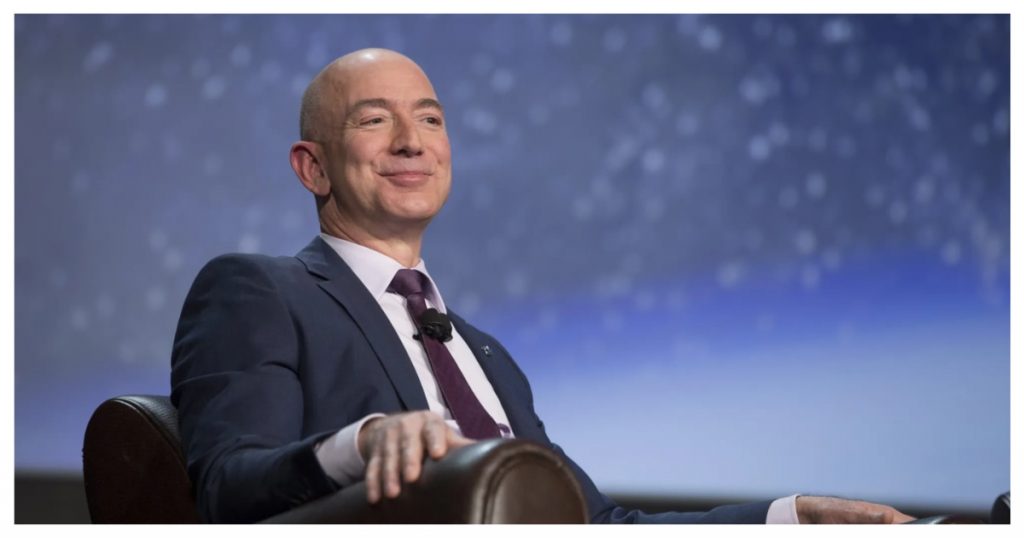
“I get up early. I like to putter in the mornings. I like to read the newspaper. I like to have coffee. I like to have breakfast with my kids before they go to school.”
That deliberate slowness isn’t laziness — it’s by design. Bezos schedules his first meeting for ten o’clock, protecting the early hours as what he calls “puttering time.”
“My puttering time is very important to me, and that’s why I set my first meeting for ten o’clock. I like to do my high-IQ meetings before lunch. Anything that’s going to be really mentally challenging — that’s a ten o’clock meeting.”
The logic is simple: cognitive energy is finite, and mornings are when it peaks. By the time the afternoon rolls around, Bezos says, the mental bandwidth just isn’t there. “By five PM, I’m like, ‘I can’t think about that today.'”
From there, his reasoning moves from the personal to the professional. The same principle that governs his morning routine governs his entire approach to leadership:
“As a senior executive, you get paid to make a small number of high-quality decisions. Your job is not to make thousands of decisions every day. Is that really worth it if the quality of those decisions might be lower because you’re tired or grouchy or any number of things? If I make three good decisions a day, that’s enough.”
This framework has deep roots in how Bezos has always thought about decision-making. He has long argued that not all decisions are equal — some are irreversible “one-way doors” that demand careful thought, while others are reversible and should be made quickly. The morning routine is, in effect, a system for reserving peak mental energy for the former.
His views on sleep follow the same logic. Bezos has been vocal about prioritising eight hours of sleep, arguing that a tired executive making 133 decisions is worse than a rested one making a handful of sharp ones. It’s quality, not volume, that defines effective leadership.
This also maps onto a broader lesson Bezos has described about focus. A senior Amazon executive once warned him that he had enough ideas to “destroy” Amazon — not because the ideas were bad, but because releasing too many at once created organisational chaos. The fix wasn’t fewer ideas; it was better sequencing. The morning routine operates on the same principle: sequence your attention, protect your sharpest hours, and the output takes care of itself.
Amazon’s biggest bets — AWS, Prime, Alexa — were not the result of a leader buried in operational minutiae. They came from someone who understood that the most valuable thing a CEO can do is think clearly, a few times a day, about the right things.