Pine Labs has joined the growing list of companies putting a hard number on how much of their engineering work has shifted to AI, with CEO Amrish Rau telling investors that almost nine in every ten lines of new code at the fintech firm are now machine-written.
Speaking on the company’s earnings concall, Rau said the shift had happened over a remarkably short window. “I wanted to shed a little bit more light as far as AI is concerned. In our business, almost 89% of all new code, which has been written within Pine Labs over the last two quarters has been completely AI generated. Let that sink in. 89% of all new code has been written using AI,” he said.
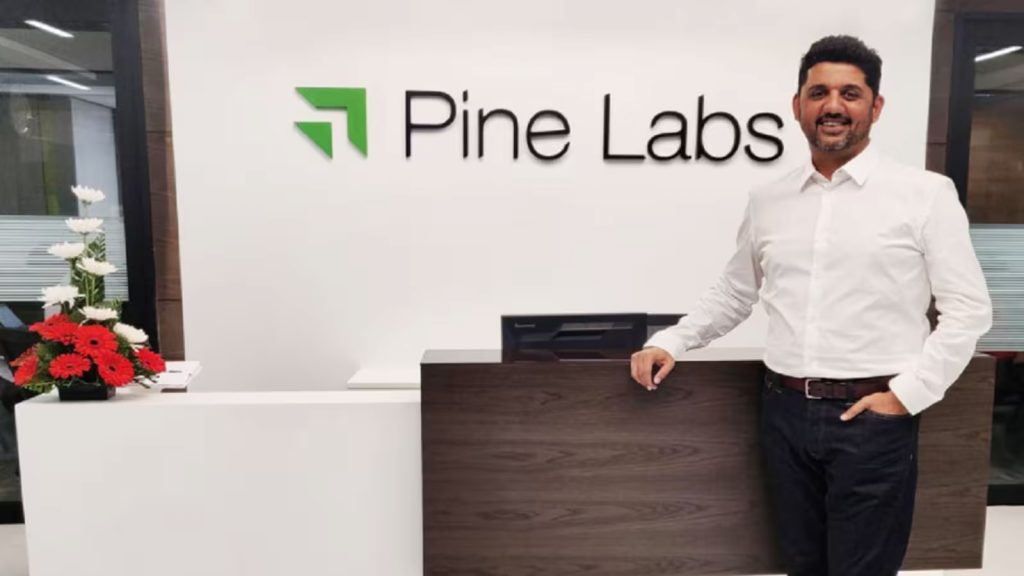
Rau framed the number as more than a statistic for the earnings deck. According to him, it does two things for the company. First, it speeds up how Pine Labs builds new products. Second, and perhaps more tellingly, it is breathing new life into systems that predate the AI boom altogether. “It provides tremendous efficiency as we build for new products within the Company, but also when you look at legacy platforms that we had built, those legacy platforms are getting updated. Those legacy platforms are getting improved as we speak,” he said.
That second point is worth sitting with. Legacy code at most large fintech companies tends to be the part nobody wants to touch — old, tangled, written by engineers who’ve long since moved on, and expensive to modernize because the risk of breaking something in a live payments system is high. Rau’s comment suggests AI tools are now being trusted to work through that backlog rather than just being used to write greenfield features, which is a different and arguably harder problem to hand off to a model.
The Anthropic And OpenAI Angle
Rau also used the call to detail Pine Labs’ AI vendor relationships, name-checking both Anthropic and OpenAI specifically. “We have been working very closely with Anthropic of the world, as Mythos is being released. We are one of the first guys to actually reach out to Anthropic to see what we can do, partner with them so that we can actually get the best use of products like Mythos but also we have gone ahead and signed up a partnership with OpenAI where we will be one of the first few design partners with OpenAI as we build out AI products in the local markets,” he said.
The OpenAI relationship isn’t new information for anyone tracking the company closely. Pine Labs and OpenAI announced a partnership in February around the India AI Impact Summit in New Delhi, with Pine Labs becoming one of OpenAI’s payment partners for agentic commerce — letting ChatGPT-driven transactions run through Pine Labs’ merchant rails. At the time, Rau had described the goal as building “the first agentic stack for the next generation of the global economy.” The Anthropic mention, however, is the more interesting data point here. Mythos is Anthropic’s flagship-tier model family, sitting above Opus, and Rau positioning Pine Labs as one of the earliest companies to reach out to Anthropic about it signals the company wants its name attached to whatever Anthropic ships at the top end, not just its commodity coding tools.
Where Pine Labs Sits Among The 89% Club
Pine Labs’ figure lands in the middle of a number that’s become something of a competitive talking point across the industry over the past year. Google’s Sundar Pichai has tracked the climb publicly — from 25% to “well over 30%” in early 2025, to nearly half by that October, to 75% by April 2026. Microsoft’s Satya Nadella had put his company at 20–30% around the same time Google was at the lower end of that range. Closer to Pine Labs in sector and geography, Meesho’s Vidit Aatrey recently said 70% of code at the e-commerce company is now AI-generated, pairing the figure with a 2x rise in platform experiments.
At the frontier labs themselves, the numbers go even higher. Anthropic CEO Dario Amodei had predicted in 2025 that 90% of code would be written by AI within months — a claim that drew skepticism at the time, but one his own company later confirmed had come true internally. By early 2026, Anthropic’s CPO Mike Krieger went a step further, saying that for most products at the company, AI-generated code was effectively at 100%. Pine Labs’ 89% places it above Google and Meesho, and within striking distance of the frontier labs that build these models for a living — a notable position for a payments company whose core business has nothing to do with AI research.
The comparison that probably matters more for investors is Inmobi, the Indian ad-tech firm whose CEO Naveen Tewari said in early 2025 that 80% of coding would be automated by the end of that year, while warning openly that it would cost engineers their jobs. Pine Labs hasn’t made similar statements about headcount, and Rau’s framing on the call leaned entirely toward efficiency and product velocity rather than workforce reduction.
What This Means For A Payments Company Specifically
Pine Labs operates in a business where reliability isn’t optional. Settlement, reconciliation, and merchant transaction processing are the kind of systems where a bug doesn’t just create a bad user experience — it can mean money going to the wrong place. Rau has previously spoken about Pine Labs already using AI to cut its internal settlement processing time from hours to minutes, a workflow that used to involve manual checks by dozens of employees verifying funds from multiple banks before markets opened each day. The 89% code generation figure on this call fits the same pattern: a company that has moved past using AI for low-stakes scaffolding and is now letting it touch the systems that move money.
Rau’s third point on the call — that Pine Labs is “using AI to deliver significant solutions in the market” rather than just internal tooling — is where the company’s ambitions extend furthest. Combined with the OpenAI agentic commerce tie-up and the early Anthropic Mythos access, Pine Labs is positioning itself not just as a company that codes faster with AI, but as infrastructure that other businesses route their AI-driven transactions through. Whether the legacy-platform modernization Rau described holds up under the kind of scrutiny that payments systems eventually face is the detail worth watching in the quarters ahead.