AI is able to accomplish many things, but people in creative industries aren’t yet sold on its potential.
Strauss Zelnick, CEO of Take-Two Interactive — the company behind the Grand Theft Auto franchise — is one of them. In a recent interview, Zelnick made the case that while AI is a powerful tool for efficiency, it runs into a fundamental wall when it comes to creativity: it is, by its very nature, backward-looking. And in the business of making hit games, that might be the only thing that matters.
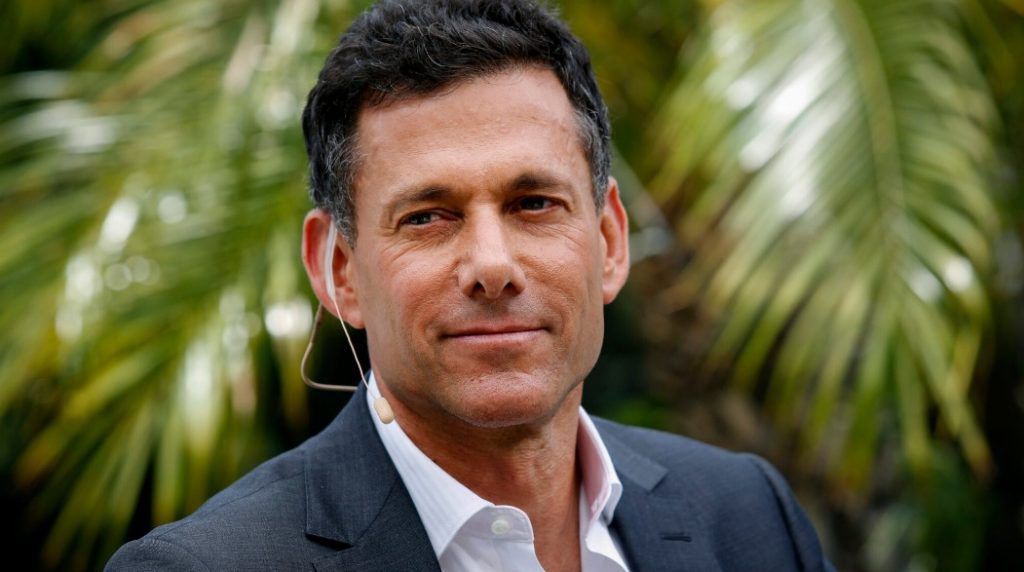
Asked for his overall view on AI, Zelnick didn’t hesitate. “All things technology that can create efficiency, I’m all in on,” he said. But when pressed on whether he doubted AI’s creative ability, he pushed back on the framing: “No, I’m not doubtful of anything. I’m totally open-minded.”
What followed, though, was a pointed dissection of what AI actually is — and why that matters. “Remember what AI is, despite the fact that there are people in Silicon Valley who don’t want you to believe this: it’s big datasets, lots of compute, and a large language model mushed together. That’s what they are. So datasets by their very nature are backward-looking. Creativity by its very nature is forward-looking.”
Zelnick acknowledged that all creative work is informed by what came before. “Creativity is informed by data. You’re informed by those hundreds of books that you read. And when you have a podcast, you’re informed by the ones you’ve listened to. How could you not be?”
That’s the crux of the problem, in his view. The promise of AI — that it can more efficiently produce creative content — misses the point entirely if what it produces is derivative. “The thesis that, wow, with AI we can more efficiently create a completely derivative property — derivative properties don’t work. So that’s where the thread has been lost.”
He drew a clear distinction between asset creation and hit creation. “AI so far is really great at asset creation, but hit creation isn’t asset creation. Asset creation is a necessary but insufficient condition for hit creation.”
And he was candid about the fact that Take-Two would stand to benefit enormously if AI could change that equation. “I would love to say that AI will make it easier, quicker, and better to make hits — because who would benefit more than we? We’re in the business already. We own IP. You don’t have to create new IP, which is really, really hard to do with or without AI. Getting someone to buy GTA VI — not so hard by comparison.”
Zelnick also addressed the narrative that AI lowers the barrier to entry in game development — and dismissed it. “When our stock goes down by fifty points because people say, ‘Anyone can make a video game’ — that was the thesis. With AI, anyone can make a video game. But anyone could make a video game last week. Anyone could make a video game five years ago. The technology’s readily available. It’s commoditized.”
The numbers, he argued, make his case for him. “You know how many mobile games get put out a year? Thousands. You know how many hits are made in a year? Zero to five. You know who makes them? We do. It’s just true.”
On the question of speed — another often-cited advantage of AI — he was equally unmoved. “Speed isn’t the issue. If I told you: with this technology you can create something that looks exactly like GTA and it’s gonna take three years, not thirty seconds — you’d say, ‘I’ll spend three years on it. It’s worth it.’ And that exists. You can, in three years, use technology that existed prior to AI to clone GTA. But it won’t be GTA. It’ll be a clone of GTA. Clones don’t sell.”
He closed with what he called the most important takeaway: “All hits are, by their very nature, unexpected. Things that are data-driven in their entirety can’t be unexpected. But that doesn’t mean AI isn’t super helpful.”
Zelnick’s argument sits at the intersection of two debates the tech and business world is grappling with simultaneously: what AI can actually do creatively, and whether it threatens the competitive advantages of established players.
His position is a nuanced one. He’s not an AI skeptic — Take-Two has said it is reviewing hundreds of AI-related opportunities at any given time. But he draws a sharp line between using AI to accelerate workflows and expecting it to replicate the creative leap that turns a product into a phenomenon.
That distinction is increasingly relevant. When Google launched Project Genie — an AI tool that turns text and image prompts into 3D virtual worlds — Take-Two’s stock took a hit, as investors feared that the moat around major studios was about to shrink. Zelnick’s response, then and now, has been consistent: making assets is not the same as making a hit.
The broader creative industry is watching the same dynamic play out. OpenAI CEO Sam Altman has said that AI will change the workflow of creative professionals — but that taste still matters. Others have argued that AI will empower “idea guys” — people with creative vision who previously lacked the technical means to execute on it.
Zelnick’s view doesn’t contradict this, exactly. He just doesn’t think the leap from “AI-assisted asset creation” to “AI-generated cultural phenomenon” has happened yet — or that it’s as close as the hype suggests. In a business where zero-to-five games become global hits out of thousands of releases every year, that gap is everything.