Dario Amodei is continuing to give dire warnings about how AI could impact the economy.
The Anthropic CEO has been one of the most vocal — and candid — voices in Silicon Valley on the economic consequences of advanced AI. His latest remarks cut to the heart of a tension that most tech leaders prefer to sidestep: that the same technology driving unprecedented growth could simultaneously hollow out the job market in ways the world has never seen before.
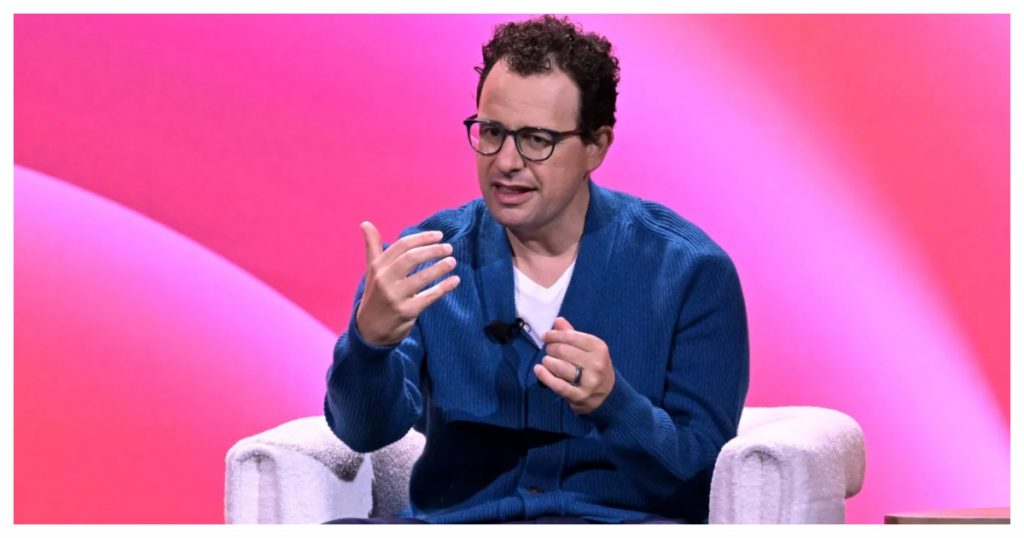
“My view is the signature of this technology is it’s going to take us to a world where we have very high GDP growth and potentially also very high unemployment and inequality,” Amodei said. “That’s not a combination we’ve almost ever seen before. You think of it as high GDP growth — that’s lots of stuff to do, lots of jobs for everyone. It’s always been like that in the past. We’ve never had a technology that’s this disruptive. So the idea that we could have five or ten percent GDP growth, but also ten percent unemployment — it’s not logically inconsistent at all. It’s just never happened that way before. And I’m really quite, for both those reasons, excited and worried.”
To illustrate his point, Amodei turned to a concrete example from inside Anthropic itself. “If I take an example, something like AI coding — the latest model we released, Claude Opus 4.5 — I have some engineers, some engineering leads within Anthropic, who have basically said to me: ‘I don’t write any code anymore. I just let Opus do the work, and I edit it.'”
He also referenced Anthropic’s recently launched product, Claude Cowork. “We just released a new thing called Claude Cowork — this was a version of our tool, Claude Code, for non-coding. This was built in a week and a half, almost entirely with Claude Opus.”
But Amodei was careful not to frame this as a simple displacement story — at least not yet. “There are still things for the software engineers to do. Even if the software engineers are only doing ten percent of it, they still have a job to do, or they can take a level up. That’s not going to last forever. The models are going to do more and more.”
He zoomed out to describe the broader economic consequence: “Software is going to become cheap, maybe essentially free. The premise that you need to amortize a piece of software you build across millions of users — that may start to be false. For this meeting, it might cost a few cents to just say: ‘Let’s make some app so people can talk to each other.’ It just may be very flexible and recyclable.”
Yet the optimism has a shadow. “At the same time, there are whole jobs, whole careers that we built for decades that may not be present. I think we can deal with it. I think we can adjust to it. But I don’t think there’s any awareness at all of what is coming here, and the magnitude of it.”
Amodei’s remarks fit into a pattern of escalating warnings he has been sounding for months. He has previously predicted that AI could eliminate roughly half of all entry-level white-collar jobs within five years, spiking unemployment to 10–20% — a scenario he has described as arriving “almost overnight” as companies quietly stop hiring. He has also forecast GDP growth of 10–15% in developed economies — levels never seen in modern economic history — and gone so far as to say the social contract underpinning democracy could fray if ordinary people lose their economic leverage.
The real-world indicators are beginning to align with his concerns. S&P 500 companies shed employees in net terms for the first time since 2016 last year, with entry-level tech hiring down sharply. Corporate America could replace as many as 3 million workers with AI by end of 2026. Amodei is not alone in these predictions: Vinod Khosla has argued that 80% of all jobs will be within AI’s reach by 2030, describing the potential elimination of $15 trillion in US labour costs as a deflationary event without historical precedent.
Not everyone agrees. Meta’s Yann LeCun publicly rebuked Amodei, arguing that AI executives are not qualified to forecast macroeconomic labour outcomes, and pointedly directed people to academic economists instead. OpenAI’s Sam Altman and NVIDIA’s Jensen Huang have both said they disagree with the scale and pace of Amodei’s displacement forecasts.
But Amodei has been right before — he was early to predict that AI would soon write the majority of code, and that has largely come to pass inside his own company. His core argument is not that disruption is certain, but that its magnitude is not being taken seriously. Whether or not his numbers prove precise, the combination he is describing — explosive growth and structural unemployment coexisting — is genuinely novel. And as he put it, the world may not be ready for it.