AI is being used widely across startups and businesses — the revenue of companies like OpenAI and Anthropic attests to this — but the results of this use might not have yet shown up in a meaningful way.
That, at least, seems to be the view of Chamath Palihapitiya, the venture capitalist and co-host of the All-In Podcast. In a recent episode, Palihapitiya made a pointed argument: that despite all the excitement around AI, companies have yet to prove that their spending on the technology is actually moving the needle on profits, productivity, or GDP. The experimentation is real, he concedes — but the returns aren’t.
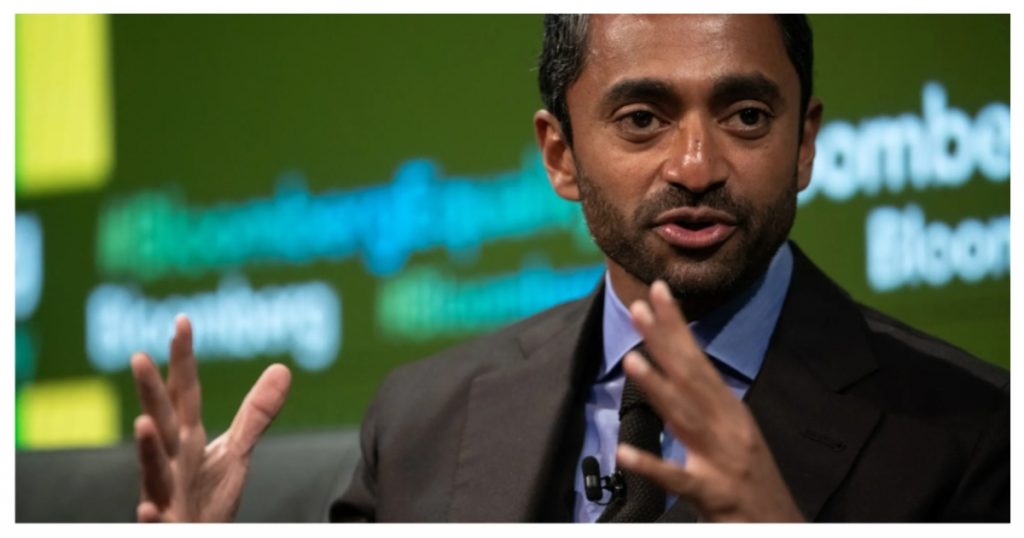
“You can’t will profits to go up,” he said. “Ultimately, what happens is — take a company randomly. Anheuser-Busch: they have to eventually sell more beer. Take Nike: they ultimately have to sell more shoes. Take a medical devices company: they have to sell more artificial hips and knees.”
His point is that AI, however impressive, still has to clear the same bar as any other business investment. Right now, he argues, it hasn’t.
“There’s an enormous amount of very constructive and creative experimentation. But what is also true is that a lot of that has not yet proven value. I don’t think that means it’s going to stop.”
The crux of his argument is a simple equation. Until a business can draw a straight line from what it spent on AI to what it made — where the return demonstrably exceeds the cost and lifts margins — the flywheel won’t spin.
“Until a company can trace very directly, ‘I spent X and I made Y, where Y is now greater than X and it’s lifted my margins’ — that is the thing that causes the flywheel to spin faster. And right now, we’ve started the first part of that equation. We’ve spent the X, and we have not seen the Y.”
He then points to three macro indicators where, in his view, the Y should already be showing up — and isn’t: “You would see it in global GDP. You haven’t. You would see it in global productivity. You haven’t. You would see it in the global profit margins of the S&P 500. We haven’t.”
Palihapitiya’s argument cuts against a tide of bullish narratives from AI-adjacent corners of the market. Anthropic CEO Dario Amodei has suggested AI could push developed-nation GDP growth to 10–15%, while OpenAI President Greg Brockman has argued that compute capacity will become the primary driver of national GDP growth. SoftBank’s Masayoshi Son has gone further, calling $9 trillion in AI infrastructure spending “very reasonable.”
But Palihapitiya’s skepticism has support in the data. Research from the Penn Wharton Budget Model estimates that AI’s impact on total factor productivity remains around 0.01 percentage points in 2025. The St. Louis Fed, tracking AI’s contribution to GDP growth, notes that while investment in data centers and information processing equipment spiked in early 2025, its contribution has since normalized — suggesting the GDP lift so far is coming from the spending on AI infrastructure, not from AI-driven output gains across the broader economy. That’s a critical distinction: building the X, not realizing the Y.
There are also growing doubts about the return on AI datacenter investments from executives like IBM CEO Arvind Krishna, who has questioned whether the math of the current infrastructure build-out can ever pencil out. Meanwhile, technology’s contribution to US GDP hit a record 46% in 2025 — but the bulk of that came from capital expenditure, not productivity gains flowing through to ordinary businesses.
None of this is to say that AI won’t deliver. Palihapitiya himself is careful not to call it a bust. The question is timing and traceability. The companies selling AI — the hyperscalers, the chip makers, the foundation model labs — are doing well. The companies buying AI are still, largely, waiting for the Y to show up. Until it does, the flywheel stays slow.