There are plenty of news stories on how companies are adopting AI in a big way, but AI might not yet be having as much impact as these numbers suggest.
Uber President and COO Andrew Macdonald has articulated what many senior technology leaders are quietly grappling with: the gap between AI’s eye-catching adoption metrics and its demonstrable impact on what actually matters — shipping useful products to users. Speaking in an interview, Macdonald acknowledged that AI usage numbers are staggering, but argued that the link between those numbers and real business output has yet to be established.
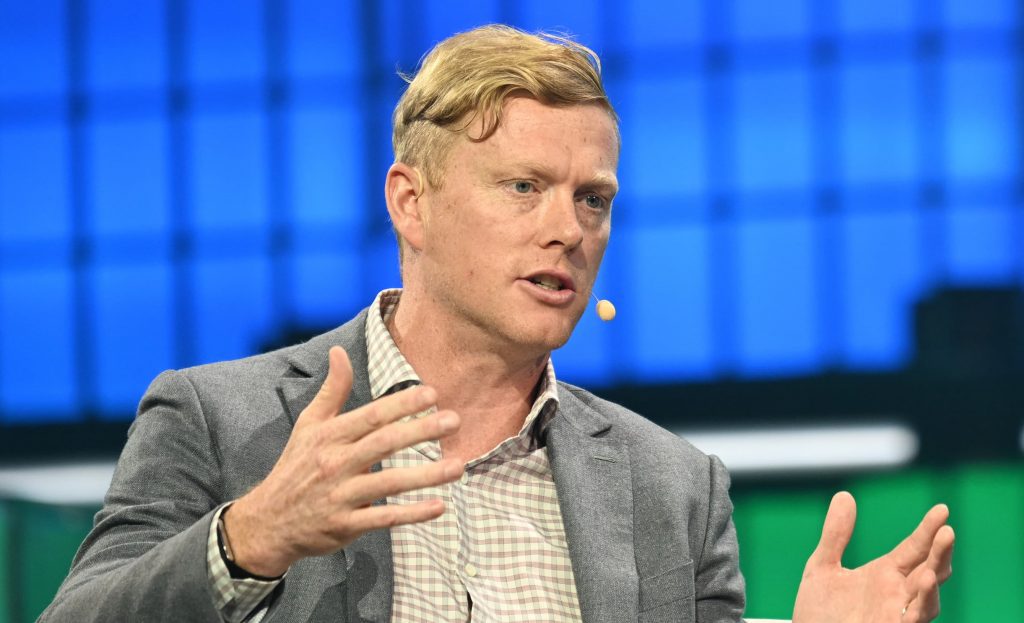
“The headline stats make your head explode, right?” Macdonald said. “When you hear companies talking about, ‘Hey, twenty-five percent of code commits over the last quarter were AI-driven.’ Or, ‘Our token usage went from X to Y,’ or, ‘Percentage of employees…’ All these sorts of numbers. And it’s amazing, and I think it’s this massive transformation of society.”
But Macdonald quickly followed that up with a harder question. “Then you sometimes go and talk to your senior engineering leaders, and you’re saying, ‘Okay, how many projects that were on the cutting room floor got moved above the line because of the productivity gains? Because twenty-five percent of our code commits were via Claude Code last quarter.’ That link is not there yet.”
He was careful not to dismiss the possibility of implicit gains. “I think maybe implicitly there’s more that is getting shipped, but it’s very hard to draw a line between one of those stats and, okay, now we’re actually producing twenty-five percent more useful consumer features, right? And that line is hard to draw. I think over the coming quarters and years, maybe that will become clearer, but I think today it’s hard, even if some of the underlying metrics are trending in a really astronomical direction.”
Macdonald then brought up a pointed example from inside Uber itself. “Our CTO, Praveen, went viral because he effectively said in an interview that we had blown through our AI budget for 2026, and it was like the middle of March or something when he said this. And everyone was like, oh, head-exploding moment, and we’re going to have to start talking about token consumption and the associated cost versus headcount, and making trades on that as an engineering organization.”
The implication is stark. “If you’re not actually able to draw a direct line to how much useful features and functionality you’re shipping to your users, that trade becomes harder to justify. Because it’s not free. AI is not free. It can feel that way if you’re just a user sitting there coming up with interesting use cases and you don’t pay the bill — but someone has to pay the bill.”
Macdonald’s comments land at a significant moment. Big Tech is projected to spend approximately $655 billion on AI infrastructure in 2026, a dramatic escalation from 2025 levels, yet the question of what that spend is actually returning in the form of shipped product is increasingly being asked in boardrooms. Uber CEO Dara Khosrowshahi himself has said he can imagine replacing incremental engineering headcount with AI agents and GPUs within five years — a bullish long-term bet that sits in some tension with his COO’s near-term skepticism.
The tension Macdonald describes isn’t unique to Uber. The interviewer pointed to Duolingo CEO Luis von Ahn as someone who has run into similar friction — finding that AI-driven efficiencies required so much checking and reinforcement that the leverage he expected from his engineering team didn’t fully materialise. This, despite Duolingo having publicly committed to becoming an AI-first company and replacing contractors with AI for content work.
What Macdonald is pointing to is sometimes called the productivity-output gap: AI is clearly changing how work gets done, but whether it is changing how much gets done — in terms that customers actually experience — remains genuinely unclear. The usage numbers are real. The transformation may well be real too. But for now, the bill is also real, and the receipts are harder to produce than the dashboards suggest.