As top financial figures weigh in on the record-shattering valuations across the artificial intelligence sector, Citadel CEO Ken Griffin has shared a nuanced perspective on where the industry stands—acknowledging that while AI is almost certainly experiencing a bubble, the long-term impact of the underlying technology will likely reshape the global econom
The debate over AI valuations has intensified across Wall Street and Silicon Valley. Prominent investors like Ray Dalio have cautioned that the AI frenzy exhibits clear bubble characteristics, while Oaktree Capital’s Howard Marks has noted he is on “bubble watch.” Meanwhile, the Bank for International Settlements (BIS) has warned that current market conditions bear distinct echoes of the late-1990s dot-com boom.
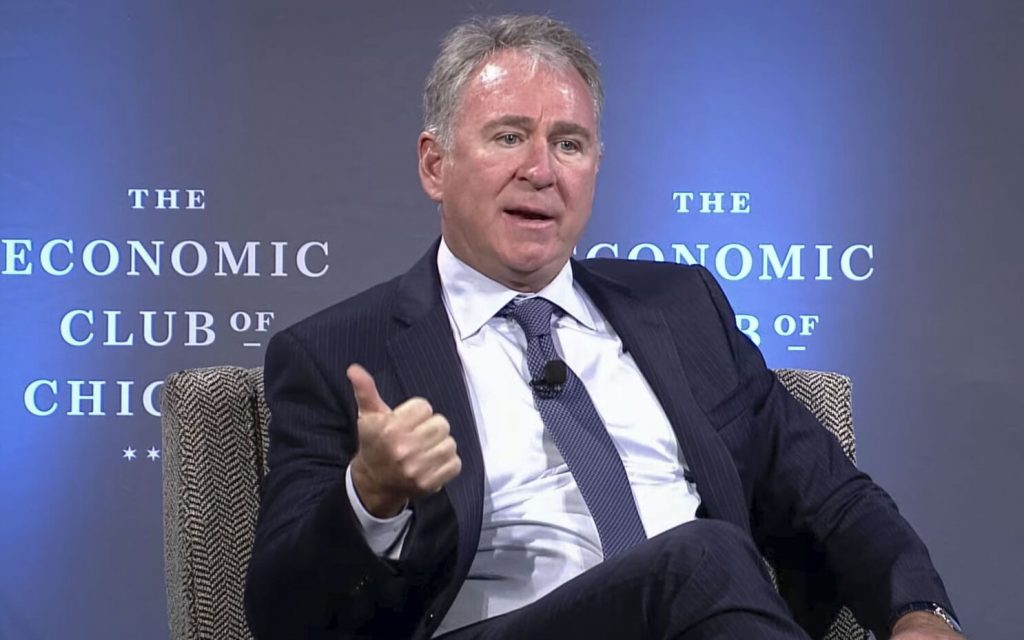
Addressing these concerns in a recent interview, Griffin noted that determining whether the market is in a bubble requires examining the broader historical context of technological disruption.
“The big picture is there’s almost certainly bubbles within this moment in time,” Griffin said. “And any radical transformation of our economy is generally intertwined with a bubble.”
Griffin drew a direct comparison to the dot-com era of the late 1990s, recalling how investors struggled to apply traditional metrics to speculative internet startups.
“I remember back in 1999, 2000, and the metrics that we used to value internet companies… And let’s be clear, some of these internet companies had pretty fanciful business models,” he remarked. “But I mean, I just wish I’d kept my Amazon stock from that moment in time. And the internet, which was the great bubble—could it be more of a part of our daily life today than it is?”
According to Griffin, speculative bubbles are a feature, not a bug, of major economic transitions—a pattern seen repeatedly from the expansion of the railways to the birth of the internet.
“So these bubbles, if we’re gonna use that word, often coincide with these giant technological transformations,” Griffin explained. “The railroads, for example. But what’s left in the wake of these bubbles, if we wanna use that word, is often game changing for the world. And the companies that are on the other side of that bubble are the market leaders for decades to come.”
A key question surrounding AI economics is how frontier model developers will monetize their systems as capabilities advance. Griffin highlighted the uncertainty around pricing power for frontier AI models as they tackle increasingly complex challenges.
“What we don’t know is as these models become more intelligent, how much are they able to demand extremely high pricing because they help to actually solve the problems that have vexed humanity for centuries?” Griffin noted.
There have been many opinions on whether we’re in an AI bubble. Last year, OpenAI CEO Sam Altman had hinted that there could be an AI bubble, and Geoffrey Hinton had suggested that AI could be a bubble because people were underestimated its social impacts. This year, Zoho founder Sridhar Vembu had said that AI was in an investment bubble. Meanwhile, Paul Graham, Eric Schmidt and Jensen Huang have suggested that we’re not in AI bubble. While market corrections may be inevitable for speculative AI plays with unproven business models, Griffin’s remarks suggest that the core infrastructure and winning platforms emerging from this cycle will define the commercial landscape for decades to come.