Just three years into the AI revolution, one-person startups seem to be truly here.
Anthropic has acquired Mithril Medicine, a one-person biotech developing treatments for rare, genetic forms of muscular dystrophy. The acquisition is notable less for its size and more for what it represents: a company built almost entirely by a single founder working alongside Claude, now folded directly into Anthropic’s own in-house drug discovery effort.
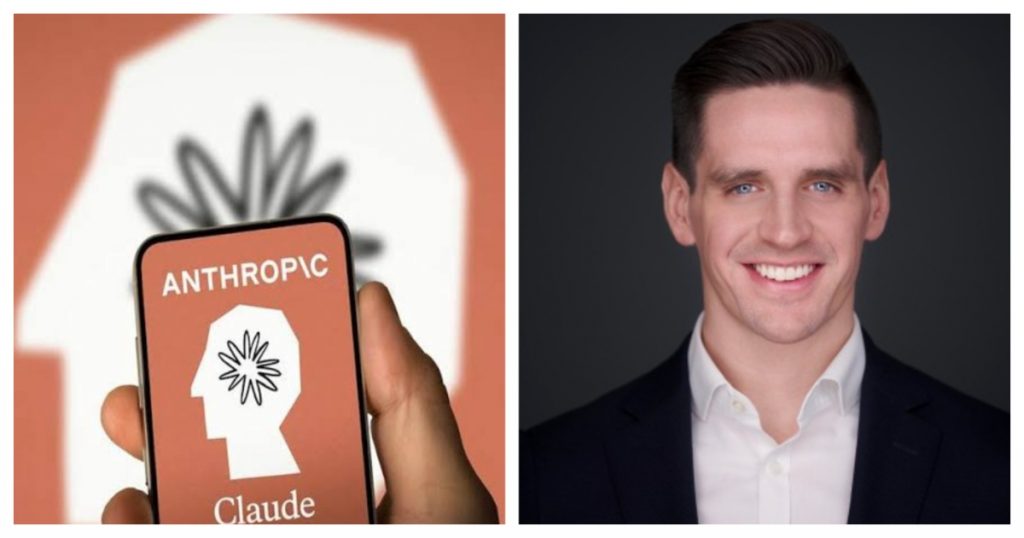
The founder, Cody Tranbarger, revealed himself as the person behind Mithril — and behind “Professor Oak,” a long-running pseudonymous biotech and venture capital account on X — in a post the same day. For six years, Tranbarger had built a following discussing VC, biotech, and crossover investing without disclosing his identity. The reveal doubled as the announcement of the acquisition itself.
Who Is Cody Tranbarger
Before founding Mithril, Tranbarger worked across venture capital, crossover investing, and startups — the experience he says shaped “Professor Oak,” the account he used to stay connected to those worlds while building quietly in the background. Mithril itself traces back to his work with Atlas Venture, where he partnered with the firm and its team to found the company roughly 18 months ago.
Mithril set out to develop bispecific antibodies (bsAbs) targeting LAMA2-congenital muscular dystrophy (LAMA2-CMD) and other diseases tied to the extracellular matrix. Atlas backed the company with a seed round, and in its early phase Mithril ran the way many Atlas-incubated companies do: virtual, decentralized, and deliberately lean.
What changed that trajectory was AI. Tranbarger leaned heavily on Claude to run nearly every operational layer of the company — coordinating contracts, logistics, and experiments across 11 external labs, according to Anthropic. That let Mithril function as, in effect, a single operator plus a model, supplemented by a small bench of part-time consultants rather than a traditional biotech headcount. In under 18 months, the company says it took a potential treatment for one form of muscular dystrophy from early concept to promising results in mouse models.
Tranbarger has described the broader thesis that emerged from that experience as “Pipeline-in-a-Person” — the idea that a single scientist, paired with enough AI leverage, could run several drug programs in parallel rather than the one or two a career in drug discovery traditionally allows. He credits conversations with researchers at Coefficient Bio, which Anthropic acquired for roughly $400 million earlier this year, for sharpening that idea into something closer to an operating model than an experiment.
How The Acquisition Came Together
Mithril’s shift from “ambitious one-person biotech” to “Anthropic subsidiary” grew out of that same thesis. Tranbarger has said the concept of Pipeline-in-a-Person resonated strongly when he first discussed it publicly in April, and that it became central to a shared vision with Anthropic that ultimately led to the acquisition and his move onto the company’s team.
Anthropic frames the deal as part of a broader push into life sciences, rather than an isolated biotech purchase. In a research update published alongside the news, the company said it has spent the past several months in research partnerships with six external drug developers — including BigHat Biosciences, Bristol Myers Squibb, Divergence Labs, Enveda, Generate Biomedicines, and The Column Group — while also starting drug discovery programs of its own. Mithril is the clearest example of the latter: Anthropic says Tranbarger will continue the muscular dystrophy research at Anthropic and plans to start several additional programs, with a treatment potentially ready for human clinical trials as soon as late 2028.
For Tranbarger, joining Anthropic came down to three reasons he laid out in his announcement: continuity for Mithril’s existing programs with more resources behind them, the chance to find out how many drug programs a single person can realistically run in parallel, and a shot at institutionalizing that model for the wider biopharma industry rather than keeping it to himself.
The move fits into a pattern of fast, talent-driven acquisitions for Anthropic’s life sciences arm, which has grown rapidly over the past year through moves like the Coefficient Bio deal and the launch of Claude Science, its dedicated research workbench for scientists. It also lands just as Anthropic is drawing attention for other reasons — the company recently disclosed plans to spend between $542 billion and $567 billion on compute infrastructure in its S-1 filing ahead of a planned IPO, with Amazon and Google both holding significant stakes in the company.
Why This Deal Is Different
Most of Anthropic’s recent biotech acquisitions have involved small teams of former pharma researchers. Mithril is unusual in that it was, by the company’s own account, a single founder’s operation leaning on Claude for the bulk of its administrative and operational load — logistics, lab coordination, and contract management across more than a dozen external partners. Anthropic is positioning the acquisition as proof of concept for a model it wants to scale: fewer people running more programs, with AI absorbing the coordination overhead that traditionally limits how many a drug hunter can manage at once.
Tranbarger, for his part, says “Professor Oak” isn’t retiring along with his anonymity. He’s promised to keep posting under the same handle, now with what he called “a front-row seat to drug development at the frontier.”