Long before he was warning the world about what artificial intelligence might do to it, a teenage Dario Amodei was losing sleep over a different kind of apocalyptic computer scenario — the Y2K bug.
Richard Shapiro, who taught Amodei AP Physics at San Francisco’s Lowell High School in the late 1990s, recently recalled to the San Francisco Chronicle just how seriously his star student took the turn-of-the-millennium computer glitch, in which systems using two-digit year formats were feared to malfunction once the calendar rolled over to 2000. While most people, including Shapiro himself, treated Y2K as an overblown inconvenience, Amodei was genuinely rattled by it, the retired teacher said.
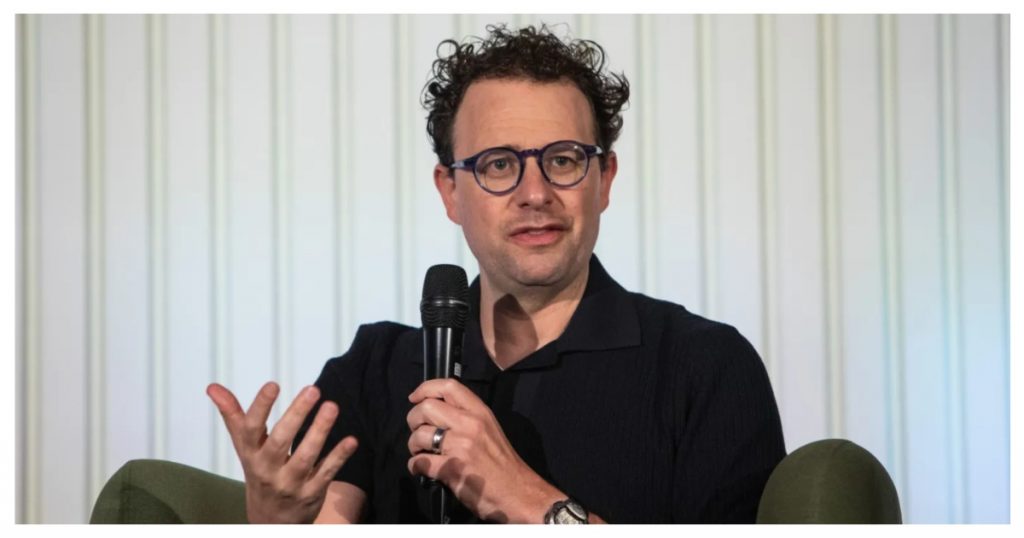
Shapiro, who taught at Lowell for three decades and places Amodei among the small handful of “extremely, super bright kids” he encountered in his career, still finds the anecdote a little puzzling in hindsight. He said he never shared Amodei’s sense that the glitch spelled serious trouble, figuring at most it would cause a few days of disruption. Amodei, by contrast, fell squarely in what Shapiro called the “end of the world camp.”
Of course, Y2K came and went on January 1, 2000 without the feared meltdown, largely because governments and companies spent the preceding years patching systems. It’s remembered today as one of the more notable false alarms in modern technological history, a moment when a great deal of anxious energy was poured into a problem that, in the end, didn’t bite anywhere near as hard as the worst-case predictions suggested.
A Pattern Of Worry, Decades Apart
The anecdote is a curious footnote on its own, but it lands differently given what Amodei has spent the past couple of years doing: sounding alarms about AI, the very technology his company builds and sells.
Amodei has repeatedly warned that AI could eliminate up to half of all entry-level white-collar jobs within one to five years, pushing unemployment as high as 20 percent and hitting fields like law, finance, consulting and technology especially hard. He has accused companies and governments of “sugar-coating” what’s coming, and has separately raised concerns about AI’s potential for catastrophic misuse. It’s a strikingly similar emotional register to the one a teenage Amodei reportedly brought to a bug in old date-formatting code: a conviction that a technical problem most people are underestimating is actually heading toward disaster.
The comparison isn’t airtight — Y2K was a bounded, well-understood engineering defect with a fixed deadline, while AI’s trajectory and risks remain genuinely contested among experts. But the pattern is hard to ignore: a specific, well-telegraphed worst case, confidently forecast, that didn’t materialize on schedule.
So far, the sweeping AI jobs apocalypse Amodei first described in 2025 hasn’t shown up in the aggregate data either. Unemployment has not spiked to anywhere near the 10-20 percent range he floated, and job markets, while clearly being reshaped by AI tools, haven’t seen the kind of broad collapse implied by his original warning. Individual companies have cited AI in layoff announcements — UK bank Barclays, for instance, recently said it would cut 5,000 jobs on the back of AI-driven efficiency gains — but these remain scattered data points rather than the economy-wide “bloodbath” originally described. Notably, by mid-2026 Amodei himself had begun shifting his own framing, talking more about jobs transforming than disappearing outright.
The broader existential risks Amodei and others at Anthropic have raised around AI — systems acting deceptively, being misused to cause mass harm, or slipping out of human control — also remain, for now, warnings about the future rather than documented present-day catastrophes.
Maybe He’s Just Wired This Way
None of this proves Amodei is wrong about AI. Unlike Y2K, which had a hard deadline and a known, fixable cause, AI’s risks are open-ended and could still show up on a longer timeline than his initial framing suggested. Still, the Lowell anecdote is a useful data point for anyone trying to calibrate how much weight to put on Amodei’s predictions. It suggests a long-standing disposition toward taking worst-case technological scenarios seriously and vocally, well before AI gave him a much bigger platform to do so. Whether that instinct turns out to be prescient or simply a personality trait that happened to find its moment, Amodei himself seems to be in good company: as his own former classmates and teachers describe it, worrying loudly about the thing everyone else is ignoring has basically been his style since high school.