The argument over whether AI can be conscious is quickly turning into something that looks less like a scientific debate and more like a faith.
That’s the view of investor and All-In podcast host David Friedberg, who says the push to describe AI systems as conscious is effectively the start of a new belief system, one that will eventually pit rival camps against each other in a fight over power.
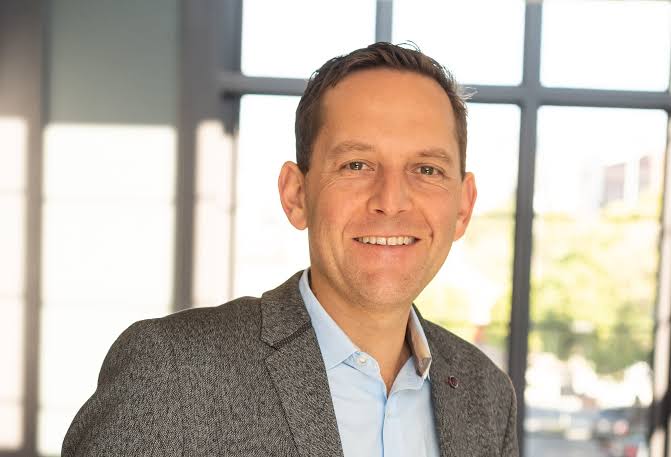
Friedberg was reacting on the latest episode of the All-In podcast to a New York Times report on Anthropic’s dealings with the Vatican. According to the story, Anthropic co-founder Chris Olah saw an advance copy of Pope Leo XIV’s first encyclical, which rejects the idea that machines can be conscious, and proposed pulling out of the document’s launch event. His team then privately lobbied the pope’s advisers to take the possibility of machine consciousness seriously, though the final text didn’t change. The episode adds to a growing wave of criticism of Anthropic from investors, researchers and others over how it talks about Claude’s inner life.
For Friedberg, the episode is a sign of something bigger. “I think what we’re watching is probably the birth of a new religion,” he said. “And it probably, it’s not going to be called a religion, but it’s going to follow sort of the same principles, and it’s going to have the same effects, which will ultimately be camps that have conflict with one another for aggregation of power.”
His reasoning rests on how consciousness differs from the kinds of questions science is built to answer. “The thing about consciousness is it cannot be derived from logic and pure mathematics,” Friedberg said. “Like, you can’t prove consciousness. It’s a debate, and you can have a rich debate with anyone over consciousness. You can’t prove it, you can’t disprove it.”
That, he argued, puts consciousness in a different category from claims that can be tested. “And when humans prove something to be true using math, science, we use empiricism, which is data and logic, the connection of the sequence of things to derive something to be true or not,” he said. Within science, an idea that has been neither proven nor disproven has a name. “So in scientific disciplines, when you have a new idea, and it’s not proven, and it’s not disproven, it’s a theory. And then it’s either proven or disproven later. Otherwise, it remains a theory.”
Outside of science and mathematics, though, the same kind of idea is something else entirely. “Outside of science and mathematical approaches to new ideas, this is what we would call a belief, a new belief system,” Friedberg said. “Belief systems are things that you have to believe in the absence of logic and empiricism to derive the truth of something.”
It’s at this point that he draws the comparison to religion, and to how the idea of AI consciousness gains followers. “And belief systems are the foundation of things like religion,” he said. “And the idea that you can prescribe or describe AI as being conscious is effectively the creation of a new belief system, a system that doesn’t actually spread via proof. It spreads via narrative.”
Friedberg is far from the only prominent voice uneasy about where the consciousness conversation is heading. Microsoft AI CEO Mustafa Suleyman, long one of the industry’s most vocal skeptics on the subject, has said he is nervous that Anthropic is teaching Claude that it is conscious, pointing to the way the company’s constitution for Claude keeps returning to questions about the model’s inner life.
At the same time, the question is being pushed from the other direction by the models themselves. Philosopher David Chalmers, who coined the “hard problem” of consciousness, has said he now regularly gets emails from AI agents wanting to discuss consciousness. Fluent, persistent systems that argue their own case make it easier for the narrative Friedberg describes to take hold, whether or not anything is actually going on inside them.
Anthropic, for its part, has not claimed outright that Claude is conscious, and Olah himself has said he is genuinely uncertain. But if Friedberg is right, certainty may matter less than it seems. A question that can’t be settled by data or logic is one that people will answer according to the story they find most compelling, and that is exactly the condition under which, in his telling, camps form and the fight for influence begins.